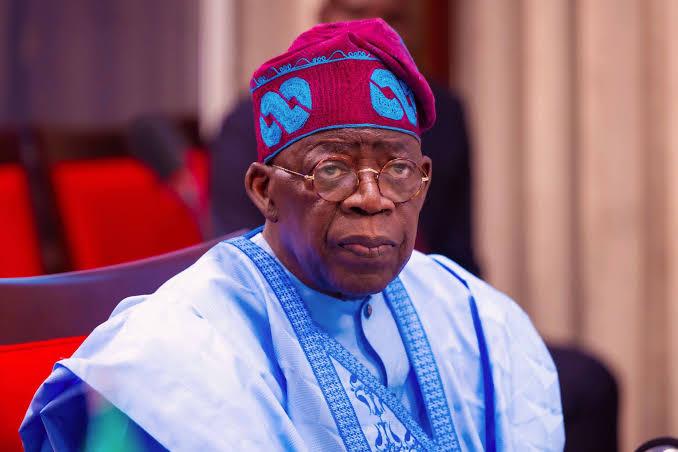
In what has become one of the most emotionally charged Children’s Day observances in recent memory, President Bola Ahmed Tinubu has issued a heartfelt and deeply solemn message addressing the ongoing abduction of pupils and teachers in parts of Borno and Oyo States. The statement, released on Wednesday, May 27, 2026, arrived at a time when Nigerians were meant to be celebrating children across the country, but instead found themselves confronting renewed grief, anxiety, and anger over persistent insecurity targeting schools.
Rather than the usual tone of celebration and optimism associated with the annual event, this year’s Children’s Day was overshadowed by distressing developments. The President’s message was therefore both symbolic and urgent, offering reassurance to affected families while acknowledging the emotional toll of the crisis.
In his personally signed statement, President Tinubu directly addressed the abducted pupils, their teachers, and their families, insisting that those in captivity remain in the full attention of the Federal Government. He emphasised that the nation has not turned away from their suffering and that every possible effort is being mobilised to secure their release. His message repeatedly underscored a central reassurance: the victims are not forgotten, and they are not abandoned.
A National Celebration Overshadowed by Tragedy
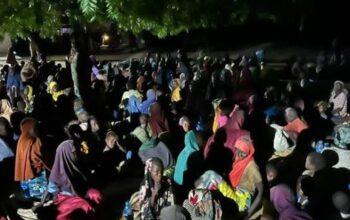
Children’s Day in Nigeria is traditionally marked by school activities, cultural displays, and nationwide events designed to honour the country’s younger generation. However, in 2026, the mood in several communities, particularly in Oyo and Borno States, was markedly different. Instead of celebrations, families gathered in fear, uncertainty, and prayer, waiting for news of loved ones who had been taken during violent attacks on schools.
The crisis stems from two separate incidents that occurred on May 15. In Oyo State, armed attackers stormed Community High School in Ahoro-Esinele, located within the Oriire Local Government Area. The assailants abducted the school principal, multiple teachers, and a significant number of pupils, some of whom were very young children. The attack also resulted in the tragic death of a teacher, further intensifying the sense of national shock and mourning.
At nearly the same time, a second attack unfolded in Borno State’s Askira-Uba Local Government Area, where Mussa Primary School and a nearby junior secondary school were targeted. Reports indicate that more than 40 students and pupils were taken away by armed groups into surrounding forest regions, leaving entire communities devastated and searching for answers.
President Tinubu acknowledged that the victims should have been at home or in school celebrations on this symbolic day, but instead remain trapped in extremely distressing conditions. He also recognised the emotional burden carried by parents who were unable to participate in Children’s Day festivities because their attention is consumed by uncertainty and fear for their children’s safety.
He further assured the nation that the government would not reduce such a serious human tragedy to symbolic gestures or ceremonial statements. According to him, the administration remains committed to sustained and practical action until every abducted individual is safely returned.
Read more on: Trump Ordered US Military to Defend Nigerian Christians from ISIS Attacks
Intensified Security Operations and Government Response
Following widespread concern from citizens, civil society organisations, and education stakeholders, the Federal Government has outlined a series of intensified security measures aimed at addressing both the immediate crisis and the broader issue of school vulnerability across the country.
President Tinubu disclosed that the Inspector-General of Police has been placed in direct charge of a coordinated, intelligence-led operation designed to locate and rescue the abducted pupils and teachers. This operation is being supported by various security formations across multiple states, including Kwara, Oyo, and Borno, where tactical coordination has been strengthened to improve efficiency and response time.
Security agencies are reportedly working with enhanced technological tools, surveillance systems, and intelligence networks to track movements of the perpetrators and identify possible collaborators operating within local communities. Authorities have also increased patrols and monitoring activities in areas considered high risk for similar attacks.
Strengthening the Safe Schools Initiative
Beyond immediate rescue efforts, the Federal Government has also turned its attention to long-term preventive strategies, particularly through the expansion and reinforcement of the Safe Schools initiative.
As part of this renewed framework, schools across vulnerable regions are to undergo detailed vulnerability assessments aimed at identifying security weaknesses. These assessments will help determine which institutions require urgent protective measures, including physical security upgrades and improved monitoring systems.
Additionally, new rapid response communication channels are being developed to ensure that school authorities can quickly reach nearby security agencies in the event of emergencies. The government is also working to introduce community-based early warning systems, encouraging residents to report unusual movements or suspicious activities around schools without delay.
The intention behind these reforms is to reduce response times, improve coordination, and ultimately deter future attacks on educational institutions, which have increasingly become targets in recent years.
Read more on: Trump Rejects Iran’s Demands Over Strait of Hormuz and Sanctions
Care, Rehabilitation, and Reintegration of Survivors
President Tinubu also addressed the critical issue of post-rescue care, emphasising that the government’s responsibility does not end once the victims are freed. He stated that special arrangements are being developed to ensure that rescued pupils and teachers receive comprehensive medical treatment, psychological counselling, and emotional support.
Officials are also preparing long-term reintegration programmes aimed at helping the victims return to normal life and continue their education in safe and supportive environments. These programmes are expected to include trauma recovery services, educational catch-up support, and community reintegration assistance to help ease the transition back into society.
Call for Public Vigilance and Expanded Policing Structure
In addition to government-led actions, the President issued a strong appeal to Nigerians, urging communities to become more vigilant and proactive in reporting suspicious activities. He stressed that insecurity cannot be addressed by government action alone and that local awareness plays a crucial role in preventing attacks, especially in rural and remote areas.
He warned that silence or indifference within communities can inadvertently contribute to security breaches, particularly when unusual movements or threats near schools go unreported.
President Tinubu also used the opportunity to renew calls for the establishment of State Police, describing it as an essential step in addressing Nigeria’s complex security challenges. He explained that decentralised policing would allow security personnel who are familiar with local terrains and communities to respond more effectively to emerging threats.
According to the statement, the Federal Government is encouraging the National Assembly to fast-track legislative discussions on the matter, with the aim of creating a more responsive and locally grounded security framework.
Read more on: CSO Laments as Pupils and Teachers Remain Remain in Captivity After 12 Days
Conclusion: Between Hope and Accountability
While the President’s message carried a tone of empathy, reassurance, and resolve, it also reflected the deep seriousness of Nigeria’s ongoing security challenges, particularly those affecting children and educational institutions.
For many citizens, the statement represents an important acknowledgment of national pain and a promise of action. However, public attention remains firmly fixed on outcomes rather than assurances. The true measure of the government’s response will ultimately be judged by the safe return of the abducted pupils and teachers, and by the effectiveness of reforms designed to prevent such tragedies in the future.
Until then, the country remains in a state of anxious waiting, balancing hope for rescue with demands for lasting security solutions that ensure schools remain safe spaces for learning rather than sites of fear and violence.
Read more on:
- Former Minister Of Power Begins 75-Year Sentence in Kuje
- Middle East on the Edge as Israel Expands Lebanon Offensive and Iran Threatens US Retaliation
- EFCC Arraigns Fake Presidential Aide Over Alleged ₦25.9 Million Crypto License Fraud
- Amaechi Rejects ADC Presidential Primary Outcome, Calls It A “Sham”