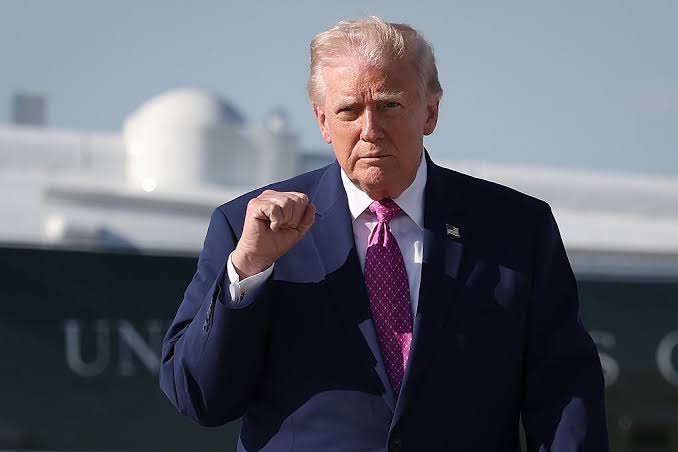
Diplomatic tensions between Washington and Tehran escalated significantly on Wednesday as renewed attempts to shape a potential peace framework once again exposed deep divisions over regional security, maritime control, and economic sanctions. President Donald Trump, speaking from the White House during a Cabinet meeting and later addressing journalists, firmly rejected key elements of a reported draft agreement allegedly circulating in Iranian state media, insisting that the United States would not accept any arrangement that compromises international shipping freedom or loosens sanctions on Tehran under conditions set by Iran.
In his remarks, Trump emphasized that the Strait of Hormuz, one of the world’s most critical energy corridors, must remain open and accessible to all nations without restriction or unilateral control. He stated that any suggestion of Iranian dominance or supervisory authority over the waterway would not be acceptable under a final deal.
“The strait is going to be open to everybody,” Trump said. “We’ll watch over it, but nobody’s going to control it. That’s part of the negotiation that we have. They would like to control it, nobody’s going to control it.”
The statement reflected Washington’s hardened stance at a time when negotiations remain fragile and heavily influenced by ongoing instability in the Middle East, where months of conflict have already disrupted shipping routes and contributed to volatility in global energy markets.
Disputed Draft Deal Sparks Fresh Controversy
The latest round of diplomatic friction was triggered after Iran’s state broadcaster, IRIB, claimed it had accessed a 14 point draft framework outlining possible terms of a US Iran understanding. According to the report, the proposed arrangement was presented as a phased compromise designed to gradually ease tensions while restructuring control over maritime operations in the region.
In the Iranian version of the draft, the United States would eventually lift its maritime restrictions and reduce pressure on shipping channels, while a joint administrative mechanism involving Iran and Oman would oversee transit through the Strait of Hormuz. Iranian officials further suggested that any fees collected from vessels passing through the strait would be categorized as protection or service charges tied to coastal security responsibilities.
The White House, however, moved quickly to dismiss the report, describing it as entirely false and not reflective of any official US negotiating position. Senior administration officials insisted that no agreement had been reached on such terms and rejected the idea that Iran would be granted any form of operational control over international shipping lanes.
The disagreement added another layer of uncertainty to already sensitive negotiations, especially as global markets continue reacting to instability in the region. Oil prices, already strained by months of geopolitical tension, have remained highly volatile, with Brent crude trading close to 94 dollars per barrel as investors assess the risk of further disruption.
Read more on: CSO Laments as Pupils and Teachers Remain Remain in Captivity After 12 Days
Strait of Hormuz Becomes Central Fault Line
At the heart of the dispute lies the Strait of Hormuz, a narrow but strategically vital maritime passage through which a significant portion of the world’s crude oil and liquefied natural gas is transported daily. Its importance has made it one of the most contested geopolitical chokepoints in the global economy.
Iran has consistently argued that its geographic position along the strait gives it legitimate authority to participate in regulating maritime traffic, especially in the name of security and environmental oversight. Officials in Tehran have proposed systems of regulated passage, including structured fees that they describe as administrative charges for protection and monitoring services.
The United States and its allies have rejected this interpretation, maintaining that the strait must remain an international waterway governed by established maritime law, without any single state exercising controlling authority or imposing unilateral toll systems.
Trump reinforced this position in unusually forceful terms during his remarks, insisting that no regional actor would be allowed to dictate terms of passage. He further suggested that maritime freedom would be enforced under international cooperation frameworks involving multiple partners rather than any Iran led structure.
Although his language reflected the intensity of the dispute, it also underscored the broader strategic concern in Washington that any concession on maritime control could reshape global shipping norms in ways that extend far beyond the current conflict.
Read more on: Former Minister Of Power Begins 75-Year Sentence in Kuje
Sanctions Relief and Nuclear Program Still Major Sticking Points
Beyond maritime disputes, economic sanctions and Iran’s nuclear ambitions remain equally unresolved and deeply contentious aspects of the negotiations.
According to diplomatic sources involved in regional mediation efforts, there had been tentative discussions suggesting Iran might consider scaling back or transferring its stockpile of highly enriched uranium in exchange for significant sanctions relief, including access to frozen foreign assets and broader financial reintegration into the global system.
However, President Trump firmly rejected the idea that sanctions relief would be used as an immediate bargaining tool. In a direct interview with PBS News, he dismissed the notion that Iran would receive economic concessions in exchange for partial nuclear compliance, reiterating that any agreement must meet strict conditions before sanctions could even be considered for adjustment.
His remarks effectively closed the door on a phased relief model similar to previous agreements, signaling instead a preference for more comprehensive compliance from Tehran before any meaningful economic easing is introduced.
This position further complicates negotiations, as Iranian officials continue to insist that sanctions relief is a central requirement for any lasting agreement. Tehran argues that economic pressure has severely impacted its domestic stability and that any durable peace framework must include substantial financial normalization.
Read more on: Middle East on the Edge as Israel Expands Lebanon Offensive and Iran Threatens US Retaliation
Behind the Scenes Diplomacy Continues Despite Public Disputes
Despite the sharp public exchange of statements, diplomatic engagement has not completely broken down. A senior US administration official confirmed that indirect talks remain ongoing, with mediators from regional states continuing to facilitate communication between both sides.
Reports suggest that both Washington and Tehran have tentatively agreed in principle on some broad elements of a possible framework, including the idea of extending the current ceasefire period and maintaining open communication channels to prevent further escalation. However, these preliminary understandings remain fragile and subject to major unresolved disputes.
Among the most significant obstacles are Iran’s demands for the release of frozen financial assets, compensation for war related damages, and recognition of its role in regional security arrangements. The United States, meanwhile, continues to insist on strict nuclear limitations, verifiable enforcement mechanisms, and unrestricted maritime access.
As both sides hold firmly to opposing interpretations of what a final agreement should look like, the possibility of a breakthrough remains uncertain.
For now, negotiations appear to be moving in parallel tracks, with public rhetoric growing sharper even as quiet diplomatic efforts continue behind closed doors. Trump, meanwhile, has maintained confidence in Washington’s negotiating position, suggesting in a recent social media post that time remains in the United States’ favor as discussions proceed without a final resolution in sight.
Read more on:
- EFCC Arraigns Fake Presidential Aide Over Alleged ₦25.9 Million Crypto License Fraud
- Amaechi Rejects ADC Presidential Primary Outcome, Calls It A “Sham”
- Tinubu Reassures Nigerians on Security, Urges Unity and Renewed Hope for National Progress
- FG and World Bank Cancel $717.7 Million Power Sector Loan as Reform Programme Ends Early