Stamford Bridge was expected to deliver another night of drama, intensity, and attacking football under the lights, but instead it ended in frustration for the home supporters as Manchester United left West London with a disciplined and valuable 1–0 victory over Chelsea in a match that will be remembered more for its tactical discipline than its attacking flair.
The result carries significant weight in the Premier League table, especially with the race for Champions League qualification tightening as the season nears its final stretch. For Manchester United, the win strengthens their position inside the top three and reinforces the sense that they are building something steady under Michael Carrick’s leadership. For Chelsea, however, it is another painful setback in what is rapidly becoming a worrying run of form, with their inability to score goals now a glaring issue that refuses to go away.
Despite the narrow scoreline, the contest itself was far from simple. It unfolded as a tense, strategic battle between two managers who approached the game with caution, structure, and a clear emphasis on control. What followed was a match of fine margins, missed chances, and decisive moments, with United ultimately proving more efficient when it mattered most.
First Half Defined by Control and a Crucial Breakthrough
The opening stages of the match reflected the cautious mindset of both sides. Chelsea, playing at home, tried to assert early dominance through possession and territorial control. Manchester United, meanwhile, showed no urgency to press aggressively, instead settling into a compact shape designed to absorb pressure and strike on the counterattack.
Chelsea’s attacking play initially showed promise. Cole Palmer drifted between the lines with intelligence, linking midfield and attack, while Estevao Willian offered directness and unpredictability on the flanks. Their movement caused occasional problems for United’s defensive structure, but the final pass often lacked precision.
As the half progressed, Chelsea’s control of possession increased, and they began to pin United deeper into their half. However, despite their dominance in the ball, they struggled to translate that into clear scoring opportunities. Most of their attempts came from distance or from wide positions that did not seriously trouble Andre Onana in goal.
Manchester United, on the other hand, remained patient and waited for their moment. That moment arrived just before the break, in the 44th minute, and it changed the tone of the match entirely.
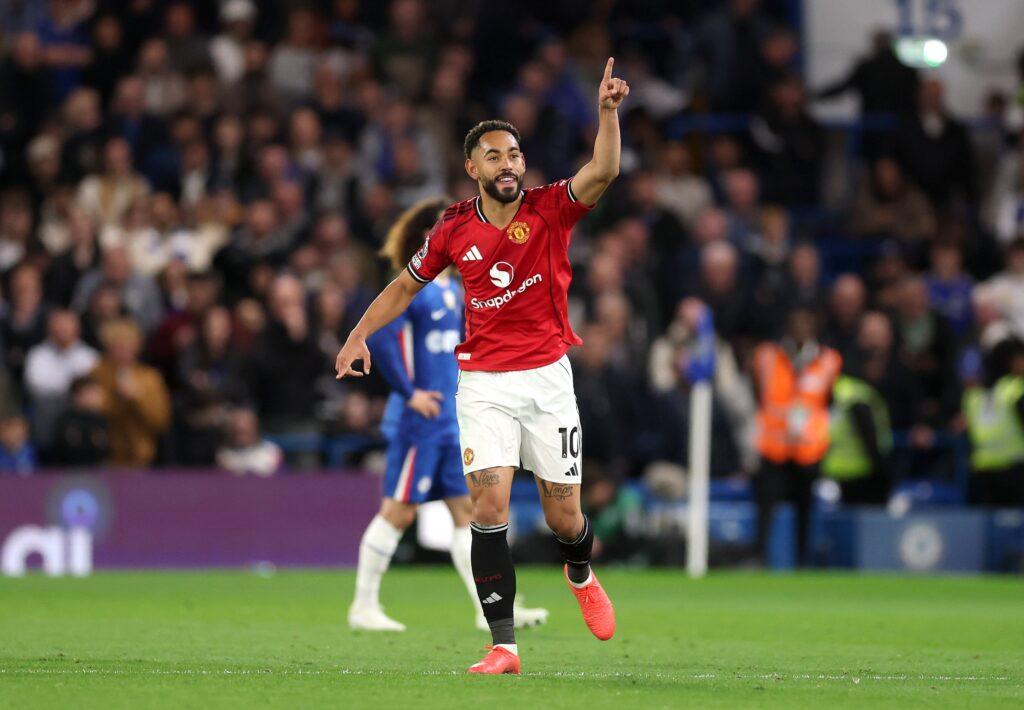
A quick transition started deep in United’s half, catching Chelsea slightly out of shape after a period of attacking pressure. The ball moved forward with speed and purpose, cutting through Chelsea’s midfield lines. Matheus Cunha, who had been quiet for much of the half, found space just inside the penalty area. With minimal hesitation, he struck the ball cleanly and with precision, sending it past Robert Sanchez, who had little time to react.
It was a goal that perfectly reflected Manchester United’s approach to the game. They had not dominated possession, nor had they created wave after wave of attacks, but they had remained structured, alert, and ready to punish any lapse in concentration. Going into halftime with a 1–0 lead, they had executed their plan with efficiency, leaving Chelsea with a mountain to climb in the second half.
Read more on: Tottenham’s Relegation Worries Continues After Brighton Draw
Second Half Pressure, Frustration, and Missed Opportunities
The restart saw a visibly more urgent Chelsea side. Liam Rosenior’s team came out with renewed energy, pushing higher up the pitch and increasing the tempo of their passing. The intention was clear. They wanted an early equaliser to shift momentum back in their favour.
For long stretches of the second half, Chelsea camped inside Manchester United’s defensive third. The pressure became constant, with wave after wave of attacks forcing United to defend deeper and deeper. The crowd at Stamford Bridge responded to the increased intensity, sensing that an equaliser was within reach.
Yet despite their dominance in territory and possession, Chelsea continued to struggle in breaking down United’s defensive structure. Michael Carrick’s side were organised, disciplined, and extremely difficult to play through. Every passing lane into dangerous areas was contested, and Chelsea were forced into increasingly speculative attempts.
The frustration grew as the minutes passed, and it was compounded by a series of moments that came agonisingly close to changing the match.
One of the most significant turning points of the second half came in the 67th minute when Chelsea struck the woodwork. A deflected effort from inside the box wrong-footed the goalkeeper and clipped the upright, leaving Stamford Bridge holding its breath. It was the closest Chelsea came to scoring, and it summed up their night perfectly, so near yet still out of reach.
As the match entered its final stages, the pressure intensified further. Chelsea pushed bodies forward in search of an equaliser, but that aggression left them vulnerable at the back. Manchester United began to find more space on the counterattack, and Carrick used his bench intelligently to manage the closing moments of the game.
Mason Mount was introduced to a mixed reception from the Chelsea supporters, a reminder of his controversial departure and the emotional undercurrent that still surrounds his career. Alongside him, Amad Diallo brought energy and pace to United’s counterattacking threat, helping relieve pressure and stretch Chelsea’s defensive line.
Despite Chelsea’s relentless push, they were denied once again late in the game when another effort struck the frame of the goal. It was the second time in the match that the woodwork had come to Manchester United’s rescue, and by that point, frustration had fully taken over the home side’s performance.
Read more on: FC Barcelona Line Up Two Strikers Target to Replace Robert Lewandowski
Tactical Discipline Versus Attacking Struggles
From a tactical perspective, the match highlighted two very different realities for both clubs.
Manchester United’s approach was built on structure, patience, and efficiency. They did not dominate the game in terms of possession or chances created, but they controlled key moments. Their defensive organisation, particularly in the second half, was impressive. Noussair Mazraoui stood out with a commanding performance, consistently reading danger and clearing lines under pressure. United’s backline absorbed Chelsea’s attacking waves without losing shape, forcing their opponents into low-percentage attempts.
Carrick’s decision-making from the bench also reflected maturity. Instead of chasing additional goals, United focused on game management. They slowed the tempo when necessary, maintained compact defensive lines, and ensured Chelsea were never given easy access into central attacking areas.
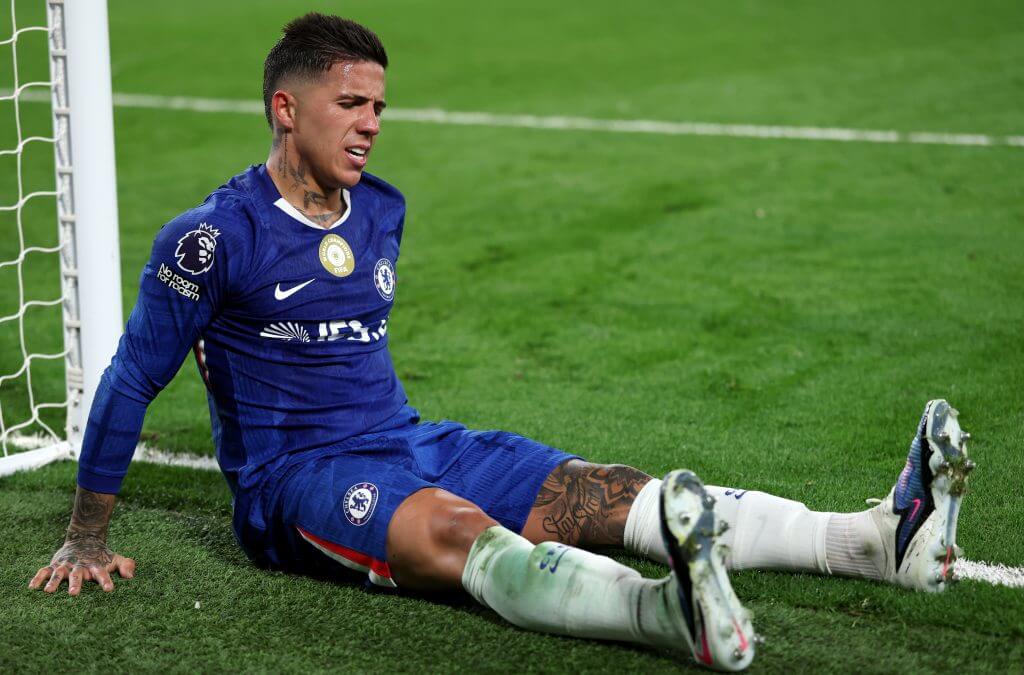
Chelsea, in contrast, are now facing a growing attacking crisis. This match marked their fourth consecutive league game without scoring, a statistic that is becoming increasingly alarming. Despite creating moments of pressure and generating a respectable number of shots, their lack of clinical finishing is proving costly.
Liam Delap, leading the line in the absence of Joao Pedro, worked hard but struggled to make a decisive impact. Chelsea’s attacking play often broke down in the final third, where decision-making and execution fell short. The absence of a consistent goal threat is now placing significant pressure on Rosenior’s tactical approach and squad selection.
Read more on: Former Arsenal and Juventus Goalkeeper Dies in Tragic Accident
Match Statistics and Overall Picture
The final statistics reflected Chelsea’s dominance in possession but also highlighted their inefficiency in front of goal. They controlled 58 percent of the ball compared to Manchester United’s 42 percent, and registered more shots overall. However, only a small fraction of those attempts tested Onana seriously.
Manchester United, despite fewer attempts, were more precise and more effective. Their three shots on target included the decisive goal from Cunha, which ultimately separated the two sides.
The match also saw a fairly physical contest, with both teams picking up several bookings as frustration grew, particularly on Chelsea’s side as the game slipped away from them.
What Comes Next for Both Clubs
The result leaves Chelsea in a difficult position. Sitting in sixth place, they are now drifting further away from the Champions League qualification spots. With only a handful of matches remaining, their inability to score goals is becoming the defining issue of their season. Rosenior now faces increasing pressure to find solutions quickly, as patience among supporters begins to wear thin.
Manchester United, meanwhile, continue to build momentum at a crucial stage of the season. Moving firmly into third place, they are now in a strong position to secure Champions League football for next season. More importantly, their performances suggest a team that is becoming increasingly difficult to break down and highly efficient in decisive moments.
As the final whistle blew at Stamford Bridge, the contrast between the two sides was clear. One walked away with confidence and control over their European destiny, while the other was left searching for answers to problems that are becoming harder to ignore.
Read more on:
- Barcelona File Second UEFA Complaint Over Champions League Officiating
- Arsenal Poised to offload Kai Havertz and Gabriel Jesus to finance €120m
- First-ever World Cup halftime show is confirmed by FIFA as global stage is eyed by Nigeria
- Bayern Edge Real Madrid in All Time Classic to Seal Semi Final Place
- Arsenal Grind Out Sporting Draw to Reach Champions League Semi-Finals
- Real Madrid Mourns Santamaría as Bayern Clash Sets Stage for Emotional Comeback Bid