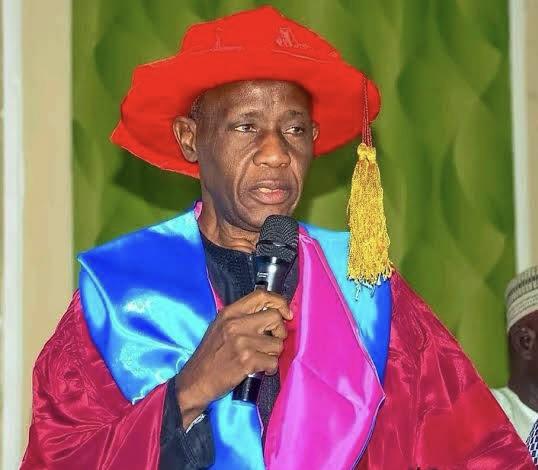
Nigeria’s sporting community has been thrown into mourning following the death of Alhaji Ibrahim Galadima, a former Chairman of the Nigeria Football Association, now known as the Nigeria Football Federation. Galadima, one of the most respected figures in the history of Nigerian sports administration, passed away on Saturday morning at a hospital in Kano metropolis after battling a prolonged illness.
His passing was confirmed by close family members as well as respected figures within the Nigerian football establishment, including his younger brother, Abba Galadima, and former NFA Secretary General Sani Ahmed Toro. Both described the news as a deeply painful loss not only to the family but to the entire nation, particularly those who followed or participated in Nigerian football governance over the last several decades.
At the time of his death, Ibrahim Galadima was 74 years old. His passing marks the end of a long and influential career in sports administration, public service, and community leadership, during which he built a reputation that set him apart from many of his contemporaries.
A respected administrator who shaped an important era in Nigerian football
Ibrahim Galadima’s time as head of Nigerian football between 2002 and 2006 is widely remembered as a defining period in the evolution of the sport’s administration in the country. He led the then Nigeria Football Association through a critical phase of restructuring, a time when discussions around governance, transparency, and institutional identity were at the forefront of national sports conversations.
One of the most significant developments during his leadership was the transition process that eventually saw the NFA evolve into the Nigeria Football Federation. Although the change was not solely his personal achievement, his administration played a central role in laying the groundwork for reforms that helped modernize the structure of football governance in Nigeria.
Those who worked closely with him often described him as calm, firm, and deeply committed to order in a system that was frequently affected by administrative instability. His leadership style was not loud or dramatic, but rather methodical, and focused on institutional stability and long term development.
For many observers of Nigerian football history, Galadima’s tenure stands out not necessarily for controversy or conflict, but for relative steadiness in a period when sports administration was often under intense public scrutiny.
Read more on: Bauchi PDP-APC Realignment Talks Collapse in Deadlock
A foundational figure in Kano football development
Beyond his national role, Ibrahim Galadima also left a lasting mark at the grassroots and state level, particularly in Kano, where he was deeply involved in sports development long before rising to national prominence.
He is widely acknowledged as one of the key figures in the early formation and development of Kano Pillars Football Club, one of Nigeria’s most prominent domestic teams. When the club was established in 1991, Galadima played an important role in shaping its early structure and direction. His contributions at that stage helped provide a foundation for what would eventually become one of the most supported and competitive clubs in the Nigerian Professional Football League.
In Kano State, he was not viewed simply as a national sports administrator but as someone who remained connected to local football development and community engagement. His involvement with Kano Pillars and other sporting institutions in the state earned him respect among players, coaches, and administrators who saw him as someone who understood football from both the grassroots and institutional perspectives.
Reputation built on integrity and discipline
One of the most frequently mentioned aspects of Ibrahim Galadima’s career is his reputation for integrity. In a sector that has often been associated with allegations of mismanagement and governance challenges, Galadima stood out as an administrator who maintained a clean record throughout his time in office.
Tributes from sports stakeholders and commentators have consistently highlighted that he was never publicly implicated in financial misconduct or corruption investigations during or after his tenure. This distinction has become a central part of how he is remembered within Nigerian sports circles.
Many describe him as a disciplined and principled administrator who believed in accountability and structure. His leadership style emphasized responsibility and transparency, qualities that earned him respect not only in Nigeria but also among some of his peers within African football administration.
Even those who may have disagreed with his policies or administrative decisions often acknowledged his personal integrity and commitment to ethical leadership.
Read more on: Tensions Rise as Iran Shuts Strait of Hormuz Again
Circumstances surrounding his passing
According to information provided by family sources and a statement from the Kano Pillars Media Directorate, Ibrahim Galadima had been battling an undisclosed illness for some time before his death. Though details of his medical condition were not made public, it was confirmed that he had been receiving treatment in Kano prior to his passing.
He died in the early hours of Saturday morning while surrounded by members of his immediate family. The atmosphere at his residence in Kano was described as somber as news of his passing spread through the sports community and beyond.
Arrangements for his burial were quickly announced in line with Islamic tradition. The funeral prayer, known as Janazah, is scheduled to take place on Sunday, April 19, 2026, at the Fagge Juma’at Mosque, also known locally as Masallacin Waje, in Kano. The prayer is expected to attract family members, religious leaders, sports administrators, government officials, and members of the public who wish to pay their final respects.
Tributes from the football community and beyond
Following the announcement of his death, tributes began pouring in from across Nigeria’s sporting ecosystem. One of the earliest reactions came from Ibrahim Gusau, the current president of the Nigeria Football Federation, who described Galadima as a mentor and a symbol of dignity in sports administration.
According to Gusau, Galadima represented a generation of leaders who placed service above personal gain and who worked tirelessly to ensure that Nigerian football maintained structure and credibility during challenging periods.
The Sports Writers Association of Nigeria also issued a formal statement mourning his passing. In their tribute, they described him as a disciplined administrator whose wisdom and experience helped guide sports journalism and governance discussions during his time in office. They also noted that his contributions would continue to be referenced by future generations of sports administrators and journalists.
Across social media and sports platforms, former players, referees, and administrators shared personal memories of their interactions with him, many describing him as approachable, calm under pressure, and deeply knowledgeable about the game.
Read more on: Security forces uncover Lagos baby factory, rescue 18 women
Contributions beyond football administration
Although Ibrahim Galadima is most widely remembered for his role in football administration, his influence extended far beyond the sport itself. His career in public service and community leadership reflected a broader commitment to governance and development.
He previously served as Commissioner of Works in Kano State, a role in which he contributed to infrastructure development and public projects within the state. His administrative experience in government helped shape his approach to sports management later in life, particularly in terms of structure and planning.
Between 1981 and 1983, he also chaired the Kano State Sports Commission, where he was involved in promoting sports development at the state level and supporting local athletes and sporting institutions.
On the national stage, he held the position of First Vice President of the Nigeria Olympic Committee between 1985 and 1987. In that capacity, he contributed to Nigeria’s engagement with international sporting bodies and supported efforts to improve the country’s participation in Olympic events.
Beyond official roles, he also held traditional leadership responsibilities as the Galadiman Fagge, a title that placed him within the traditional structure of Kano society. In that capacity, he was involved in community affairs, conflict resolution, and local development initiatives. His influence in this role further strengthened his connection to grassroots communities.
Read more on: Iran Reopens Strait of Hormuz to Commercial Vessels
A difficult year for Nigerian football
His passing adds to what has already been a difficult year for Nigerian football and sports in general. The year 2026 has seen the loss of several respected figures within the football community, including former national team coach Adegboye Onigbinde and former referee leadership figure Sani Zubairu.
For many observers, these successive losses represent the gradual fading of a generation of administrators, coaches, and officials who played foundational roles in shaping Nigerian football as it is known today.
The death of Ibrahim Galadima is particularly significant because of his reputation for integrity and his long-standing involvement in multiple layers of sports governance. His absence is expected to be felt not only in administrative circles but also in conversations about leadership standards in Nigerian sports.
Read more on: Two UTME Candidates Escape Kidnappers in Benue, Police Report
A legacy that will be remembered
As Nigeria reflects on the life and contributions of Ibrahim Galadima, the consensus among many within the sports community is that he leaves behind a legacy defined by discipline, service, and integrity. While no administration is without its challenges, his name is consistently associated with stability and professionalism.
For Kano State, he remains a key figure in the development of local football and public service. For Nigerian football at large, he is remembered as one of the administrators who helped guide the sport through a critical period of reform and transition.
His passing marks the end of an era, but his influence will likely continue to be referenced in discussions about sports governance, institutional reform, and ethical leadership in Nigerian football for years to come.
Read more on:
- President Tinubu Approves 2026 Appropriation, Pushes 2025 Budget Deadline
- Ex-Humanitarian Minister, Others Declared Wanted
- 10-Day Israel–Lebanon Ceasefire Begins
- Trump Makes Major Announcement on Nuclear Agreement With Iran
- Tinubu: I Won’t Be Scared by Opposition or Shirk Nigeria’s Challenges
- Gunmen Abduct UTME Candidates on Benue Highway