Nigeria’s political atmosphere is once again witnessing a wave of strategic realignments and behind-the-scenes consultations as parties begin early preparations for the 2027 general elections. At the center of recent developments is the African Democratic Congress (ADC), which is steadily emerging as a key platform for opposition consolidation and renewed political bargaining across the country.
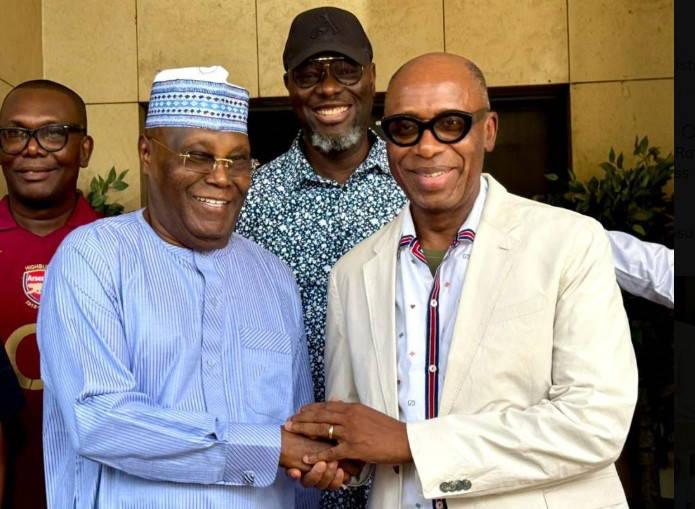
In a significant post-primary political move, the newly confirmed presidential candidate of the ADC, former Vice President Atiku Abubakar, visited former Rivers State Governor and ex-Minister of Transportation, Rt. Hon. Chibuike Rotimi Amaechi, at his Abuja residence. The visit, which drew attention across political circles and social media platforms, is widely being interpreted as part of broader efforts to stabilize internal relations within the party following a fiercely contested presidential primary.
Post-Primary Reconciliation Takes Center Stage
The ADC presidential primary, which produced Atiku Abubakar as the party’s flag bearer, was one of the most closely watched internal contests in recent political memory. The race featured three prominent figures within the party structure, Atiku Abubakar, Rotimi Amaechi, and well-known businessman Mohammed Hayatu-Deen, each bringing considerable political influence and support bases into the contest.
At the conclusion of the voting process, Atiku emerged victorious with a decisive margin, securing the party’s ticket ahead of his challengers. While his win was celebrated by his supporters, it also triggered immediate reactions from the losing aspirants. Both Amaechi and Hayatu-Deen reportedly raised concerns regarding the transparency and fairness of the process, with allegations pointing to internal irregularities and structural advantages that may have influenced the outcome.
These grievances, though not unexpected in high-stakes party primaries, created early signs of tension within the ADC, prompting concerns among party stakeholders about unity and cohesion ahead of the national election cycle.
In response, Atiku Abubakar reportedly committed to a deliberate reconciliation process aimed at engaging all aggrieved aspirants directly. His visit to Amaechi’s residence in Abuja is seen as the first major step in fulfilling that promise and signaling a willingness to prioritize unity over division.
Read more on: Tinubu’s Daughter Rejects Lagos APC Primaries Result
A High-Level Delegation and Closed-Door Engagement
The meeting was not a private engagement between two individuals alone. Atiku was accompanied by a number of influential political actors within the opposition coalition. Among them were former Sokoto State Governor and serving Senator Aminu Tambuwal, as well as the National Chairman of the ADC, Chief Ralph Nwosu, both of whom are considered key stakeholders in the ongoing restructuring of the party.
Although the meeting was held behind closed doors and no official communiqué has been released at the time of reporting, political insiders suggest that discussions centered on several critical issues affecting the party’s internal stability. These include the need to manage post-primary grievances, reinforce party discipline, and establish a unified strategy capable of positioning the ADC as a formidable force against the ruling All Progressives Congress in 2027.
Despite the absence of formal details, visual evidence from the visit, including photographs and short video clips shared online, showed an atmosphere that appeared calm, respectful, and politically cordial. Observers have pointed to this as an encouraging sign that both leaders are open to continued dialogue despite the competitive nature of the recent primary contest.
Read more on: “You Are Not Forgotten” Tinubu Reassures Families of Abducted Pupils
A Pattern of Political Engagement and Strategic Alignment
The recent visit is not an isolated event but rather part of a series of interactions between Atiku Abubakar and Rotimi Amaechi in recent months. Political observers have noted a gradual warming of relations between the two figures, suggesting the possibility of a strategic alignment within the broader opposition framework.
Earlier in April, Atiku paid a similar visit to Amaechi during an earlier phase of political consultations within the opposition bloc. During that visit, he publicly described Amaechi as a statesman whose contributions to governance and national development remain significant and worthy of recognition. That statement was widely interpreted as an attempt to build rapport and establish mutual respect between both leaders.
In addition, just a day before the most recent Abuja meeting, Atiku issued a public birthday message to Amaechi. In that message, he referred to the former governor as a brother and fellow patriot, a tone that further reinforced perceptions of growing political closeness and mutual acknowledgment between both men.
Taken together, these developments suggest a calculated but steady effort to bridge internal divides, reduce friction, and build a more cohesive political front within the ADC.
Political Calculations and the Question of Unity
The timing of Atiku’s visit has also sparked wider political analysis, with commentators suggesting that the move is as much about optics as it is about reconciliation. In the highly competitive landscape leading up to 2027, unity within opposition parties is often viewed as a critical factor in determining electoral viability.
By personally engaging Amaechi shortly after securing the party’s presidential ticket, Atiku appears to be projecting an image of inclusiveness, magnanimity, and leadership maturity. This approach is often seen as essential in managing post-primary politics in Nigeria, where internal disputes frequently weaken party structures ahead of general elections.
However, the effectiveness of such reconciliation efforts remains to be seen. While public gestures and cordial meetings signal goodwill, deeper political agreements and sustained trust-building will ultimately determine whether these relationships translate into lasting cooperation.
Read more on: Trump Ordered US Military to Defend Nigerian Christians from ISIS Attacks
What Lies Ahead for the ADC and the Opposition Bloc
Attention is now turning to how the ADC leadership will extend similar reconciliation efforts to other key stakeholders, particularly Mohammed Hayatu-Deen, who also contested the presidential ticket and reportedly harbors reservations about the outcome of the primary process.
The ability of the party to successfully integrate all factions will likely play a major role in shaping its credibility and competitiveness in the 2027 elections. With the ruling All Progressives Congress closely monitoring developments within the opposition, any sign of fragmentation could significantly affect the ADC’s positioning as a viable alternative.
For now, the visit by Atiku Abubakar to Rotimi Amaechi stands as a notable moment in the evolving political story of the ADC. Whether it becomes a turning point for lasting unity or simply another episode in Nigeria’s complex political negotiation cycle will depend on what follows behind the scenes in the weeks and months ahead.
Read more on: