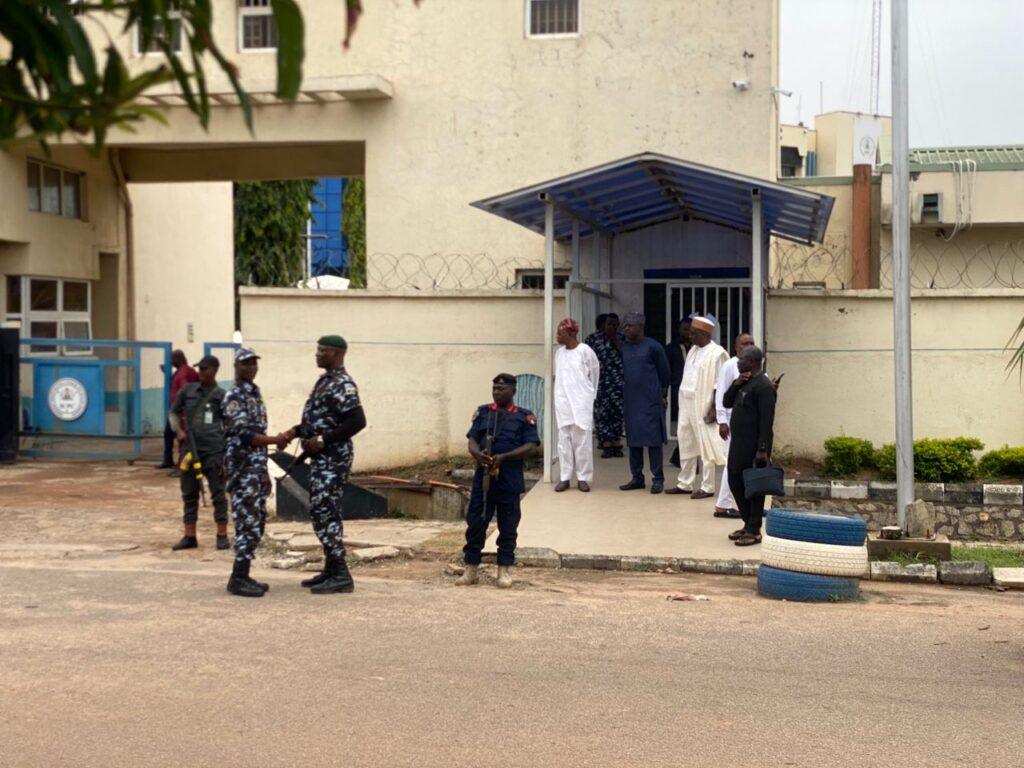
Nigeria’s political space has been thrown into fresh turmoil following the continued detention of former Kaduna State Governor, Mallam Nasir Ahmad El-Rufai, with the African Democratic Congress (ADC) forcefully condemning what it describes as targeted political persecution. The situation, which began as a corruption-related legal matter, has rapidly evolved into a broader national debate over human rights, due process, and the alleged use of state institutions for political purposes.
The ADC’s intervention has added a new layer of intensity to the already heated discourse. In a strongly worded statement, the party did not hold back in its criticism of the current administration, insisting that El-Rufai’s ordeal is no longer about accountability but about political suppression. According to the party, the former Federal Capital Territory Minister is effectively being treated as a political detainee rather than a suspect undergoing lawful investigation.
At the heart of the controversy are claims from El-Rufai’s family members and close political allies, who have raised serious concerns about his welfare while in the custody of the Independent Corrupt Practices and Other Related Offences Commission (ICPC). They allege that access to him has been unnecessarily restricted and that his fundamental rights are being undermined under the guise of procedural enforcement.
The ADC echoed these concerns, warning that the situation could deteriorate further if urgent steps are not taken. The party went as far as linking the developments to the presidency, accusing the federal government of weaponizing anti-corruption agencies to settle political scores. In its view, the pattern of events surrounding El-Rufai’s detention suggests a deliberate attempt to weaken or silence perceived political opponents.
Raising the stakes, the ADC issued a clear warning that the federal authorities, including the ICPC and the Economic and Financial Crimes Commission (EFCC), would be held accountable for any adverse outcome affecting the former governor. The party also hinted at escalating the matter beyond Nigeria’s borders, stating that it may involve international human rights organizations such as Amnesty International if the situation does not improve. This threat signals an effort to draw global attention to what it considers a violation of fundamental freedoms.
Read more on: Hamzat Emerges Lagos APC Governorship Candidate After Massive Vote Count
Public attention intensified significantly after a video surfaced online featuring one of El-Rufai’s wives speaking in Hausa. In the emotional clip, she recounted an incident in which she was reportedly denied entry into the ICPC facility in Abuja while attempting to deliver food to her husband in the evening. The video quickly gained traction, fueling public sympathy and further amplifying criticism of the authorities.
Additional allegations came from El-Rufai’s son, Mohammed Bello, who accused officials of subjecting his father to psychological pressure and disregarding existing court directives. He claimed that efforts to allow the former governor access to his personal physician had been obstructed, even after medical concerns had been raised. According to Bello, such actions go beyond administrative procedure and amount to deliberate harassment.
Supporters of El-Rufai have also weighed in, alleging irregularities in how his detention is being handled. Some loyalists, along with Kaduna Central Senator Lawal Usman, claimed that the former governor had been moved between facilities in a manner that contradicts court orders requiring that he remain under ICPC supervision. These claims, though yet to be independently verified, have contributed to the growing perception among his supporters that due process is being compromised.
In response to the mounting accusations, the ICPC has firmly denied any wrongdoing. The commission has maintained that all its actions are guided strictly by established protocols and legal frameworks. According to its spokesperson, the restrictions on visitation are standard practice and apply uniformly to all detainees, regardless of their status or political affiliation.
The commission clarified that its visitation policy allows access only within specified hours, typically between morning and early evening. It noted that the incident involving El-Rufai’s wife occurred outside these approved hours, describing the resulting public reaction as an attempt to sensationalize routine procedures. The ICPC insisted that there was no deliberate effort to isolate or mistreat the former governor.
Read more on: Police Officer Arrested After Threatening To Kill Anyone Who Films Him
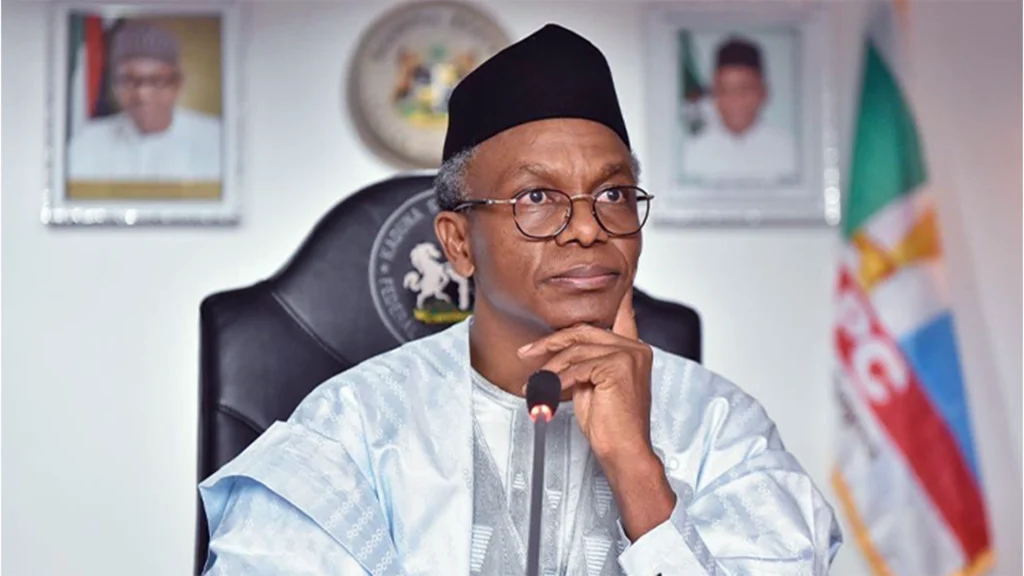
Addressing concerns about his health, the commission stated that El-Rufai is in stable condition and has not been denied medical care. It emphasized that he has access to both in-house medical services and external professionals when necessary. To support this claim, the ICPC pointed to a recent court decision permitting him to undergo supervised visits to private medical specialists in Abuja, including consultations for eye and dental care.
The agency further stressed that it is simply carrying out its statutory duties in relation to an ongoing investigation. The case against El-Rufai stems from a 2024 indictment by the Kaduna State House of Assembly, which alleged financial misconduct involving substantial public funds during his tenure as governor. Following his arraignment earlier this year on multiple charges, he entered a plea of not guilty, setting the stage for what is expected to be a prolonged legal battle.
Since his initial detention in February 2026, El-Rufai’s case has moved through various legal phases, including a transfer from EFCC custody to the ICPC. In April, he was formally arraigned before a Kaduna High Court on an amended set of charges. By early May, his legal team had filed a motion seeking a review of his bail conditions, which reportedly include a substantial financial requirement. While the court granted limited concessions, such as supervised medical visits, the broader conditions remain in place.
What began as a corruption investigation has now taken on a distinctly political dimension, with opposition parties rallying around El-Rufai and questioning the neutrality of the institutions involved. The federal government, on its part, has continued to emphasize the importance of allowing due process to run its course without interference.
As tensions continue to rise, the situation reflects deeper divisions within Nigeria’s political environment. For some observers, the case represents a test of the country’s commitment to the rule of law and the independence of its anti-corruption agencies. For others, it raises troubling questions about the potential for political influence in legal proceedings involving high-profile figures.
With both sides standing firm and public opinion increasingly polarized, the El-Rufai case is likely to remain a focal point in national discourse. Its outcome could have far-reaching implications not only for the individuals directly involved but also for the broader perception of justice, governance, and political accountability in Nigeria as the country moves further into 2026.
Read more on: