The fragile calm that has held parts of the Middle East together in recent weeks is now facing renewed uncertainty, as Iran issues a strong and unambiguous warning to the United States over the future of the ongoing ceasefire. What was once seen as a temporary pause in a rapidly escalating conflict is increasingly being viewed as a tense standoff, with both sides preparing for the possibility of renewed confrontation.
Iranian officials have made it clear that any decision by the United States to resume military operations would not go unanswered. Instead, they insist that such a move would trigger a far more intense and damaging response than what has already been witnessed. The warning reflects both confidence in Iran’s military readiness and deep frustration over stalled diplomatic efforts.
A Firm Message from Iranian Leadership
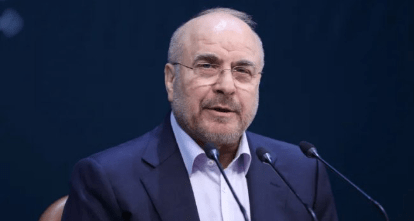
Speaking after a series of strategic meetings in Tehran, Iran’s chief negotiator, Mohammad Bagher Ghalibaf, delivered a pointed message directed at United States President Donald Trump. His remarks suggested that Iran has used the ceasefire period not as a moment of weakness, but as an opportunity to rebuild, reorganize, and strengthen its defense capabilities.
According to Ghalibaf, Iran’s armed forces are now in a far stronger position than they were at the beginning of the conflict. He stressed that if hostilities were to resume, the consequences for the United States would be significantly more severe.
His statement reflects a broader sentiment within Iran’s leadership, where there is growing skepticism about the intentions of Washington. While the ceasefire has technically paused direct military exchanges since early April, it has done little to ease underlying tensions or rebuild trust between the two sides.
Diplomatic communication remains limited and strained, with both nations holding firm to their positions and showing little willingness to compromise on key issues.
Read more on: Oyo School Abduction: Terrorists Open Dialogue, List Conditions
How the Conflict Escalated
The roots of the current crisis can be traced back to late February 2026, when coordinated military strikes by the United States and Israel targeted critical Iranian infrastructure. The attacks marked a dramatic escalation in an already tense relationship and triggered an immediate response from Tehran.
Iran retaliated with a series of missile launches and drone operations aimed at strategic targets across the region. The exchange quickly expanded beyond isolated incidents, evolving into a broader confrontation that disrupted regional stability and drew global attention.
One of the most significant consequences of the escalation was its impact on global trade and energy supply. Iran moved to restrict access through the Strait of Hormuz, one of the most important maritime routes in the world, through which a large portion of global oil shipments pass. In response, the United States increased its naval presence and imposed countermeasures aimed at limiting Iran’s ability to control the waterway.
The resulting tension sent shockwaves through international markets, with oil prices fluctuating sharply and concerns growing about the potential for a prolonged conflict.
Amid mounting international pressure, both sides agreed to a ceasefire on April 8, 2026. While the agreement succeeded in halting active combat, it was always understood to be a temporary measure rather than a long-term solution.
Limited Progress in Peace Talks
Since the ceasefire took effect, efforts to reach a more permanent resolution have struggled to gain momentum. Only one formal round of peace negotiations has taken place, held in Islamabad, Pakistan. The talks lasted for approximately twenty one hours but ended without any significant breakthroughs.
Key disagreements remain unresolved, and communication between the parties has been sporadic. This lack of progress has contributed to growing uncertainty about the durability of the ceasefire.
Recent diplomatic activity suggests that mediators are working urgently to prevent a collapse. Pakistan and Oman have taken on central roles in facilitating dialogue, leveraging their relationships with both sides to keep communication channels open.
Field Marshal Asim Munir, Pakistan’s Army Chief, recently traveled to Tehran for high-level discussions with Iranian officials. During his visit, he met with Foreign Minister Abbas Araghchi and other senior figures in what has been described as a critical effort to stabilize the situation.
These discussions come at a time when rhetoric from both Washington and Tehran has become increasingly sharp, raising concerns that diplomacy may be losing ground to military posturing.
Read more on: NNPC Accuses Dangote of Monopoly Ambitions Over Fuel Market
Core Issues Driving the Standoff
At the heart of the ongoing deadlock are two major issues that continue to divide the parties.
The first concerns the Strait of Hormuz. The United States and its allies insist that the waterway must remain open and accessible to international shipping without interference. Given its importance to global energy supply, any disruption is seen as unacceptable. Washington has made it clear that it will not support any arrangement that allows Iran to exert significant control over the passage.
The second major issue relates to Iran’s nuclear program. The United States is demanding that Iran transfer its stockpile of highly enriched uranium خارج its borders as part of a broader agreement aimed at reducing nuclear risk. Iranian leaders have rejected this demand, arguing that it undermines their sovereignty and goes beyond reasonable negotiation terms.
These disagreements have created a situation in which neither side is willing to make the concessions necessary to move forward, leaving the ceasefire in a state of uncertainty.
Global Implications and Rising Concerns
The possibility of renewed conflict is already having a ripple effect across the global economy. Energy markets remain highly sensitive to developments in the region, and analysts warn that any escalation could lead to a sharp increase in oil prices.
Financial markets are also on edge, with investors closely monitoring the situation for signs of instability. A return to open conflict could trigger significant market disruptions and impact global economic growth.
From a security perspective, the risks extend beyond direct confrontation between the United States and Iran. Military experts have warned that any renewed hostilities could spread across multiple fronts, involving various actors and further destabilizing the region.
Iranian officials have hinted at the possibility of expanding the scope of any future response, suggesting that American interests across the Middle East could become targets if the conflict resumes.
Read more on: Governor Fubara Pledges to Finish Rivers Projects Despite Political Uncertainty
A Critical Moment for Diplomacy
As the ceasefire passes the six week mark, the urgency of finding a lasting solution continues to grow. While the pause in fighting has provided temporary relief, it has not addressed the underlying issues that led to the conflict in the first place.
For now, mediation efforts by Pakistan and Oman remain the primary avenue for de-escalation. Both countries are working to bridge the gap between Washington and Tehran, though progress has been slow and uncertain.
The coming days are likely to be decisive. If diplomatic efforts fail, the region could once again find itself on the brink of a wider conflict with far-reaching consequences.
At present, the ceasefire still holds, but the atmosphere surrounding it is tense and unpredictable. With both sides signaling readiness for escalation while continuing to engage in limited dialogue, the situation remains delicately balanced between peace and renewed confrontation.
Read more on: