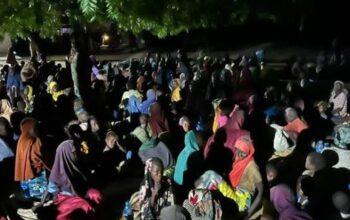
A growing wave of insecurity is quietly reshaping life across parts of Kwara State, particularly in the southern region, where no fewer than thirty traditional rulers have left their ancestral palaces in search of safety. What once seemed unthinkable has now become reality, as monarchs who traditionally serve as symbols of authority and stability have been forced to abandon their domains due to escalating violence.
The development, confirmed by community leaders and security sources as of April 25, 2026, follows a prolonged period marked by kidnappings, targeted attacks, and coordinated raids by armed groups. These incidents have not only placed the lives of traditional rulers at risk but have also disrupted the social and political fabric of the communities they oversee.
For generations, traditional rulers have occupied a unique position within Nigerian society. Beyond their ceremonial roles, they act as custodians of culture, mediators in disputes, and key figures in maintaining local order. Their palaces often function as administrative centers where issues affecting the community are addressed. However, the current security situation has made it increasingly difficult for them to fulfill these responsibilities.
Read more on: Palestinians Hold First Elections Since Gaza War
Many of the affected monarchs are from the Kwara South senatorial district, with a significant concentration in Ifelodun Local Government Area. Faced with persistent threats, they have relocated to relatively safer urban areas such as Ilorin, Offa, Osogbo, and Lagos. While some have been away for only a few months, others have spent close to a year away from their communities, effectively living in exile.
The absence of these traditional leaders has left a noticeable gap in the affected communities. Towns such as Omugo, Afin, Oreke, Oreke Oke-Igbo, Olohuntele, Alabe, Ganmu Ailehri, Ologanmo, and Igbo Agbon are among those most impacted. In these areas, residents say the departure of their rulers has created a sense of uncertainty and vulnerability.
One resident of Omugo, Wale Olasunkanmi, spoke about how life has changed since their traditional leader left. He recalled a time when monarchs lived among their people, actively participating in community life and serving as a source of reassurance during difficult periods. According to him, the situation today is very different. The king now visits only occasionally, usually for important meetings or ceremonies, and leaves almost immediately afterward. This limited presence, he noted, has made residents feel increasingly exposed.
The insecurity in the region did not develop overnight. Instead, it has intensified gradually, with a series of incidents that have eroded confidence in local safety. However, recent events have brought the crisis to a tipping point, particularly in April 2026, when multiple high-profile attacks occurred within a short period.
Read more on: Middle East Crisis: Recent Developments
One of the most alarming incidents took place on April 18, when gunmen stormed the palace of the Baale of Oloruntele in broad daylight. Reports indicate that the attackers carried out the operation in front of the monarch’s family, demonstrating a level of boldness that has further heightened fears across the region.
On the same day, in the early hours of the morning, another group of heavily armed men carried out a similar attack in Olayinka community. Their target was Oba Salman Olatunji Aweda. According to accounts from residents, the attackers arrived at the palace in significant numbers, forced their way inside, and broke down doors to gain access to the monarch. They dragged him from his room and demanded money he had reportedly received earlier from local mining activities. Despite complying, the monarch was taken away along with his brother.
These incidents were preceded by an earlier attack on March 22 in Omugo, where armed men invaded a church and abducted eight worshippers. That event is widely regarded by residents as a turning point, as it marked a shift from isolated incidents to more frequent and organized attacks. Following the church abduction, many people began to reconsider their safety, and some started leaving the area altogether.
One of the most troubling aspects of the current crisis is the scale of ransom demands. Security sources indicate that kidnappers have become increasingly brazen, demanding sums that range from forty million naira to as high as four hundred million naira in cases involving prominent figures such as traditional rulers. These figures are far beyond the reach of most communities, placing immense pressure on families and local networks to secure the release of victims.
Read more on: Lagos Police Arrest Cameroonian Cyber Fraud Kingpin in INTERPOL Raid
In response to the growing threat, the Kwara State Police Command has stepped up its operations. Under the leadership of Commissioner Adekimi Ojo, security forces have launched targeted raids and surveillance missions aimed at dismantling criminal networks operating in the region. On April 20, authorities arrested forty-two individuals suspected of engaging in illegal mining activities in the Olayinka area, following the abduction of Oba Aweda.
Although investigations are still ongoing, there are increasing indications that illegal mining may be linked to the rise in violent crime. Security officials believe that these operations often provide both the funding and the intelligence needed for kidnappers to carry out their activities. In some cases, traditional rulers who oversee lands where mining occurs may become targets due to their perceived access to resources or information.
To address these concerns, security agencies have begun deploying advanced tools such as drones to monitor forested areas that are believed to serve as hideouts for criminal groups. These forests, which stretch across parts of Kwara and into neighboring states such as Niger and Kebbi, present a significant challenge due to their size and terrain. Nonetheless, authorities remain hopeful that sustained efforts will yield results.
While these operations continue, the situation on the ground remains difficult for residents. The absence of traditional rulers has had far-reaching consequences that go beyond governance. In many communities, daily life has been severely disrupted.
Read more on: Police Arrest “One Chance” Robbery Gang, Recover Guns and Stolen Items in Asaba
Several towns have become noticeably quieter, with fewer people in public spaces and reduced economic activity. In some cases, communities are described as nearly deserted, as families relocate to safer areas. Farmers, who form the backbone of the local economy, have abandoned their fields out of fear of being attacked while working. This has raised concerns about food production and the long-term impact on livelihoods.
Education has also been affected. In a number of rural areas, schools have been forced to close as teachers and students leave for urban centers. The disruption to education adds another layer of difficulty for families already dealing with insecurity and displacement.
Local markets, which once served as hubs of commerce and social interaction, are no longer considered safe. Traders are reluctant to set up stalls, and customers are wary of gathering in large numbers. As a result, economic activity has slowed significantly, further compounding the challenges faced by residents.
Amid these difficulties, there is a growing call for more comprehensive security measures. Residents and experts alike argue that the current approach needs to be strengthened to address the scale of the problem. One of the key demands is the establishment of permanent security outposts within affected communities, rather than relying solely on patrols and periodic interventions.
Read more on: Anambra APC Dismiss Alliance Rumours with APGA
There is also a push for greater collaboration between formal security agencies and local vigilante groups. Many believe that individuals who are familiar with the terrain can provide valuable support in identifying and tracking criminal elements. However, for such collaborations to be effective, there must be clear coordination and adequate support.
Another important issue is the protection of traditional rulers themselves. Providing dedicated security for these leaders could encourage them to return to their communities and resume their roles. Their presence, residents say, is crucial for restoring confidence and rebuilding the sense of order that has been disrupted.
As the crisis continues, the image of empty palaces has taken on a powerful symbolic meaning. These structures, once filled with activity and authority, now stand as reminders of the challenges facing the region. They highlight not only the personal risks faced by traditional rulers but also the broader impact of insecurity on community life.
Efforts to address the situation are ongoing, but the path to recovery is likely to be complex. It will require not only immediate security interventions but also long-term strategies aimed at addressing the underlying causes of violence. Until then, many communities in Kwara South remain in a state of uncertainty, waiting for a time when their leaders can safely return and normal life can begin to take shape once again.
For now, the question on the minds of many residents remains deeply unsettling. If those who wear the crown are no longer safe within their own palaces, what hope is there for the ordinary citizen?
Read more on: