DEIR AL-BALAH and RAMALLAH is shaping up to be a defining moment in modern Palestinian political life. For the first time since the outbreak of the devastating conflict in 2023, and for many residents of the Gaza Strip the first opportunity in nearly twenty years, Palestinians have taken part in municipal elections. The day carries both symbolic and practical importance, reflecting a population that is cautiously attempting to move from survival mode toward civic participation and structured governance.
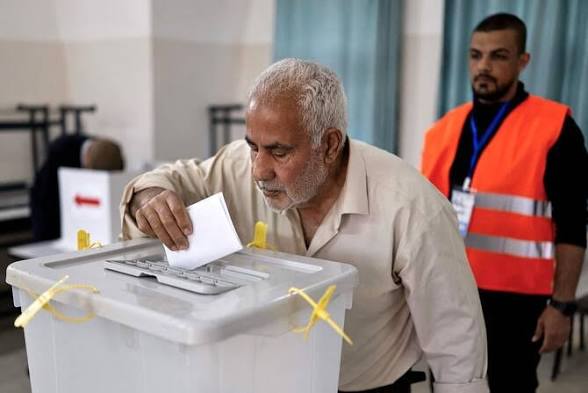
Across parts of Gaza and the occupied West Bank, the familiar sounds of rebuilding continue to echo. Construction equipment, generators, and repair crews remain part of daily life as communities work to recover from widespread destruction. Yet on this day, another sound has joined that background. The quiet movement of voters lining up, the shuffle of ballot papers, and the marking of choices inside makeshift polling stations have introduced a different kind of energy. For many, the sight of ink on their fingers stands as a powerful reminder of agency, identity, and the possibility of political renewal.
The elections are being conducted across 420 local councils in the West Bank and, most notably, in the central Gaza city of Deir al-Balah. This city has become the focal point of what officials describe as a test phase for reintroducing democratic processes into Gaza. Due to the scale of destruction in northern and southern parts of the territory, Deir al-Balah was selected because it retained enough structural integrity to support the organization of voting. While it has not been untouched by conflict, it avoided the most severe ground operations, making it a relatively stable environment for this critical exercise.
The Central Elections Commission has taken on the responsibility of coordinating the process. Their task has not been simple. With many public buildings damaged or completely destroyed, organizers had to find alternative ways to set up polling locations. As a result, voting stations have appeared in places that would not typically host such activities. Tents have been erected in open spaces, private homes have been temporarily converted into polling units, and community buildings have been repurposed to accommodate voters. These arrangements highlight both the logistical challenges and the determination to move forward despite them.
Read more on: Middle East Crisis: Recent Developments
Security has been another important consideration throughout the day. Local police forces, operating under transitional arrangements, have maintained a visible presence around polling stations. Their role has been to ensure order, prevent disruptions, and provide reassurance to voters. Given the recent history of instability, this visible security has been seen as necessary to encourage participation and maintain confidence in the process.
In Gaza, practical constraints have shaped the voting schedule. Due to ongoing electricity shortages, polling stations were set to close earlier than those in the West Bank. Officials determined that ballots would need to be counted during daylight hours to avoid complications that could arise from power outages. This adjustment reflects the broader reality of life in Gaza, where infrastructure challenges continue to influence even basic administrative activities.
At the heart of this election lies a broader political objective. Leaders within the Palestinian Authority have emphasized that the vote is not only about local governance but also about reconnecting Gaza and the West Bank within a unified political framework. By conducting elections simultaneously across both territories under the supervision of the Ramallah based Central Elections Commission, there is a clear attempt to signal a return to coordinated governance.
A spokesperson for the commission, Fareed Taamallah, explained that the central idea behind the process is to reestablish a single political system that includes both regions. This goal carries significant weight, given the long period of political division that has characterized Palestinian governance in recent years. The election is therefore being closely watched as an indicator of whether such reintegration is possible.
Read more on: Lagos Police Arrest Cameroonian Cyber Fraud Kingpin in INTERPOL Raid
The range of candidates participating in the election reflects the current political landscape. Most of the electoral lists are linked to the Fatah movement or consist of independent figures, including technocrats and local business leaders. These candidates often present themselves as practical problem solvers, focusing on service delivery rather than broader ideological debates.
One notable absence is that of Hamas as an official participant. Although the group has governed Gaza since 2006, it is not formally represented on the ballot in this election. This absence is significant and reflects the current transitional arrangements that shape the political environment. At the same time, observers note that individuals with perceived ties or sympathies to Hamas may still be present among independent candidates, making it difficult to completely separate political influence from the process.
For voters, the issues at stake are deeply rooted in daily life. In Deir al-Balah, priorities include restoring access to clean water, clearing debris from damaged neighborhoods, and rebuilding sanitation systems. These are immediate concerns that affect health, safety, and overall quality of life. In the West Bank, while the level of physical destruction differs, voters are focused on economic stability, security, and the efficiency of municipal services.
Public response to the election has been mixed, reflecting both hope and skepticism. By early afternoon, turnout had reached 24.5 percent, a figure that suggests moderate engagement. For some, participating in the vote is an expression of civic responsibility and a chance to influence local decision making. For others, doubts remain about how much impact elected councils can truly have in the current circumstances.
Read more on: Police Arrest “One Chance” Robbery Gang, Recover Guns and Stolen Items in Asaba
Many residents have voiced a desire for change but remain cautious in their expectations. A voter in Gaza, Ashraf Abu Dan, explained that he chose to participate because he believes in his right to elect representatives who can deliver essential services. He emphasized the need for justice and for rebuilding efforts to be carried out effectively. His perspective reflects a broader sentiment among those who see the election as an opportunity, even if limited, to improve their immediate environment.
At the same time, there are voices of skepticism, particularly in parts of the West Bank. In cities such as Tulkarem, some residents argue that larger political realities continue to shape daily life regardless of local leadership. For them, the influence of external control and ongoing tensions raises questions about how much authority municipal councils truly possess.
The international community has responded positively to the election. Officials from the United Nations and other organizations have described the process as an important step toward restoring democratic practices. Ramiz Alakbarov, the UN Deputy Special Coordinator for the Middle East, referred to the elections as a valuable opportunity for Palestinians to exercise their rights under difficult conditions.
Observers from both international bodies and local civil society groups have been present to monitor the voting process. Their involvement is seen as crucial for ensuring transparency and building trust. It also plays a role in securing future support from international donors, many of whom have linked financial assistance for reconstruction to progress in governance and institutional reform.
Read more on: Anambra APC Dismiss Alliance Rumours with APGA
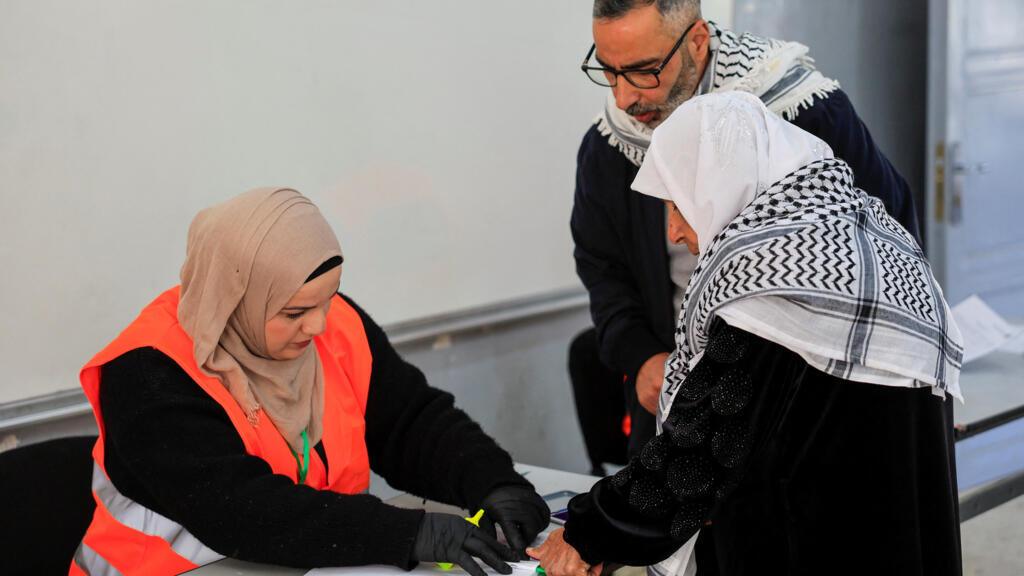
A Palestinian woman registers before casting her ballot at a polling station during municipal elections
As the day progresses, attention is turning toward what comes next. Polls are expected to close later in the evening, with initial results anticipated soon after. These results will provide the first concrete indication of how voters have responded to the available choices and how the political landscape may begin to shift.
The outcome of this election will likely influence future plans for governance in Gaza. If the process is viewed as successful, there are already discussions about expanding municipal elections to other parts of the territory, including larger and more heavily affected cities. Such steps would represent a gradual effort to rebuild political structures alongside physical reconstruction.
For many Palestinians, however, the significance of this day extends beyond immediate results. After years marked by conflict, division, and limited political participation, the simple act of voting carries deep meaning. It represents a moment of engagement and a reminder that even in the most challenging circumstances, there is a desire to shape the future through collective decision making.
The road ahead remains uncertain. The challenges facing Gaza and the West Bank are complex and deeply rooted. Rebuilding infrastructure, restoring economic stability, and navigating political divisions will require sustained effort and cooperation. Elections alone cannot resolve these issues, but they can serve as a foundation for broader change.
Read more on: President Tinubu Swear-in New Minister
In Deir al-Balah and beyond, the image of voters dipping their fingers in ink stands as a quiet yet powerful symbol. It reflects resilience, determination, and a willingness to participate in the slow and often difficult process of rebuilding not just cities, but systems of governance and public trust.
For a population that has spent years navigating crisis after crisis, this election is a step forward, however small it may seem. It is a reminder that even in the aftermath of conflict, the pursuit of stability and representation continues.
Read more on:
- Lassa Fever: Oyo Confirms Five Cases, One Death Recorded
- FG Increases Civil Servants’ Allowance, Benefits and Housing Support
- Trump Rules Out Nuclear Strike but Warns Iran “Time Is Running Out” Amid Rising Tensions
- Yobe APC Backs Consensus Model for 2027 Primaries, Endorses Tinubu for Second Term
- Atiku Slams Tinubu’s $516m Superhighway Loan, Warns of Rising Debt Burden