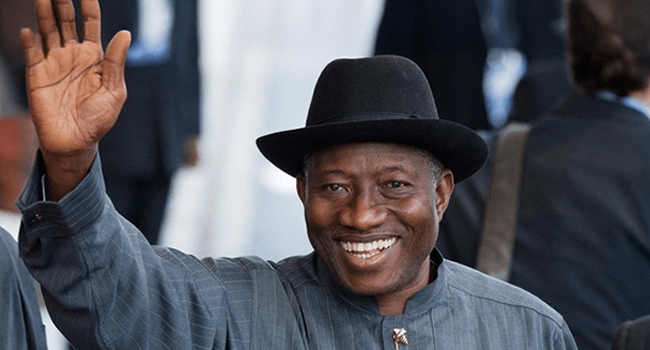
In a judgment that is already generating widespread political and legal discussion across Nigeria, the Federal High Court sitting in Abuja has dismissed a suit seeking to disqualify former President Dr. Goodluck Ebele Jonathan from contesting in the 2027 presidential election. The ruling not only clears a significant legal roadblock but also reinforces the judiciary’s stance on what it considers unnecessary and repetitive litigation.
Delivering the decision, Justice Peter Lifu made it clear that the case lacked merit and should not have occupied the court’s time. In strong terms, the judge described the suit as an abuse of court process, emphasizing that the legal system must not be used to pursue matters that have already been settled or to generate avoidable political controversy. As part of the ruling, the court imposed a cost of twenty million naira against the plaintiff, ordering that the amount be paid directly to the former president.
The decision has effectively removed any immediate legal uncertainty surrounding Jonathan’s eligibility to seek the presidency again, even though he has not formally declared any intention to run.
How the Case Emerged
The legal challenge was initiated by an Abuja based lawyer, Johnmary Jideobi, who sought a judicial interpretation of the constitutional limits on presidential tenure as it applies to Jonathan’s political history. The case quickly drew national attention due to its implications for the 2027 general elections and the possibility of a political comeback by the former leader.
At the heart of the argument was Jonathan’s unique path to the presidency. He first assumed office in 2010 following the death of President Umaru Musa Yar’Adua, completing the remainder of that administration’s tenure. He then contested and won the 2011 presidential election, serving a full term that ended in 2015.
The plaintiff argued that these two periods in office should be counted together in determining eligibility. According to this line of reasoning, any attempt by Jonathan to contest and potentially win in 2027 would result in him taking the presidential oath for a third time, which the plaintiff claimed would violate constitutional provisions limiting presidents to two terms.
This argument, though not entirely new in Nigeria’s legal and political discourse, was presented as a fresh attempt to obtain a definitive judicial pronouncement that would permanently bar Jonathan from future presidential contests.
Read more on: Rising Concern as Terrorist Expansion Edges Closer to Nigeria’s South-West
Defense Strategy and Legal Position
Jonathan’s legal team, led by Senior Advocate of Nigeria Chris Uche, mounted a strong and immediate challenge to the suit. From the outset, the defense maintained that the matter had already been addressed in previous court decisions and should not be reopened.
They argued that Nigeria’s legal system operates on the principle that once a matter has been conclusively determined by competent courts, it should not be relitigated. According to the defense, multiple judicial pronouncements in past election cycles had clarified Jonathan’s eligibility status, making the new case unnecessary.
Beyond the substantive arguments, the defense also questioned the seriousness of the plaintiff’s approach. They pointed to repeated absences in court and what they described as a lack of diligent prosecution. This, they argued, suggested that the case was more about drawing public attention than seeking genuine legal clarification.
Key Observations from the Court
In his ruling, Justice Lifu aligned with the arguments put forward by the defense and provided a detailed explanation for dismissing the case. A central point in the judgment was that the issue raised by the plaintiff had already been settled in law, and bringing it back before the court amounted to a misuse of judicial resources.
The judge stressed that the courts are not venues for revisiting settled questions or advancing speculative political concerns. He noted that allowing such cases to proceed would open the floodgates for endless litigation, which could undermine the efficiency and credibility of the judicial system.
Another important factor in the court’s decision was the conduct of the plaintiff. The judge observed that the lack of consistent participation in proceedings weakened the case significantly. In his view, this reinforced the conclusion that the suit did not meet the standard of seriousness required for matters of such national importance.
The imposition of a twenty million naira cost was particularly noteworthy. It sends a clear message that the judiciary is prepared to take firm action against what it considers frivolous or abusive litigation. By awarding the cost in favor of Jonathan, the court underscored both the inconvenience caused to the former president and the need to discourage similar actions in the future.
Read more on: El-Rufai’s Wife Files ₦2bn Lawsuit Against ICPC Over Alleged Defamation
INEC’s Absence and Its Implications
An interesting dimension of the case was the stance of the Independent National Electoral Commission. Throughout the proceedings, the electoral body did not send legal representation, effectively distancing itself from the dispute.
This absence has been interpreted by some observers as a signal that INEC did not see the case as one requiring its intervention, particularly since it involved a question that had been addressed in previous legal contexts. Others view it as a cautious move to avoid being drawn into a politically sensitive matter at an early stage.
Political Reactions and Broader Significance
Although Jonathan has remained silent following the ruling, the decision has already sparked reactions across political circles. For his supporters, it represents a major legal victory and a reassurance that he remains eligible to participate in future elections if he so chooses.
Within the broader political landscape, the judgment may influence early calculations ahead of the 2027 elections. Jonathan, who served as president from 2010 to 2015, remains a recognizable figure both domestically and internationally. His potential return to active politics could reshape alliances, particularly within opposition blocs or consensus building efforts.
At the same time, analysts caution that eligibility does not necessarily translate into candidacy. The decision to run would depend on a range of factors, including political dynamics, party considerations, and Jonathan’s personal willingness to reenter the electoral arena.
Read more on: Tinubu Secure Massive 131,096 Votes in Edo APC Presidential Primary
Legal Clarity and Constitutional Interpretation
Beyond its immediate political implications, the ruling contributes to ongoing discussions about constitutional interpretation in Nigeria. Questions about term limits and eligibility have surfaced repeatedly in the country’s democratic journey, often reflecting the complexities of its political history.
This judgment reinforces the idea that legal clarity, once established, should be respected to maintain stability within the system. By rejecting the attempt to reopen the debate, the court has reaffirmed the importance of consistency in judicial decisions.
Looking Toward 2027
As Nigeria gradually moves closer to another election cycle, attention will likely shift from legal battles to political strategy and public engagement. For now, the court’s decision has removed a significant point of contention and provided a clearer picture of the legal landscape.
Whether or not Goodluck Jonathan chooses to contest remains an open question. However, what is no longer in doubt is his constitutional standing to do so. The ruling ensures that if he decides to step forward, his candidacy will not be hindered by the type of legal challenge that has now been dismissed.
In the months ahead, political actors, analysts, and citizens alike will continue to watch closely as events unfold. What began as a courtroom dispute has now become a defining moment that could shape conversations and decisions leading into the 2027 general elections.
Read more on: