New details emerging from Washington have shed light on what officials are describing as a carefully coordinated and long-running military campaign in Nigeria’s Lake Chad Basin, culminating in the elimination of a senior ISIS figure and a wave of follow-up strikes across insurgent strongholds.
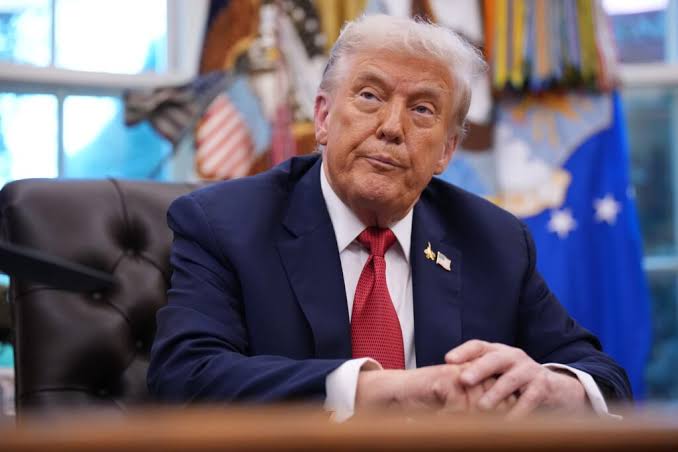
During a White House briefing, United States Secretary of War Pete Hegseth disclosed that President Donald Trump issued a direct instruction to the Pentagon approximately a year earlier, directing the US military to prioritize efforts aimed at protecting Christian communities in Nigeria who have repeatedly come under attack from ISIS affiliated groups operating in the region.
According to Hegseth, that directive eventually developed into a broader counterterrorism strategy involving close cooperation between US Africa Command and the Nigerian Armed Forces. The result, he said, was a sustained operational push that ultimately led to the killing of one of the most senior figures in the global ISIS network, identified as Abu Bilal al Minuki, along with the dismantling of several associated militant cells.
A Direct Presidential Directive Shaping Military Priorities
Hegseth explained that the operation did not emerge suddenly, but instead grew out of a series of high level security discussions in which President Trump was briefed on the scale of violence affecting Christian populations in parts of northeastern and central Nigeria.
He stated that following those briefings, the President instructed the Department of War to intensify its focus on supporting efforts to safeguard vulnerable communities and disrupt the militant networks responsible for repeated attacks.
He described the directive as clear and persistent, noting that while the planning and coordination required for such operations involved complex intelligence sharing and logistical preparation over many months, the White House maintained steady pressure to ensure that tangible results were achieved.
Read more on: Trump Rejects Iran’s Demands Over Strait of Hormuz and Sanctions
The Raid That Targeted Abu Bilal al Minuki
The most significant breakthrough came on May 16, 2026, when a joint operation involving US Africa Command and Nigerian special forces conducted a coordinated nighttime raid in the Lake Chad Basin region.
Military officials confirmed that the target of the operation was Abu Bilal al Minuki, described in intelligence assessments as the global second in command within ISIS and a key architect of operations in West Africa.
According to the briefing, al Minuki played a central role in coordinating the Islamic State West Africa Province, overseeing logistical networks, weapons supply chains, and financial channels that sustained insurgent activity across multiple borders. He was also linked to the development of improvised explosive devices, drone based attack systems, and coordinated abductions along major transportation routes.
Following the initial strike, intelligence gathered at the site reportedly enabled further targeting of remaining militant positions. In the days that followed, additional air and ground operations were carried out, resulting in the elimination of an estimated 175 fighters associated with the group, according to officials familiar with the mission.
Read more on: CSO Laments as Pupils and Teachers Remain Remain in Captivity After 12 Days
Rising Violence and International Concern in Nigeria
The operation comes amid growing international concern over the scale of violence in parts of Nigeria, particularly in rural communities where insurgent groups and armed criminal networks continue to operate.
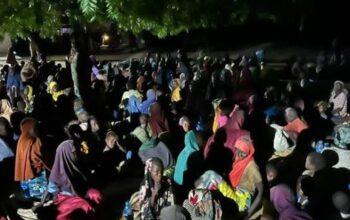
Reports from humanitarian and rights monitoring organizations indicate that thousands of civilians have been affected by ongoing attacks in recent months. Communities in the northeast and Middle Belt regions have repeatedly experienced mass displacement, killings, and kidnappings, with farmers and rural residents often the most exposed.
In one widely reported incident during the Easter period, dozens of civilians were killed in an attack attributed to armed extremist elements, adding to mounting pressure on both local authorities and international partners to respond more aggressively.
Religious leaders and civil society groups have also voiced concern over the frequency of targeted violence, urging stronger security cooperation and increased protection for vulnerable populations across affected regions.
Security Challenges Beyond a Single Operation
While military officials and analysts have described the killing of Abu Bilal al Minuki as a significant setback for ISIS affiliated operations in the region, they caution that the broader security situation remains complex and far from resolved.
Insurgent activity in the Lake Chad Basin continues to overlap with other forms of armed violence, including banditry, kidnapping networks, and localized militia conflicts that extend beyond ideological terrorism.
Security experts note that ISIS linked groups in the northeast rely on adaptable tactics such as improvised explosive devices, mobile attack units, and drone experimentation, while criminal networks in other parts of the country focus heavily on ransom based kidnappings and raids on rural settlements.
This layered threat environment, they argue, means that sustained progress will depend not only on targeted military strikes but also on long term efforts to disrupt arms trafficking routes, strengthen border security, and improve protection for agricultural and trade corridors that support local economies.
Read more on: Former Minister Of Power Begins 75-Year Sentence in Kuje
Ongoing Military Cooperation and Next Steps
Officials from both US Africa Command and Nigeria’s Defence Headquarters have confirmed that joint surveillance and reconnaissance operations are continuing across multiple areas in the northeast. These efforts are aimed at preventing any regrouping of militant cells and reducing the likelihood of retaliatory attacks following the recent operation.
While the full impact of the latest strikes is still being assessed, military planners say the focus remains on maintaining pressure on remaining insurgent leadership structures and preventing the reestablishment of coordinated command networks.
For now, the operation represents one of the most significant coordinated efforts between the United States and Nigeria in recent years, though officials acknowledge that the broader fight against insurgency in the region is ongoing and likely to continue requiring sustained cooperation and intelligence sharing.
Read more on:
- Middle East on the Edge as Israel Expands Lebanon Offensive and Iran Threatens US Retaliation
- EFCC Arraigns Fake Presidential Aide Over Alleged ₦25.9 Million Crypto License Fraud
- Amaechi Rejects ADC Presidential Primary Outcome, Calls It A “Sham”
- Tinubu Reassures Nigerians on Security, Urges Unity and Renewed Hope for National Progress