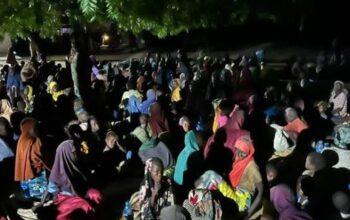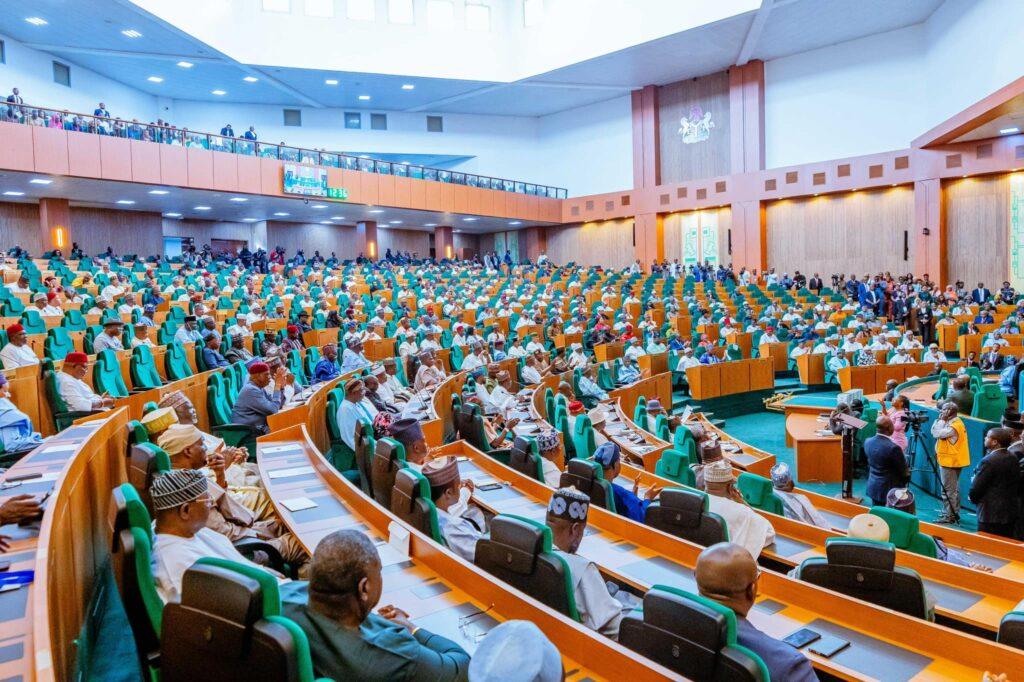
The Nigerian House of Representatives has issued one of its strongest public interventions yet, directing an urgent and uncompromising demand to the Federal Government and national security agencies to immediately secure the release of abducted schoolchildren and teachers across the country. Lawmakers stressed that the situation has gone beyond routine security concern and now represents a national emergency requiring swift, coordinated, and sustained action.
During a highly charged plenary session, members of the House expressed deep concern over what they described as a disturbing resurgence of mass school kidnappings in different parts of the country. The tone of the debate reflected rising frustration within the legislature, with many lawmakers insisting that repeated condemnations without decisive structural reforms have failed to address the scale of the crisis.
Rather than limit their response to verbal outrage, the House pushed forward a series of far reaching proposals aimed at strengthening Nigeria’s internal security framework. Central among these was a renewed and more forceful call for decentralised policing, alongside improved intelligence operations, expanded military presence in vulnerable regions, and a complete overhaul of school protection systems nationwide.
A troubling pattern of coordinated school attacks
The House of Representatives’ intervention followed two separate but closely linked incidents that have shaken public confidence and reignited national fear over the safety of schools, particularly in rural and semi rural communities.
Read more on: CAN Calls on Federal Government to Declare Emergency Over Rising Insecurity
The Oyo State coordinated school attack in Oriire Local Government Area
On May 15, armed attackers reportedly carried out a coordinated and highly organized assault in Oriire Local Government Area of Oyo State. In a shocking development, three schools were targeted almost simultaneously, highlighting the scale and planning behind the operation.
The affected institutions included Baptist Nursery and Primary School in Yawota, Community Grammar School in Esiele, and L.A. Primary School. Eyewitness accounts and preliminary reports indicated that the attackers stormed the schools in broad daylight, causing panic among pupils, teachers, and residents.
More than 30 individuals, comprising both pupils and teachers, were forcefully taken away and moved into nearby forest areas. The incident quickly escalated into a national tragedy when reports later confirmed the killing of Mr. Michael Oyedokun, a mathematics teacher who was abducted during the raid. His death, described as brutal and senseless, involved beheading at the hands of the abductors.
The killing triggered widespread outrage across Oyo State and beyond, leading to protests by community members and an indefinite industrial action by teachers’ unions in solidarity with the victims and in protest against the deteriorating security situation in educational institutions.
The Borno State abduction and renewed fears in the North East
In a separate development that further heightened national tension, lawmakers also addressed the abduction of 42 schoolchildren in parts of Borno State. Although details remain limited, the incident has revived painful memories of previous mass kidnappings in the North East, especially the 2014 Chibok schoolgirls abduction, which remains a defining moment in Nigeria’s security history.
The latest incident has reinforced concerns that despite years of military operations and security investments in the region, armed groups continue to pose a serious threat to civilian populations, particularly schoolchildren who remain highly vulnerable.
Read more on: US and Iran Exchange Fresh Strikes as Peace Negotiations Stall
Legislative alarm and demand for urgent intervention
The motion that brought the matter to the floor of the House was sponsored and strongly defended by Hon. Olamijuwonlo Alao Akala, who represents the Ogbomoso North, Ogbomoso South, and Oriire Federal Constituency.
In his presentation, he painted a grim picture of the current security climate, warning that the country is gradually normalising what should otherwise be unacceptable acts of violence against children and educators. He called on the Federal Government to act with urgency, stressing that delays in response operations often increase the risk of fatalities and reduce the chances of successful rescue missions.
He urged security agencies to prioritise the safe return of the abducted victims above all other considerations, noting that the value of human life, particularly that of children, must remain the highest national priority.
Other lawmakers supported the motion and expanded the discussion to include broader concerns about inequality in security deployment. Several members argued that there is a visible disparity between the level of protection provided to political office holders and that available to ordinary citizens, especially in rural communities and public schools where security presence is often minimal or nonexistent.
Key resolutions adopted by the House of Representatives
Following extensive deliberations, the House adopted a series of resolutions aimed at compelling immediate government action and strengthening long term security strategy across the country.
- Immediate tactical response and establishment of permanent military presence
The House called for the immediate deployment of specialised military units to affected areas, particularly in regions identified as high risk zones for kidnapping and banditry. Lawmakers further demanded the establishment of a permanent Military Forward Operating Base in Oriire Local Government Area.
According to the resolution, such a base would serve as a strategic security hub to monitor, deter, and respond rapidly to criminal activities in the surrounding forest belts, including areas around the Old Oyo National Park, which has reportedly become a refuge for armed groups.
Lawmakers emphasised that temporary deployments and short term interventions are no longer sufficient to address the scale and persistence of the threat.
- Accelerated implementation of state police and decentralised security structures
A major point of consensus among lawmakers was the urgent need for decentralisation of Nigeria’s policing system. The House reiterated its long standing position that the current centralised policing structure is overstretched and unable to effectively respond to simultaneous security challenges across multiple states.
They called for the establishment of state controlled police forces that would operate in coordination with federal security agencies, thereby improving response time, local intelligence gathering, and community engagement.
In addition, lawmakers proposed the creation of specialised local courts to expedite the prosecution of terrorism and kidnapping related offences. They also recommended the integration of advanced surveillance systems, including aerial drones, satellite based monitoring, and digital intelligence platforms to enhance operational efficiency.
- Nationwide strengthening of school protection and early warning systems
The House further resolved that all levels of government must prioritise the protection of schools as critical national infrastructure. Members called for the immediate expansion of early warning systems designed to detect potential threats before they escalate into full scale attacks.
They also recommended the establishment of community based security committees around schools, involving traditional rulers, local vigilante groups, parent associations, and security agencies working in coordinated frameworks.
Lawmakers stressed that schools must never again be treated as soft targets that can be easily exploited by armed groups.
- Strict legislative oversight and continuous monitoring of rescue operations
To ensure accountability and sustained attention, Speaker Tajudeen Abbas referred all related motions to a joint committee of the House comprising Defence, Interior, Police Affairs, National Security, and Basic Education.
These committees have been tasked with maintaining continuous oversight of rescue operations, engaging directly with security agencies, and submitting frequent progress reports to the House. Lawmakers stressed that parliamentary oversight must remain active until all abducted victims are safely returned.
Read more on: Opposition Leaders Intensify Coalition Talks Ahead of 2027 Elections
Federal Government response and ongoing military operations
In response to the growing national concern, a high level Federal Government delegation visited affected communities in Oyo State. The delegation included the Chief of Staff to the President, Femi Gbajabiamila, the National Security Adviser, Nuhu Ribadu, and the Minister of Defence, General Christopher Musa.
The officials met with community leaders, traditional authorities, school representatives, and families of the victims. They assured residents that the Federal Government is fully committed to ensuring the safe return of all abducted persons and restoring security to affected areas.
Meanwhile, security operations have intensified significantly in the region. Military authorities confirmed that troops have established contact with suspected abductors operating within forested areas of the Oyo axis. The deployment includes ground forces, intelligence units, and aerial support.
Super Tucano fighter jets have been deployed to provide surveillance and tactical air support as part of a coordinated rescue strategy. Security officials stated that operations are being carefully executed to avoid harm to the abducted children and teachers, with emphasis placed on precision, intelligence driven action, and minimal risk to civilian lives.
Growing national anxiety and call for urgent results
Across the country, the situation has continued to generate widespread concern, with parents, teachers, and civil society organisations calling for faster results from security operations. Many Nigerians have expressed frustration over the recurring nature of school abductions and the psychological impact on communities already living in fear.
The House of Representatives, in its concluding position, maintained that Nigeria must urgently rethink its internal security architecture if it is to prevent further tragedies. Lawmakers warned that continued delays in reforming policing structures and strengthening rural security could deepen instability and further endanger vulnerable populations.
Conclusion
The House of Representatives has sent a clear and forceful message that the protection of Nigerian children and educators can no longer be treated as a secondary responsibility. With military operations ongoing and national attention sharply focused on the crisis, there is growing expectation that concrete results will follow swiftly.
At the heart of the matter remains a simple and urgent demand echoed throughout the chamber: that every abducted child and teacher must be brought home safely, and without further loss of life.
Read more on: