As Nigeria steadily moves toward the 2027 general elections, the country’s political environment is entering a more fluid and strategic phase. What is unfolding is not simply routine election preparation, but a widening recalibration of alliances, ambitions, and party structures across nearly all major political blocs.
Recent trends in public engagement, including rising online searches and increased political commentary, suggest growing national attention on possible realignments ahead of the next electoral cycle. Politicians, party leaders, and influential stakeholders are already repositioning themselves in anticipation of what is expected to be one of the most competitive elections in recent history.
From internal disputes within established parties to emerging conversations about large scale opposition coalitions, the political terrain is shifting in ways that may redefine Nigeria’s electoral balance.
Alex Otti and the Labour Party’s Search for Stability
In Abia State, Governor Alex Otti continues to maintain a strong political presence within the Labour Party, especially at the state level where his influence remains largely unchallenged. He recently emerged as the party’s governorship candidate for the next election cycle without opposition, following a comprehensive series of ward level primaries conducted across all 184 wards in the state.
This smooth emergence has been interpreted by his supporters as a reflection of his governance record and his ability to maintain a strong internal political structure within Abia. It also reinforces his status as one of the most prominent elected officials under the Labour Party platform.
However, beyond Abia State, the Labour Party continues to experience internal tension and organizational uncertainty. The party is currently divided into competing factions, each laying claim to leadership legitimacy and control of party structures.
One of the most prominent figures in the ongoing dispute, Julius Abure, who leads a rival faction, has publicly accused Governor Otti of playing a central role in deepening internal divisions within the party. These accusations have added to the already complex leadership crisis that has affected the party’s cohesion at the national level.
Despite these tensions, the interim national leadership of the Labour Party, recognized by the Independent National Electoral Commission and led by Senator Nenadi Usman, has consistently reaffirmed its support for Governor Otti. According to this faction, Otti remains a key stakeholder in the party’s future and continues to enjoy legitimacy within the recognized structure.
Following the exit of Peter Obi from the Labour Party’s mainstream activities, the party has been compelled to rethink its internal direction and long term strategy. In this vacuum, Governor Otti has increasingly become one of the most visible and influential elected figures remaining within the party’s official framework.
In response to the evolving situation, Otti has announced plans for a nationwide membership revalidation exercise, alongside the organization of ward, local government, and state congresses. He has also indicated that a national convention will be convened to further restructure and stabilize the party.
Significantly, Otti has also made it clear that the Labour Party is currently not prioritizing any form of broad coalition arrangement with other political parties. Instead, the focus, according to him and his supporters, is on rebuilding internal strength, discipline, and organizational clarity before considering external political partnerships.
Read more on: NUT Launches Indefinite Strike in Oyo Over Kidnapped Teachers and Students
The Expanding Coalition Conversations and Opposition Strategy
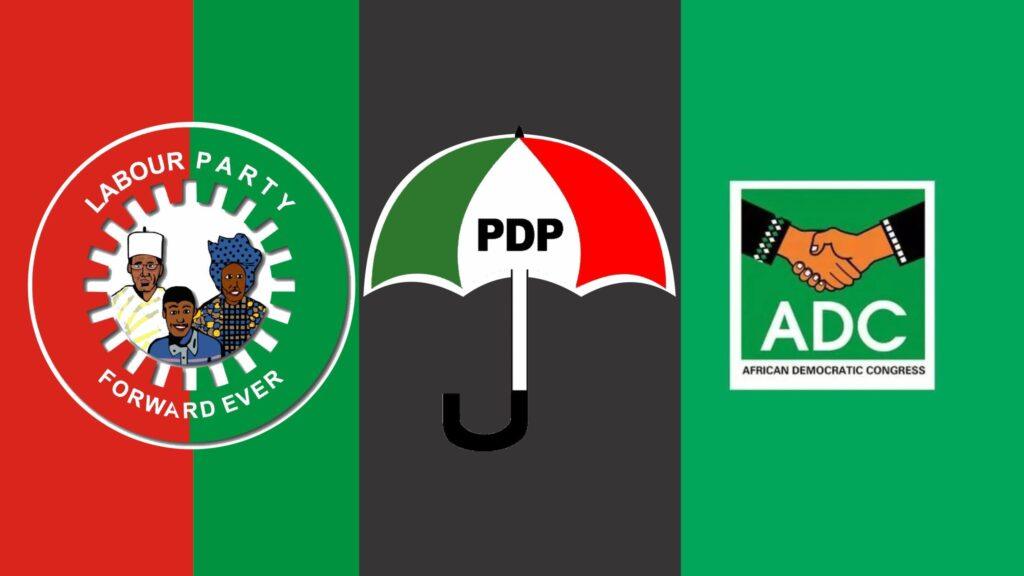
While the Labour Party continues its internal restructuring, attention at the national level is increasingly focused on the possibility of a broad opposition alliance ahead of the 2027 elections. This emerging political conversation has drawn in several major political actors who are exploring the idea of a unified platform capable of challenging the ruling All Progressives Congress.
At the center of these discussions is the growing political engagement between former Vice President Atiku Abubakar and Peter Obi, who is now politically associated with the African Democratic Congress. Their interactions, along with those of other opposition figures, are shaping what many observers describe as the early formation stage of a potential mega coalition.
The primary motivation behind these discussions is the belief that fragmented opposition efforts contributed significantly to previous electoral outcomes. As a result, there is a renewed emphasis on unity, coordination, and the possibility of presenting a single presidential candidate backed by multiple political platforms.
The Structure of the Proposed Alliance
One of the central ideas being explored is the adoption of a consensus based selection process for a presidential candidate. This would allow the coalition to avoid internal primaries that could deepen divisions, while instead focusing on negotiation and agreement among key stakeholders.
Atiku Abubakar has publicly expressed willingness to support this approach. He has stated that he is open to stepping aside if another candidate emerges as more widely acceptable or politically viable within the coalition framework. His position has been interpreted by some analysts as a strategic attempt to strengthen opposition unity rather than insist on personal ambition.
Similarly, Peter Obi’s involvement in these discussions has added momentum to the coalition narrative. While his current political alignment is associated with the African Democratic Congress, his influence remains significant across multiple political and demographic groups, particularly among younger voters and urban populations.
Other influential political figures have also been linked to ongoing consultations. These include Rabiu Kwankwaso of the New Nigeria People’s Party and former Kaduna State Governor Nasir El Rufai. Reports suggest that these actors have engaged in discussions with key northern political stakeholders in an effort to build a geographically balanced and nationally competitive alliance.
Read more on: US-Iran Ceasefire Talks Advance as Trump Reviews 60-Day Truce and Nuclear Deal Framework
Regional Calculations and Political Balancing
A major factor shaping these discussions is the need for regional inclusivity. Nigeria’s political structure requires broad geographical appeal, and any serious presidential ambition must reflect support across the northern and southern regions.
For this reason, consultations have extended beyond party lines into informal negotiations with regional power brokers, political influencers, and former office holders. The goal is to build a structure that can withstand regional competition while maintaining national cohesion within the proposed alliance.
The Emerging Political Structure Ahead of 2027
The evolving dynamics of Nigeria’s political environment can be better understood through a structured comparison of current strategies being adopted by key actors:
| Political Actor or Bloc | Current Strategic Direction | Underlying Objective |
| Governor Alex Otti and Labour Party leadership | Focus on internal revalidation, congresses, and rebuilding party structures | To maintain Labour Party independence and institutional stability without external reliance |
| Atiku Abubakar and PDP aligned forces | Leading coalition discussions and promoting consensus candidacy model | To unify opposition forces and prevent vote splitting in the 2027 elections |
| Peter Obi and allied political networks | Engaging in multi party consultations and coalition building efforts | To expand national reach and strengthen competitive positioning across regions |
| Kwankwaso, El Rufai, and northern political actors | Participating in strategic consultations and regional balancing discussions | To ensure northern political relevance within any emerging national alliance |
Read more on: Fubara Marks Third Anniversary, Reaffirms Commitment to Rapid Development
Broader Implications for Nigeria’s Democratic Process
The developments currently unfolding reflect a broader transformation in Nigeria’s democratic competition. Increasingly, political actors are moving away from isolated party strength toward coalition based strategies that prioritize electoral mathematics and national coverage.
This shift is largely influenced by the outcome of previous elections, where divided opposition platforms struggled to compete effectively against a more consolidated ruling party structure. As a result, political negotiations ahead of 2027 are being shaped by lessons drawn from past electoral cycles.
At the same time, these emerging alliances remain fragile and subject to competing interests. Differences in political ideology, personal ambition, regional expectations, and party loyalty could still disrupt ongoing negotiations.
Final Outlook: A Political Landscape in Motion
Nigeria’s political chessboard ahead of 2027 is clearly still under construction. While early signs point toward greater cooperation among opposition figures, the final structure of these alliances remains uncertain.
What is clear, however, is that the political conversation has already shifted. Individual ambition is increasingly being weighed against collective strategy, and party identity is being tested by the demands of national electoral competition.
As discussions continue and alignments evolve, the coming months are likely to determine whether these early coalition talks mature into a unified political force or dissolve under the pressure of competing interests. For now, Nigeria’s political future remains open, dynamic, and intensely contested.
Read more on: