What was shaping up to be one of the most significant political realignments in northern Nigeria has come to an abrupt halt. Talks between Bauchi State Governor Bala Mohammed and leaders of the All Progressives Congress (APC) have officially broken down after weeks of intense negotiations behind closed doors. The collapse of these discussions has not only stalled the governor’s expected defection from the Peoples Democratic Party (PDP) but has also introduced a fresh layer of uncertainty into the political dynamics of Bauchi State and the wider North East region.
The negotiations, which had drawn the attention of top political figures across the country, were widely seen as a strategic move that could reshape alliances ahead of the 2027 general elections. However, despite early signs of progress, both sides ultimately failed to reach a compromise on a critical issue that proved impossible to ignore.
The Core Dispute That Ended the Talks
At the center of the failed negotiations was a disagreement over how power would be shared within the APC structure in Bauchi State if Governor Mohammed and his supporters were to join the party. The governor’s camp proposed a formula that would grant them a controlling stake in the party’s leadership across all levels in the state.
Specifically, the proposal called for a 60 percent share of party control for the governor’s faction, leaving the remaining 40 percent to existing APC members. This arrangement would have given Mohammed and his allies significant influence, from grassroots positions at the ward level all the way up to the state executive leadership.
Supporters of the governor argued that such an arrangement was not unusual in Nigerian politics. They pointed out that when a sitting governor defects to another party, it is often expected that he brings his political structure with him. This includes elected officials, party loyalists, and grassroots networks that form the backbone of his influence.
According to this line of reasoning, it would be impractical for a governor to switch parties without maintaining control over the political machinery needed to govern effectively. Those close to Mohammed insisted that accepting anything less would weaken his position and limit his ability to deliver results.
However, leaders within the APC strongly disagreed with this proposal. They viewed it as an attempt to sideline long standing members who had built the party in Bauchi State over the years, often under challenging circumstances while the PDP was in power.
For the APC, handing over majority control to newcomers, even if led by a sitting governor, was seen as unfair and potentially destabilizing. Party loyalists argued that such a move would undermine their contributions and create resentment within the ranks.
This fundamental disagreement proved too significant to overcome. Despite multiple rounds of discussions and attempts at compromise, neither side was willing to budge from its position. The result was a complete breakdown in talks.
Read more on: Tensions Rise as Iran Shuts Strait of Hormuz Again
Official Confirmation of the Deadlock
The collapse of the negotiations was formally confirmed during a press briefing held in Bauchi. The announcement was made by Pharm. Sama’ila Burga, a key figure in the faction of the PDP aligned with Governor Mohammed and associated with Tanimu Turaki.
Speaking to journalists, Burga explained that the talks had reached an impasse due to the inability of both parties to agree on the structure of power sharing. He emphasized that the 60 to 40 proposal put forward by the governor’s camp was based on established political practices and was intended to ensure a smooth transition.
He also defended the position of the governor’s faction, arguing that it would be unreasonable for a sitting governor to defect without retaining significant control over the party structure in his state. In his view, such control is necessary to maintain political stability and ensure effective governance.
At the same time, Burga acknowledged that the APC leadership had its own concerns, particularly regarding the impact of the proposed arrangement on existing members. However, he made it clear that no agreement could be reached without addressing the governor’s demands.
Read more on: Security forces uncover Lagos baby factory, rescue 18 women
The Background to the Planned Defection
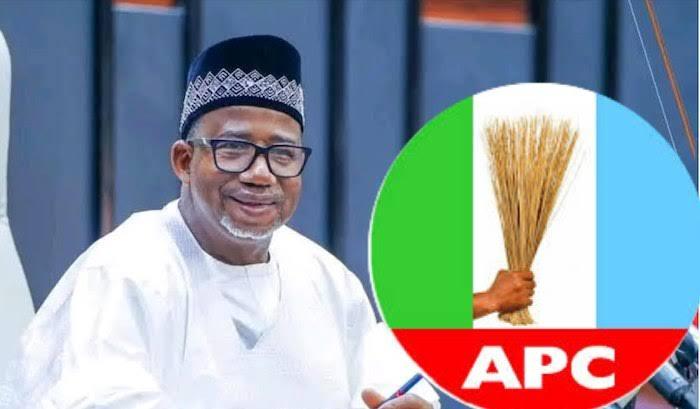
Governor Bala Mohammed’s consideration of a move to the APC did not happen overnight. It was the result of growing dissatisfaction with the state of the PDP at the national level.
In recent months, the PDP has faced internal challenges that have weakened its cohesion. Disputes among party leaders, unresolved conflicts, and a lack of clear direction have contributed to a sense of instability within the party.
Mohammed had publicly expressed his frustration with these issues, describing the PDP as struggling to function effectively. His comments signaled a willingness to explore alternative political platforms that could better support his ambitions and provide a more stable environment.
This led to the emergence of a faction within the PDP aligned with the governor and backed by Tanimu Turaki. The group began operating with a degree of independence from the party’s national leadership, setting the stage for a possible exit.
An “Exit Committee” was reportedly established to manage the process of leaving the PDP and negotiating entry into another party. The APC quickly emerged as the most likely destination, given its national prominence and strategic importance.
Read more on: Iran Reopens Strait of Hormuz to Commercial Vessels
A Sudden Shift in Tone
Following the breakdown of talks, the tone from Governor Mohammed’s camp changed noticeably. What had been a period of courtship and negotiation quickly gave way to criticism of the APC.
During the same press briefing, Burga suggested that the governor’s faction might have avoided a difficult situation by not joining the ruling party. He pointed to ongoing internal disputes within the APC in several states as evidence that the party is not without its own challenges.
According to him, there are examples of politicians who joined the APC with high expectations, only to become disillusioned when those expectations were not met. He warned that entering such an environment without clear guarantees could have created new problems for the governor and his supporters.
This shift in narrative reflects the fluid nature of political alliances, where relationships can change rapidly depending on circumstances. It also underscores the strategic calculations that often guide decisions at this level.
Read more on: Two UTME Candidates Escape Kidnappers in Benue, Police Report
The Role of Key Political Figures
The negotiations between Mohammed’s camp and the APC were not conducted in isolation. They involved some of the most influential figures in Nigerian politics, including senior members of the federal government.
The presence of such high profile individuals highlighted the significance of the potential defection. A successful move by a sitting governor in a key state like Bauchi would have had implications beyond the state level, potentially influencing political alignments across the region.
Their involvement also suggested that there was strong interest in facilitating the deal. However, even with this level of engagement, the core issues proved too difficult to resolve.
Exploring New Political Options
With the APC option now off the table, attention has turned to what Governor Mohammed might do next. Reports indicate that the Exit Committee has not been disbanded, suggesting that plans for a political shift are still under consideration.
One of the parties that has expressed interest is the African Democratic Congress (ADC). A delegation from the party recently visited Bauchi in what appears to be an effort to persuade the governor to join their platform.
For the ADC, securing the support of a sitting governor would represent a major boost, enhancing its visibility and credibility ahead of future elections. For Mohammed, it could offer an opportunity to build a new political base while maintaining greater control over his structure.
There is also talk of a broader strategy aimed at forming or joining a “third force” in Nigerian politics. Such a movement would seek to position itself as an alternative to both the PDP and the APC, appealing to voters who are dissatisfied with the two dominant parties.
While this idea has been discussed in various forms over the years, its success has often depended on the ability of key figures to come together and present a unified front. Whether Mohammed will play a central role in such an effort remains to be seen.
Read more on: President Tinubu Approves 2026 Appropriation, Pushes 2025 Budget Deadline
Implications for Bauchi and Beyond
The collapse of the defection talks has immediate implications for Bauchi State. It leaves the political landscape in a state of uncertainty, with questions about the future direction of the governor and his supporters.
For the PDP, the development could provide a temporary reprieve, as it retains the support of a sitting governor who had been on the verge of leaving. However, the underlying issues that prompted Mohammed to consider defection in the first place have not been resolved.
For the APC, the outcome means missing out on an opportunity to strengthen its position in Bauchi. At the same time, it avoids the potential internal conflicts that might have arisen from integrating a large new faction into the party.
At a broader level, the episode highlights the complex nature of political negotiations in Nigeria. Decisions are influenced by a combination of personal ambitions, party dynamics, and strategic considerations, all of which can shift rapidly.
Looking Ahead
As the dust settles, attention will focus on the next moves by Governor Bala Mohammed. Whether he remains within the PDP, aligns with another party, or pursues a new political path altogether will have significant implications for the future.
The coming weeks are likely to bring further developments as discussions continue behind the scenes. Political actors across the country will be watching closely, aware that the choices made in Bauchi could have ripple effects beyond the state.
For now, what seemed like a straightforward realignment has turned into a reminder that in politics, agreements are never guaranteed until they are finalized. The breakdown of talks serves as a clear example of how even the most promising negotiations can unravel when key interests do not align.
Read more on: