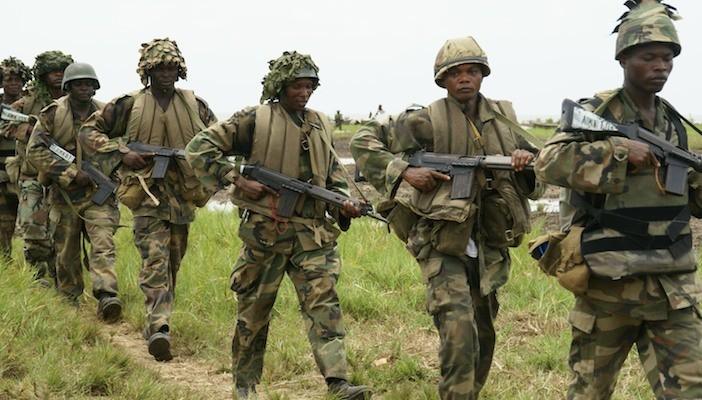
Nigerian security forces have recorded what is being described as one of their most significant operational successes in recent months, following a large-scale offensive against armed insurgents in the Lake Chad Basin. Troops under Operation Hadin Kai reportedly neutralized more than 30 terrorists during a coordinated engagement on the waterways of Borno State, in an operation that targeted key movement and supply routes used by extremist groups operating in the region.
The operation, which unfolded overnight, focused on disrupting the mobility of fighters believed to be affiliated with Boko Haram and the Islamic State West Africa Province. These groups have long exploited the complex geography of the Lake Chad Basin, using its islands, marshlands, and hidden waterways as cover for movement, planning, and logistics. The latest military action appears to have been aimed specifically at dismantling that advantage.
According to military sources and preliminary operational updates, the engagement was triggered by intelligence reports indicating that a large group of insurgents was attempting to move through the lake’s network of channels toward the Kukawa and Marte areas. These locations have historically experienced repeated security challenges due to their proximity to the Tumbuns, a series of swampy islands that provide natural concealment for armed groups.
Read more on: Terrorists Attack Borno and Adamawa Border Communities
Acting on this intelligence, Nigerian troops deployed specialized amphibious units to intercept the suspected movement. Surveillance assets, including aerial monitoring systems, helped track the insurgents’ movement across the water, allowing the military to position forces strategically before contact was made. What followed was a fierce confrontation on the water, marking one of the more intense maritime engagements in the ongoing counterinsurgency campaign.
Reports indicate that the encounter involved multiple gunboats operated by the insurgents. As the military units closed in, a firefight erupted, with both sides exchanging heavy gunfire across the waterways. The insurgents attempted to maneuver through the marshy terrain to evade interception, but the coordinated response from the troops proved overwhelming.
During the operation, at least four insurgent boats were reportedly destroyed after being directly engaged by military firepower. Additional vessels were set ablaze or disabled, leaving many fighters stranded in the water. Military sources further confirmed that over 30 insurgents were killed either during the exchange of fire or as a result of drowning after their boats were sunk or destroyed in the course of the operation.
The destruction of these vessels is being viewed as a significant disruption to the operational capabilities of the armed groups in the region. For years, the Lake Chad Basin has served as a critical logistical corridor for insurgents, enabling them to move weapons, fuel, food supplies, and personnel between Nigeria, Chad, and Niger. The waterways, often difficult to patrol due to their vast and unpredictable nature, have provided a relatively safe passage for militant activities, particularly in areas that are difficult for ground forces to access.
Read more on: Iran Reportedly Launches Attacks on Ships in Hormuz Strait
By targeting and destroying these boats, the Nigerian military has effectively struck at the heart of this supply network. Officials familiar with the operation have described the development as a deliberate attempt to restrict the freedom of movement enjoyed by the insurgents and to isolate them within specific pockets of terrain where they can be more easily tracked and engaged.
A senior military spokesperson emphasized that controlling mobility is a key component of the broader counterinsurgency strategy. According to the spokesperson, the operation reflects a growing shift in tactics aimed not only at confronting fighters directly but also at cutting off their access to essential routes and resources. This approach is intended to weaken the operational structure of the groups over time and reduce their ability to launch coordinated attacks on both military and civilian targets.
The success of the latest mission is also being linked to increased reliance on intelligence gathering and technological surveillance. In recent months, the military has expanded its use of drone systems to monitor movement across the Lake Chad Basin. These tools have allowed for real-time tracking of suspicious activity, particularly in areas that are difficult to access by land or are concealed by dense vegetation and water channels.
The integration of these technologies has improved situational awareness for commanders in the field, enabling more precise and timely responses to emerging threats. In this case, aerial surveillance played a crucial role in identifying the movement of insurgent boats and guiding troops toward the interception point.
Read more on: Nigeria Reports Fresh COVID-19 Case Years After Pandemic
Local knowledge has also played an important part in the success of such operations. Members of the Civilian Joint Task Force, who are familiar with the terrain and waterways, assisted military personnel during the mission. Their understanding of the region’s geography has often proven valuable in navigating the complex network of islands and marshes that define the Lake Chad environment.
Despite the success of this latest operation, the broader security situation in Borno State remains fragile. The region continues to experience periodic attacks and ambushes, underscoring the persistent threat posed by insurgent groups. Earlier in the month, the area witnessed another high-profile incident involving the loss of senior military personnel in an ambush, highlighting the risks faced by both troops and civilians in the ongoing conflict.
These challenges have prompted the military to adopt a more aggressive and proactive posture in recent operations. Increased focus on the waterways is part of a broader effort to prevent insurgents from regrouping and launching surprise attacks from remote or inaccessible locations. The latest engagement suggests that this strategy may be yielding tangible results, at least in terms of disrupting movement and reducing operational freedom.
Analysts observing the situation note that control of the Lake Chad Basin is central to the long-term outcome of the conflict in the Northeast. Whoever maintains dominance over the waterways effectively controls one of the most important logistical networks available to armed groups in the region. As such, the recent operation is being viewed as more than just a tactical victory, but also as part of a wider strategic effort to regain control of contested spaces.
Read more on: President Tinubu Ousts Finance Minister and 1 Other, Appoints New Replacements
The destruction of insurgent boats and the reported casualties among fighters may force armed groups to reassess their approach to movement and supply chains. However, there is also recognition that such groups have historically adapted to military pressure by changing tactics, shifting routes, or dispersing into smaller units to avoid detection. This means that while the current operation represents a setback for insurgents, it may not completely eliminate their presence in the region.
For communities living around the Lake Chad Basin, the implications of ongoing military operations are mixed. On one hand, there is relief that security forces are actively targeting armed groups that have caused significant harm over the years. On the other hand, continued instability means that daily life remains uncertain, with many residents still facing displacement, economic disruption, and limited access to basic services.
The military has maintained that operations will continue until insurgent capabilities are significantly degraded. Officials have reiterated their commitment to sustained pressure across all operational domains, including land, air, and water. This multi-dimensional approach is intended to ensure that insurgents are unable to regroup or establish safe havens within the region.
As the situation continues to evolve, attention will remain focused on whether these gains can be consolidated into longer-term stability. The challenge for security forces will be to maintain momentum while also addressing the underlying conditions that have allowed insurgent groups to persist for so long.
For now, the latest operation stands as a notable moment in the ongoing campaign in the Northeast, reflecting both the intensity of the conflict and the continued efforts by Nigerian forces to regain control of one of the most contested and strategically important regions in the country.
Read more on:
- Former President Jonathan Responds After Atiku’s Criticism
- FG Slams 13-Count Treason Charges on Alleged Coup Plotters
- APC Unveils 2027 Election Timetable, Reveals Costs for Presidential and Governorship Forms
- Former Senator Set to Announce New Political Direction as ADC Crisis Deepens
- Terror group gives 72-hour Ultimatum, demands ₦5bn for 416 abducted women and children