Nigeria’s political atmosphere took a dramatic turn today after a decisive ruling by the Supreme Court brought an end to the prolonged leadership crisis within the African Democratic Congress, widely known as the ADC. The judgment, which has been described by analysts as both timely and far reaching, affirmed former Senate President Senator David Mark as the legitimate National Chairman of the party. This verdict effectively closes a chapter of internal disputes that had threatened the party’s relevance for over a year.
The case, which had lingered in various courts since early 2025, centered on a fierce contest for control of the party’s leadership structure. On one side stood the faction loyal to Senator David Mark, while the opposing bloc was led by Nafiu Bala Gombe. Both groups claimed legitimacy, citing separate conventions and internal processes. The resulting confusion left the party divided and weakened, unable to present a unified front in national discourse.
With today’s ruling, the Supreme Court has drawn a clear line. In its decision, the apex court held that the processes that produced the David Mark led leadership substantially complied with both the party’s constitution and the provisions of the Electoral Act. By doing so, it nullified earlier judgments that had questioned the validity of that leadership and ordered that all recognition be accorded to the Mark led structure.
Almost immediately after the ruling was delivered, the Independent National Electoral Commission moved to align with the court’s decision. In a formal statement, the commission confirmed that it had updated its official records to reflect Senator David Mark as the recognized National Chairman of the ADC. This step is crucial because INEC serves as the gatekeeper for party recognition in Nigeria’s electoral system. With this confirmation, all official dealings, including candidate nominations and party correspondence, will now be handled exclusively through the Mark led National Working Committee.
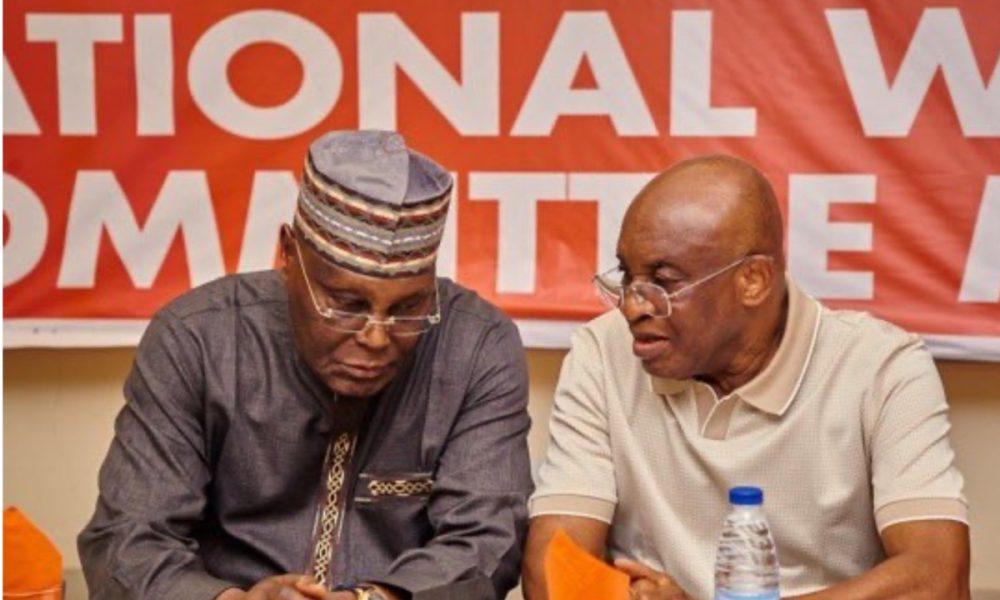
While the legal victory itself was significant, what followed shortly afterward added an entirely new dimension to the unfolding political narrative. Within hours of the judgment, prominent political figures were seen arriving at a private residence in the upscale Asokoro district of Abuja. Among them were former Vice President Atiku Abubakar, former Rivers State Governor Rotimi Amaechi, and Senator David Mark himself.
Read more on: Oil Prices Surge to Four-Year High as Trump Weighs Military Action Against Iran
The meeting, which sources described as urgent and highly strategic, has quickly become the subject of intense speculation across political circles. Although no official statement was released immediately after the gathering, insiders suggest that the discussions went far beyond mere celebrations of the court victory. Instead, the focus appeared to be on charting a new political direction, one that could significantly reshape the opposition landscape ahead of the 2027 general elections.
For months, there have been whispers about the possibility of a broad based opposition coalition that could challenge the dominance of the ruling party. However, those conversations often stalled due to internal divisions and the lack of a stable platform. With the ADC’s leadership question now settled, many observers believe that the party could serve as the foundation for such a coalition.
According to individuals familiar with the Asokoro meeting, several key issues were likely on the table. One of the central themes was the idea of bringing together dissatisfied members from both the Peoples Democratic Party and the All Progressives Congress into a single political structure. This proposed alignment, often referred to informally as a mega party, aims to consolidate opposition strength and present a unified challenge in the next election cycle.
Another major topic of discussion was the strategy for 2027. Political actors are increasingly aware that fragmented opposition efforts have historically benefited incumbents. As a result, there is a growing push to identify a consensus candidate who can rally broad support across different regions and political interests. The presence of figures like Atiku Abubakar and Rotimi Amaechi at the meeting underscores the seriousness of these deliberations.
Read more on: Lagos 2027: Jandor Withdraws From APC Governorship Contest
Strengthening the party’s internal structure was also said to be a priority. Now that the legal distractions have been removed, attention is expected to shift toward building a more robust grassroots presence. This includes expanding party offices, mobilizing supporters at the local level, and creating a cohesive organizational framework that can compete effectively nationwide.
A close associate of Senator David Mark hinted at the broader significance of the moment, describing it as more than just a legal victory. According to the aide, the resolution of the leadership crisis marks the beginning of a new phase for the party and potentially for the country’s political direction. The sentiment reflects a growing belief among some stakeholders that the ADC could evolve into a central platform for political realignment.
Reactions to the developments have been swift and varied. Across the political spectrum, leaders and institutions are weighing in on what this could mean for Nigeria’s future.
Former Senate President Bukola Saraki welcomed the Supreme Court’s decision, emphasizing the importance of unity within opposition ranks. He noted that prolonged legal battles often weaken political parties and distract from their core objectives. In his view, the judgment provides an opportunity for members of the ADC to come together and focus on building a credible alternative for voters.
On the other hand, the ruling party has downplayed the significance of the emerging alliance. In a brief statement, the national secretariat of the All Progressives Congress expressed confidence in its position, suggesting that the regrouping of familiar political figures does not pose a substantial threat. The tone of the response indicates a willingness to acknowledge the development while maintaining a posture of political strength.
Read more on: 2027 Elections: ADC and PDP Await Key Supreme Court Ruling Today
Within the Peoples Democratic Party, the situation appears more complex. Sources indicate that the party’s Board of Trustees is planning an emergency meeting to assess the potential impact of the ADC’s resurgence. There are concerns that high profile members could defect if the new coalition gains momentum, which could further weaken an already fragmented opposition landscape.
For many Nigerians, these high level political maneuvers may seem distant from everyday concerns. However, the implications are significant. A stable and unified opposition has the potential to reshape electoral competition, influence policy debates, and ultimately affect governance outcomes.
The resolution of the ADC’s leadership crisis removes a major obstacle that had limited the party’s effectiveness. With a recognized leadership in place, the party can now engage more confidently in national politics. This includes organizing conventions, fielding candidates, and participating in alliances without the uncertainty that previously hindered its activities.
The concept of a mega party, while still in its early stages, represents a notable shift in strategy. Instead of multiple opposition parties competing against one another, the idea is to create a single platform that can pool resources, unify messaging, and present a stronger challenge to the ruling establishment. Whether this vision will materialize remains to be seen, but the groundwork appears to be taking shape.
Read more on: Outrage in Ibadan After Motorcyclist Dies in Police Encounter, Two Officers Arrested
One of the key questions moving forward is how other influential political figures will respond. In particular, attention is turning toward Peter Obi and the Labour Party, which gained significant traction in recent elections. Observers are keen to see whether they will join forces with the emerging coalition or maintain an independent path.
The coming weeks are likely to be critical. Political negotiations, alliance building, and strategic planning will intensify as stakeholders seek to position themselves for the future. The ability of the ADC to manage internal dynamics while accommodating new entrants will be a major factor in determining its success.
At a broader level, these developments highlight the evolving nature of Nigeria’s political system. As voters become more engaged and expectations continue to rise, parties are under increasing pressure to adapt. This includes not only addressing internal challenges but also presenting clear and compelling visions for the country.
The Supreme Court’s ruling has effectively reset the board. What was once a divided and uncertain party now has a clear leadership structure and a potential role at the center of a larger political movement. The transition from courtroom battles to strategic planning marks a turning point that could influence the trajectory of the 2027 elections.
Read more on: President Tinubu Appoints Bianca Odumegwu Ojukwu as Nigeria’s Foreign Affairs Minister
For citizens, the hope is that these shifts will lead to more meaningful choices at the ballot box. A competitive political environment can encourage better governance, greater accountability, and more responsive leadership. While it is still early days, the signs of realignment suggest that the next election cycle could be one of the most dynamic in recent history.
As the dust settles from today’s ruling, all eyes remain on Abuja. The quiet meeting in Asokoro may well prove to be one of the most consequential gatherings in the lead up to 2027. What began as a legal dispute has now opened the door to a broader conversation about the future of Nigeria’s democracy.
In the end, the significance of this moment lies not just in who controls a political party, but in what that control could enable. If the emerging coalition succeeds in building a cohesive and inclusive platform, it could redefine the balance of power. If it falters, it may simply become another missed opportunity in a long history of political realignments.
For now, one thing is clear. The landscape has shifted, the players are repositioning, and the journey toward the next general election has taken on a new level of intensity. Nigeria stands at the beginning of another important chapter, with outcomes that will depend on the decisions made in the days and months ahead.
Read more on: