There is a palpable sense of expectation across Nigeria’s political space as the Supreme Court prepares to deliver crucial judgments on the lingering leadership crises within two major opposition parties, the African Democratic Congress, ADC, and the Peoples Democratic Party, PDP. At the heart of these cases lies more than internal disagreements. What will be decided today has the potential to significantly reshape the structure, strength, and readiness of the opposition ahead of the 2027 general elections.
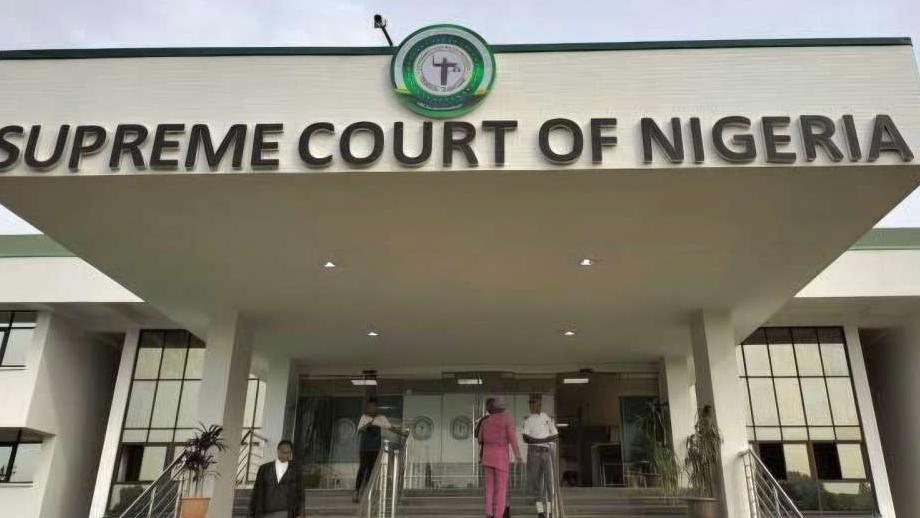
The Supreme Court complex in Abuja’s Three Arms Zone has become a focal point of national attention. Politicians, party loyalists, legal observers, and journalists have gathered in anticipation of decisions that could determine who holds legitimate authority within these parties. For both the ADC and the PDP, the rulings are expected to settle disputes that have dragged on for months, creating uncertainty and weakening their ability to function effectively.
These cases are not simply legal battles. They are deeply political contests that will define which factions have the constitutional and institutional authority to organize party activities, conduct primaries, manage party resources, and submit candidates to the Independent National Electoral Commission, INEC. In a political environment where timing and organization are critical, the outcomes may either revive the opposition or push it further into disarray.
Read more on: Outrage in Ibadan After Motorcyclist Dies in Police Encounter, Two Officers Arrested
The PDP Crisis and the Controversial Ibadan Convention
For the Peoples Democratic Party, the spotlight is firmly on the legality of its National Convention held in Ibadan in November 2025. That convention was intended to reposition the party after a period of internal strain, but instead, it triggered one of the most serious leadership crises in its recent history.
The dispute arose from a challenge led by Kabiru Tanimu Turaki, who is contesting earlier rulings by both the Federal High Court and the Court of Appeal. These lower courts had nullified the Ibadan convention, declaring that it was conducted in violation of internal party processes and judicial directives.
Central to the controversy is the role of former Jigawa State Governor Sule Lamido. Lamido had alleged that he was unfairly prevented from purchasing an expression of interest form to contest for the position of National Chairman. According to him, this exclusion amounted to a breach of his rights and undermined the democratic principles within the party.
Justice Peter Lifu of the Federal High Court had earlier ruled that the PDP should not proceed with the convention unless Lamido was allowed to participate fully in the process. Despite this directive, the party went ahead with the convention. That decision ultimately led to the courts voiding the exercise, leaving the PDP without a clearly recognized leadership structure.
Since then, the party has struggled with internal paralysis. Key decisions have been delayed, factional divisions have deepened, and the party’s ability to act as a cohesive opposition force has been significantly weakened. The Supreme Court’s judgment today is expected to either validate the convention and restore the current leadership or uphold its nullification, forcing the PDP to restart its leadership process entirely.
If the court affirms the earlier rulings, the implications could be far reaching. The party may have to organize a fresh convention, reconcile competing interests, and rebuild trust among its members, all within a limited timeframe before the 2027 elections. On the other hand, if the Supreme Court overturns the lower court decisions, it could provide the PDP with a much needed opportunity to stabilize and refocus its efforts.
Read more on: President Tinubu Appoints Bianca Odumegwu Ojukwu as Nigeria’s Foreign Affairs Minister
The ADC Leadership Struggle
While the PDP case has attracted significant attention, the African Democratic Congress is facing an equally critical moment. The Supreme Court is set to rule on a dispute between two factions claiming leadership of the party. One faction is led by former Senate President David Mark, while the other is headed by Nafiu Bala Gombe.
This leadership tussle has created confusion within the party and raised serious concerns about its operational legitimacy. INEC has already taken a cautious approach by refusing to recognize either faction until the judiciary provides a final determination. This position has effectively placed the party in a state of suspension, limiting its ability to participate fully in political activities.
The case, identified as SC CV 180 2026, was given priority by the Supreme Court due to its urgency. With electoral timelines approaching, the need for clarity has become increasingly pressing. Legal representatives for the David Mark faction have argued that the decisions of the lower courts were flawed and that denying recognition to their leadership risks disenfranchising a large segment of party members.
On the other side, the Gombe led faction insists that it represents the legitimate leadership of the party and has called for the court to uphold its position. The outcome of this case will determine which group has the authority to steer the party forward and represent it in dealings with INEC and other political stakeholders.
The ruling is scheduled for 2pm 30th April 2026, and like the PDP case, it is expected to have immediate and practical consequences. A clear judgment in favor of one faction would allow INEC to formally recognize the party’s leadership, thereby enabling it to resume normal political activities. However, if the decision leaves room for further disputes, the ADC may continue to face challenges that could hinder its role in the upcoming elections.
Read more on: Tinubu Replaces NMDPRA Chief, Nominates Rabiu Umar to Lead Reforms
Why These Judgments Are So Important
The significance of these rulings extends beyond the internal affairs of the PDP and ADC. They speak to the broader health of Nigeria’s democracy and the readiness of the opposition to provide a credible alternative to the ruling party.
One of the most immediate concerns is the issue of candidate selection. Political parties must conduct primaries that comply with legal and regulatory standards. If a party’s leadership is not clearly recognized, any candidates it produces could face disqualification. This creates a serious risk for both parties, as it could undermine their participation in the electoral process.
Funding is another critical factor. Political campaigns require substantial financial resources, and donors are often reluctant to commit funds to parties that are embroiled in legal disputes. Without clarity on leadership, both the PDP and ADC may struggle to attract the financial support needed to compete effectively.
The possibility of coalition building is also at stake. There have been ongoing discussions about forming a united opposition front to challenge the dominance of the ruling party in 2027. However, these efforts have been stalled by the uncertainty surrounding party leadership. Without clear authority, it is difficult to negotiate and finalize agreements that would bring different political groups together.
In this context, the Supreme Court’s role becomes particularly significant. The judiciary is being called upon to provide definitive answers to questions that political actors have been unable to resolve internally. While this underscores the importance of the courts in maintaining order, it also raises concerns about the extent to which political disputes are being transferred to the legal arena.
Read more on: Delta Police Officer Faces Murder Charge After Fatal Shooting of Suspect in Custody in Effurun
Voices from the Ground
Outside the Supreme Court complex, the atmosphere reflects the high stakes of the moment. Supporters from both parties have gathered, expressing a mix of hope, चिंता, and determination. Security has been tightened to prevent any clashes, as authorities seek to maintain order during what could be a tense day.
A youth leader from the PDP in Oyo State captured the mood when he spoke about the significance of the judgments. He said that the party is not just waiting for a legal decision but for a chance to move forward. According to him, the outcome will determine whether the PDP can regroup and prepare for the challenges ahead or remain trapped in internal conflict.
Similar sentiments have been expressed by members of the ADC, who see the ruling as an opportunity to resolve a crisis that has hindered the party’s growth. For many of them, today represents a turning point that could either revive the party’s prospects or deepen its challenges.
Read more on: US Reviews New Iranian Peace Proposal Amid Ongoing Tensions
What Comes After the Judgments
Once the Supreme Court delivers its decisions, attention will quickly shift to INEC. The electoral body is expected to act on the rulings by formally recognizing the legitimate leadership of each party. This process is likely to take place within a short timeframe, possibly within 48 hours.
The recognition by INEC will be crucial in restoring normalcy. It will allow the parties to resume activities such as organizing meetings, planning strategies, and preparing for primaries. It will also provide a basis for engaging with other political actors and exploring potential alliances.
However, the road ahead will not be without challenges. Even with clear rulings, both parties will need to address the divisions that have emerged during the disputes. Reconciliation efforts will be essential to rebuild unity and strengthen their positions.
For the PDP, this may involve bringing together different factions and ensuring that all members feel included in the party’s future. For the ADC, the focus will be on consolidating leadership and reestablishing its presence in the political landscape.
Read more on: Ekiti Church Attack: CAN Expresses Outrage, Calls for Immediate Action
A Broader Reflection on Nigeria’s Political Process
The events of today also invite a deeper reflection on the role of the judiciary in political affairs. While the courts provide an essential mechanism for resolving disputes, the frequent reliance on litigation raises questions about the state of internal party democracy.
Ideally, political parties should have strong internal systems for managing disagreements and conducting transparent processes. When these systems fail, the courts become the final arbiters. This can help restore order, but it also places a significant burden on the judiciary and can slow down political processes.
There is an ongoing debate about whether this trend strengthens or weakens Nigeria’s democracy. On one hand, judicial intervention ensures that rules are followed and that rights are protected. On the other hand, excessive litigation can create uncertainty and distract from the core task of governance and political engagement.
Read more on: Five Ogun Polytechnic Students Freed After Kidnapping
A Defining Moment for the Opposition
As Nigeria looks ahead to the 2027 elections, the importance of a strong and organized opposition cannot be overstated. The outcomes of today’s Supreme Court rulings will play a key role in determining whether the PDP and ADC can fulfill this role.
If the decisions provide clarity and stability, they could mark the beginning of a new phase for both parties. This would allow them to focus on developing policies, engaging with voters, and presenting themselves as viable alternatives.
However, if the disputes continue or if the rulings lead to further fragmentation, the opposition may struggle to mount an effective challenge. In that scenario, the balance of power in Nigeria’s political system could remain largely unchanged.
For now, all eyes are on the Supreme Court. The judgments expected today carry weight far beyond the courtroom. They will influence not only the future of two political parties but also the broader trajectory of Nigeria’s democracy as the nation prepares for another critical electoral cycle.
Read more on:
- Supporters Back Tinubu’s Second Term Push with N100m APC Nomination Forms
- Reps Grant Approval for Tinubu’s $516m Loan Request
- South Africa: Nigeria Demands Justice and Protection for Its Citizens After Two Killings
- Sanwo-Olu Backs Deputy Governor Hamzat for Lagos 2027 Governorship Election
- Gunmen Invade Kogi Orphanage, Kidnap 23 Children in Midnight Raid