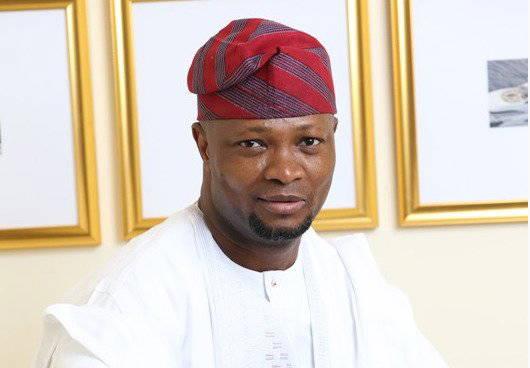
The political atmosphere in Lagos State took a significant turn on Thursday as Dr. Abdul-Azeez Olajide Adediran, widely known as Jandor, officially announced his withdrawal from the 2027 governorship race under the platform of the All Progressives Congress, APC. The development has immediately reshaped discussions within the party and across the wider Lagos political space, coming at a time when preparations for the next general election cycle are beginning to intensify.
The announcement was made during a well-attended press conference held at the Lagos4Lagos Movement headquarters in Ikeja, where supporters, political associates, and members of the media gathered to hear what many already suspected would be a major political statement. Jandor, who has been one of the most recognizable figures in Lagos opposition politics in recent years, explained that his decision was not taken lightly but followed what he described as extensive consultations with key stakeholders within the APC at both state and national levels.
He emphasized that the move was guided by what he called the greater interest of the party, rather than personal ambition. According to him, his political journey has always been about contributing to governance and building structures that can strengthen Lagos, not simply occupying office for its own sake. He noted that in a political environment as complex and competitive as Lagos, unity within the ruling party remains critical for sustaining its dominance and ensuring continuity in governance.
Read more on: 2027 Elections: ADC and PDP Await Key Supreme Court Ruling Today
Jandor explained that his return to the APC in 2025 was driven by a desire to reconnect with the political structure where he began his career and to contribute to what the party describes as its Renewed Hope agenda in Lagos State. He stated that after careful reflection and engagement with party leaders, it became necessary to align with a broader consensus that prioritizes stability within the party ahead of the primaries.
While he did not explicitly endorse any individual candidate, he made it clear that he would support whatever direction the party leadership ultimately agrees upon. His tone during the address suggested a deliberate effort to avoid division and instead promote cohesion at a time when internal competition is expected to intensify.
The timing of Jandor’s withdrawal is particularly significant given recent developments within the Lagos APC. Just days before his announcement, Governor Babajide Sanwo-Olu, alongside top party leaders and all 57 local government chairmen in the state, publicly endorsed the current Deputy Governor, Dr. Obafemi Hamzat, as the preferred successor for the governorship seat. That endorsement has been widely interpreted as a strong signal of where the party’s leadership is leaning ahead of the primaries.
Political observers believe that this wave of support for Hamzat may have played a decisive role in shaping Jandor’s decision. With major stakeholders already aligning behind a perceived frontrunner, continuing to pursue the ticket could have led to a divisive and potentially damaging primary contest. Instead, his withdrawal appears to have been framed as a strategic sacrifice to preserve internal harmony within the party.
Read more on: Outrage in Ibadan After Motorcyclist Dies in Police Encounter, Two Officers Arrested
Jandor’s political trajectory over the past few years has been marked by notable shifts and significant public attention. In the 2023 Lagos governorship election, he emerged as the flag bearer of the Peoples Democratic Party, PDP, and ran a vigorous campaign that positioned him as one of the key challengers to the ruling APC. Although he eventually finished in third place, his campaign was widely acknowledged for its grassroots mobilization and energetic messaging, which resonated with a segment of Lagos voters seeking alternative leadership.
Following the election, internal disagreements within the PDP began to surface more visibly. By March 2025, Jandor announced his departure from the party, citing what he described as persistent internal sabotage and lack of cohesion. His exit from the PDP marked a turning point in his political journey, as he subsequently returned to the APC, the party where he first built his political foundation.
At the time of his return, analysts described the move as both strategic and symbolic. It was seen as an attempt to reintegrate into the dominant political structure in Lagos while also reestablishing relationships that could be crucial for future ambitions. His re-entry into the APC was welcomed by some factions within the party, particularly those who viewed him as a strong grassroots mobilizer capable of strengthening electoral outreach.
Read more on: President Tinubu Appoints Bianca Odumegwu Ojukwu as Nigeria’s Foreign Affairs Minister
However, his withdrawal from the 2027 governorship race now marks another major shift in his political path. Rather than positioning himself as a direct contender for the top office in Lagos, Jandor appears to be transitioning into a more strategic role within the party structure. Political analysts suggest that this could potentially open doors for future appointments, either at the state level or within the federal government, depending on how the 2027 political cycle unfolds.
With Jandor stepping aside, attention has now fully shifted to the remaining aspirants within the APC. Dr. Obafemi Hamzat is currently seen as the leading figure in the race, largely due to his position as Deputy Governor and the recent wave of endorsements from influential party stakeholders. His administrative experience and long-standing presence within the Lagos political system have strengthened his profile as a continuity candidate.
Another key contender is Hakeem Muri-Okunola, a former Head of Service in Lagos State. Known for his administrative expertise and strong connections within the state’s civil service structure, he is widely regarded as a candidate with deep institutional knowledge. His supporters argue that he represents a blend of technocratic competence and political familiarity, which could appeal to both party elites and grassroots voters.
Read more on: Tinubu Replaces NMDPRA Chief, Nominates Rabiu Umar to Lead Reforms
Senator Tokunbo Abiru also remains a notable figure in the race, although he has maintained a relatively cautious public stance regarding his ambitions. Representing Lagos East Senatorial District, Abiru has built a reputation for legislative discipline and economic-focused advocacy. His supporters believe he could emerge as a consensus candidate if internal negotiations within the party shift in that direction.
Within the APC, Jandor’s withdrawal is being interpreted by some as a demonstration of internal discipline and strategic coordination. Lagos politics has long been characterized by intense competition during primaries, often requiring delicate negotiations to avoid fragmentation. By stepping down at this stage, Jandor has effectively reduced the number of high-profile contenders, potentially simplifying the party’s path toward consensus.
Political analyst Segun Sowunmi described the development as a calculated move that strengthens the ruling party’s internal structure. According to him, Jandor’s influence at the grassroots level should not be underestimated, and his decision to align with the party’s broader direction rather than challenge it demonstrates political maturity. He noted that the APC has once again shown its ability to manage internal ambitions in a way that prevents open conflict before elections.
Read more on: Delta Police Officer Faces Murder Charge After Fatal Shooting of Suspect in Custody in Effurun
Sowunmi further explained that the Lagos APC has historically relied on strong internal negotiation mechanisms to maintain unity. By bringing influential figures into the fold and ensuring they align with a central direction, the party reduces the likelihood of factional disputes spilling into the general election. In this context, Jandor’s withdrawal is seen as part of a broader pattern of consolidation.
Beyond the immediate implications for the governorship race, attention is also turning to what role Jandor may play in the future political arrangement of Lagos and the federal government. There is growing speculation that he could be considered for a strategic appointment after the 2027 elections, particularly given his experience in both opposition and ruling party structures.
His Lagos4Lagos Movement, which has built a strong grassroots network over the years, remains active and is expected to play a supportive role for the APC’s eventual candidate. Political observers suggest that this network could also be instrumental in mobilizing support for President Bola Ahmed Tinubu’s broader political agenda, especially as national elections approach.
Read more on: US Reviews New Iranian Peace Proposal Amid Ongoing Tensions
As Lagos moves closer to the 2027 governorship primaries, the political landscape continues to evolve rapidly. Jandor’s withdrawal has not only reduced the number of contenders but has also signaled a shift toward consolidation within the ruling party. Whether this will lead to a smoother selection process or simply concentrate competition among fewer but stronger candidates remains to be seen.
For now, what is clear is that the Lagos political equation has changed once again. Jandor’s decision marks a significant moment in the ongoing narrative of ambition, alignment, and strategy that defines politics in Nigeria’s most influential state.
Read more on:
- Ekiti Church Attack: CAN Expresses Outrage, Calls for Immediate Action
- Five Ogun Polytechnic Students Freed After Kidnapping
- Supporters Back Tinubu’s Second Term Push with N100m APC Nomination Forms
- Reps Grant Approval for Tinubu’s $516m Loan Request
- South Africa: Nigeria Demands Justice and Protection for Its Citizens After Two Killings