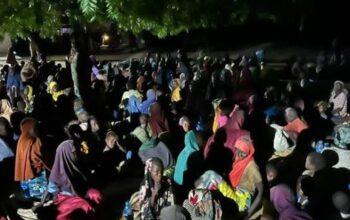
The already fragile security situation in northern Nigeria has suffered another devastating blow after a series of violent reprisal attacks claimed the lives of at least eleven civilians in Kankia Local Government Area of Katsina State. The killings, which took place around midday on Sunday, have left communities in mourning and heightened fears among residents who continue to live under the shadow of persistent bandit violence.
Authorities believe the attacks were carried out as retaliation by armed groups following recent successful operations by security forces in the area. What began as a string of tactical victories against criminal elements quickly escalated into a tragic cycle of revenge, exposing once again the complexity and danger of the ongoing security crisis in the region.
Tension Builds After Security Breakthroughs
In the days leading up to the attack, security agencies had recorded notable successes in their fight against banditry in Kankia and surrounding areas. According to information released by the Katsina State Ministry of Internal Security and Home Affairs, intelligence reports had indicated that a notorious bandit leader identified as Mohammadu Fulani was mobilizing fighters for coordinated attacks targeting key locations, including strategic bridges that serve as important access routes within the area.
Security operatives acted swiftly on the intelligence. On April 29, police tactical units successfully intercepted a large-scale cattle rustling operation in the villages of Gadar Yan Tulu and Kartaka. During the operation, officers recovered a total of 205 livestock, including 91 cows and 114 sheep, which had been stolen by the bandits.
The recovery was seen as a major breakthrough, not only because of the economic value of the livestock but also because cattle rustling remains one of the primary sources of funding for armed groups in the region. By disrupting this operation, security forces dealt a significant blow to the financial network sustaining the bandits.
However, the situation escalated further on Saturday when a joint security team led by the Divisional Police Officer in Kankia encountered members of the same criminal group. The confrontation led to a fierce exchange of gunfire between the operatives and the bandits. Several of the attackers were reportedly killed during the clash, while others fled with injuries.
Security personnel also recovered eight motorcycles believed to have been used by the bandits for mobility during their operations, along with additional rustled cattle. The motorcycles, often used for quick raids and escape, are a key asset for these groups, making their recovery another strategic success for the authorities.
At the time, these victories were seen as a sign that ongoing efforts to combat banditry were beginning to yield results. Unfortunately, they also appear to have triggered a violent backlash.
Read more on: Galadima Reveals Obi, Kwankwaso Set to Exist ADC Amid Rising Tensions
A Brutal and Calculated Reprisal
Less than twenty four hours after the clash, suspected bandits regrouped and launched a retaliatory assault on nearby communities. The attackers targeted the villages of Jeka da Kolo and Gwalgoro, both located within the Gyaza Kunduru ward of Kankia Local Government Area.
Eyewitness accounts describe a scene of chaos and terror as armed men stormed the villages, opening fire on residents. Many of the victims were caught off guard, with little or no opportunity to escape. The attackers reportedly moved swiftly through the communities, carrying out shootings before retreating ahead of the arrival of security reinforcements.
By the time police tactical teams were able to respond and push back the attackers, eleven civilians had already lost their lives. Several others sustained injuries, and properties were left damaged in the wake of the violence.
The killings have been widely condemned by authorities, who described the attack as both cowardly and barbaric. The Commissioner of Police in Katsina State, Ali Umar Fage, expressed deep sorrow over the incident and extended condolences to the families of the victims. He emphasized that the loss of innocent lives in such circumstances is unacceptable and assured residents that efforts were underway to bring those responsible to justice.
Grief and Fear Grip Affected Communities
For residents of Jeka da Kolo and Gwalgoro, the attack has left deep emotional scars. Families are mourning loved ones, while survivors are grappling with trauma and uncertainty about their safety. The fear of further attacks has forced many to remain on high alert, with some considering fleeing their homes in search of safer areas.
Community members say the violence has disrupted daily life, affecting farming, trading, and other economic activities that sustain livelihoods. In a region where many depend on agriculture, insecurity has made it increasingly difficult for people to work their land without fear of being attacked.
Local leaders have called for increased security presence and more proactive measures to prevent future attacks. They stress that while military and police operations have achieved some success, communities remain vulnerable to retaliatory violence whenever bandits suffer losses.
Read more on: Fresh Police Killing in Oyo Triggers Nationwide Anger
Government and Security Agencies Respond

In response to the attack, the Katsina State Government has reiterated its commitment to tackling insecurity and protecting lives and property. Governor Dikko Umaru Radda, through a statement issued by the Commissioner for Internal Security, Dr Nasir Mu’azu, urged residents to remain calm and cooperate with security agencies.
The government also announced a series of measures aimed at addressing the immediate situation and preventing further violence. These include the launch of an intensive manhunt for the perpetrators, increased deployment of tactical teams to the affected areas, and the continuation of coordinated patrols designed to track down fleeing bandits.
Police authorities confirmed that intelligence-led operations are already underway, with officers conducting bush combing exercises to locate and apprehend the attackers. The Commissioner of Police has directed all relevant units to intensify efforts and ensure that those responsible are brought to justice without delay.
Security agencies have also called on residents to provide timely and credible information that could assist in identifying and tracking the criminals. Authorities believe that community cooperation remains a crucial element in the fight against banditry, as local knowledge can often provide valuable insights that aid operations.
A Persistent Security Crisis in the North West
The latest attack in Kankia is part of a broader pattern of violence that has plagued Katsina State and other parts of northwestern Nigeria for years. Banditry has evolved into a complex and deeply rooted problem, driven by a combination of factors including poverty, weak governance, and the proliferation of illegal arms.
Armed groups frequently engage in activities such as cattle rustling, kidnapping for ransom, and attacks on rural communities. These operations not only result in loss of life but also contribute to widespread displacement and economic hardship.
In many cases, successful security operations against bandits are followed by retaliatory attacks, creating a cycle of violence that is difficult to break. The events in Kankia reflect this troubling pattern, where gains made by security forces can sometimes lead to immediate backlash against vulnerable communities.
Just weeks before the Kankia incident, another attack in Dutsin Ma Local Government Area resulted in the deaths of five people and forced more than 300 residents to flee their homes. Such incidents highlight the ongoing challenges faced by authorities in maintaining lasting peace in the region.
Read more on: Nigeria Launches Free Evacuation Flights as xenophobia Crisis Increase
The Human Cost of Insecurity
Beyond the statistics and official statements lies the human cost of these attacks. Each life lost represents a family torn apart and a community weakened. Survivors are often left dealing with physical injuries, psychological trauma, and the loss of livelihoods.
Children in affected areas face disruptions to their education, while farmers struggle to cultivate crops due to fear of attacks. The long term impact of these challenges can hinder development and deepen poverty in already vulnerable communities.
Humanitarian organizations have repeatedly called for increased support for victims of banditry, including access to medical care, counseling services, and economic assistance. Addressing the needs of those affected is seen as a critical component of any comprehensive response to the crisis.
Calls for Sustained Action
Security experts argue that while tactical operations are necessary, a more comprehensive approach is needed to address the root causes of banditry. This includes improving economic opportunities, strengthening local governance, and enhancing coordination among security agencies.
There are also calls for greater investment in intelligence gathering and technology to improve the effectiveness of operations. Some analysts believe that community based security initiatives could play a role in bridging the gap between residents and formal security structures.
For now, the immediate priority remains restoring a sense of safety in Kankia and preventing further loss of life. Authorities have assured residents that they are committed to achieving this goal, but many believe that lasting peace will require sustained effort and collaboration at all levels.
Read more on: UNICROSS Mourns Loss of Three Students and Staff in Tragic Highway Crash
A Community in Mourning, A Nation Watching
As the people of Jeka da Kolo and Gwalgoro bury their dead, the tragedy serves as a stark reminder of the ongoing security challenges facing Nigeria. The attack has once again drawn attention to the urgent need for effective solutions that can break the cycle of violence and protect vulnerable communities.
While security forces continue their operations and the government implements response measures, residents remain hopeful that justice will be served and that steps will be taken to prevent similar incidents in the future.
For now, the memory of the eleven lives lost lingers heavily over Kankia, a painful testament to the cost of insecurity and the urgent need for lasting peace in the region.
Read more on
- Delta Police Officer Faces Murder Charge After Fatal Shooting of Suspect in Custody in Effurun
- President Tinubu Embarks on France, Kenya, Rwanda Trip for Strategic Summits
- Silence in Wike Camp as APC Stakeholders Present Fubara with Re-election Forms
- INEC Sets June 20 for Bye-Elections Across Six States
- Atiku and Amaechi Meet David Mark as INEC Confirms ADC Leadership
- Oil Prices Surge to Four-Year High as Trump Weighs Military Action Against Iran