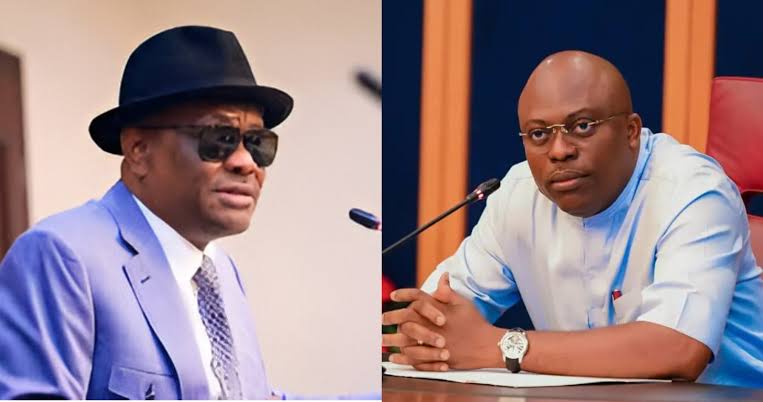
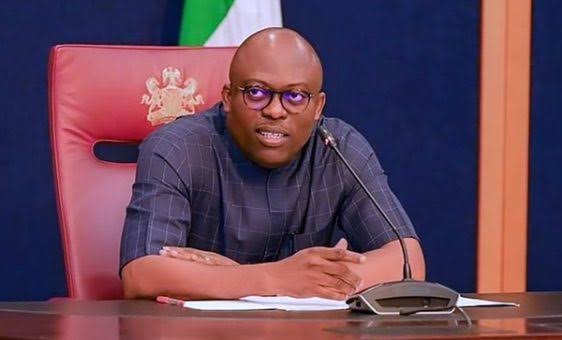
The political landscape of Rivers State has once again been thrown into a wave of tension, speculation, and strategic recalculation following a dramatic development that many observers describe as one of the most significant realignments in recent years. Governor Siminalayi Fubara has reportedly received the All Progressives Congress (APC) expression of interest and nomination forms ahead of the 2027 governorship election, a move that has instantly reshaped conversations within the state’s already fragile political environment.
The presentation of the forms, which took place on Friday, May 1, 2026, was not initiated by the governor himself. Instead, it was carried out by a coalition of APC stakeholders, party elders, and political representatives who insist that the action reflects the will of the people across Rivers State.
The development has triggered intense reactions, especially within the political structure associated with the Minister of the Federal Capital Territory, Nyesom Wike, whose influence has long been a defining factor in Rivers politics. However, unlike previous political confrontations where statements, rebuttals, and media exchanges followed quickly, this time there has been what many describe as a striking and unusual silence from Wike’s political camp.
Read more on: INEC Sets June 20 for Bye-Elections Across Six States
A Surprise Political Intervention by APC Stakeholders
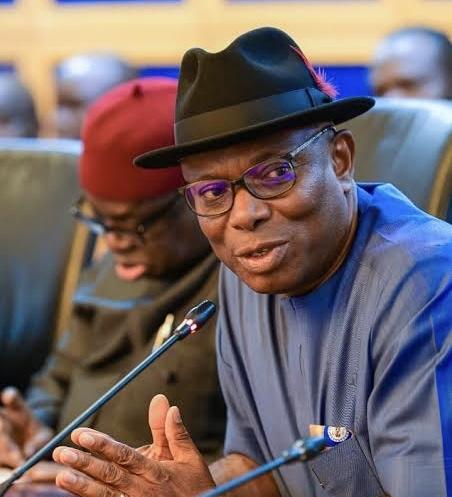
The moment that captured public attention began when a delegation led by Hon. Awaji-Inombek Abiante, the representative of the Andoni and Opobo Nkoro Federal Constituency, arrived with APC nomination materials for Governor Fubara. The group explained that the decision was not a personal initiative but rather a collective effort supported by various stakeholders across the state.
According to Abiante, the purchase of the nomination forms was funded through voluntary contributions from supporters spread across all 23 local government areas of Rivers State. He emphasized that the action was rooted in what he described as a strong public demand for continuity in leadership.
The delegation insisted that Governor Fubara did not request the forms, nor was he directly involved in their procurement. Instead, they framed their action as a response to what they called overwhelming encouragement from citizens who believe the governor should seek a second term.
Abiante, while addressing journalists during the presentation, stated that the delegation was effectively acting on behalf of the people, adding that the governor could not “escape the responsibility placed upon him by his supporters.” His remarks reinforced the idea that the move was intended as a symbolic gesture of political pressure rather than a formal declaration of ambition by the governor himself.
Read more on: Atiku and Amaechi Meet David Mark as INEC Confirms ADC Leadership
The Idea of “Compelled Candidacy”
One of the most discussed aspects of the development is the language used by the stakeholders, who repeatedly referred to their action as a form of “compulsion.” In their explanation, they insisted that Governor Fubara was being “compelled by the people” to continue in office beyond his current tenure.
This framing has sparked debate among political analysts, some of whom argue that it reflects a growing trend in Nigerian politics where grassroots mobilization is used to legitimize political ambition, even before official declarations are made.
The delegation compared their action to similar political traditions in other parts of the country, particularly referencing instances where party structures and advisory councils have purchased nomination forms for political figures, including high profile national leaders in previous election cycles. According to them, such actions are not unusual in Nigeria’s political environment, where symbolic endorsements often precede formal declarations.
Growing Silence From Wike’s Political Network
While supporters of Governor Fubara have openly celebrated the development, the reaction from the camp of Nyesom Wike has been noticeably muted. For a political bloc known for its strong media presence, quick responses, and assertive communication style, the lack of immediate commentary has not gone unnoticed.
Over the past year, Rivers State politics has been defined by a strained relationship between Governor Fubara and elements aligned with his predecessor. Although both figures have operated within the broader framework of the ruling national party structure, local tensions have often spilled into public view.
The latest development, however, appears to have created a new layer of complexity. Political observers note that the silence from Wike’s allies could be interpreted in several ways, ranging from strategic restraint to internal recalibration of political positioning.
Some analysts believe the camp may be assessing the broader implications of Fubara’s apparent consolidation of support within both the state and the national party structure before issuing any public response.
Read more on: Oil Prices Surge to Four-Year High as Trump Weighs Military Action Against Iran
Signs of a Shifting Political Balance
The political situation in Rivers State has remained fluid since the events of the previous year, which included a prolonged period of instability and a temporary declaration of emergency governance in parts of the state. In the aftermath of those events, efforts have been made to restore normal political activity and rebuild institutional stability.
Governor Fubara’s administration has since been credited by supporters with making progress in several key areas, particularly in infrastructure development and economic planning. Among the projects frequently cited are the ongoing Trans Kalabari Road project, valued at approximately two hundred billion naira, and the Andoni Access Road initiative, both of which are seen as critical to improving connectivity in the state’s coastal regions.
In addition to infrastructure, the administration has also emphasized the development of the state’s blue economy, focusing on marine based economic opportunities and investment in coastal communities. Supporters argue that these initiatives have helped restore confidence in governance after a period of political uncertainty.
APC Alignment and National Political Implications
Perhaps the most politically significant element of the latest development is the clear indication that Governor Fubara is being positioned to contest the 2027 governorship election under the All Progressives Congress platform. This alignment places him directly within the structure of the ruling party at the national level, led by President Bola Ahmed Tinubu.
The same group of APC stakeholders that presented the nomination forms also publicly declared their support for President Tinubu’s re election bid in 2027, further linking state level political movements with national political strategy.
This alignment creates a politically complex situation, particularly for Nyesom Wike, who currently serves as Minister of the Federal Capital Territory within the same federal administration. While Wike remains a key figure in national politics, the emergence of Fubara as a potential APC gubernatorial candidate with strong grassroots backing introduces a new dynamic within Rivers State politics.
Read more on: Lagos 2027: Jandor Withdraws From APC Governorship Contest
A Complex Web of Loyalty and Influence
Political analysts have described the current situation as a delicate balancing act involving multiple layers of loyalty and influence. On one hand, Wike remains an influential national figure within the federal cabinet. On the other hand, his former political ally in Rivers State is now being openly positioned as a leading candidate within the same ruling party structure.
This development has raised questions about how internal party relationships will evolve in the coming months, particularly as preparations for the 2027 general elections gradually begin to take shape across the country.
The situation also highlights the increasingly complex nature of political alliances in Nigeria, where regional interests, national party structures, and personal relationships often intersect in unpredictable ways.
Read more on: 2027 Elections: ADC and PDP Await Key Supreme Court Ruling Today
What Comes Next for Rivers Politics
With the nomination forms now officially in circulation, attention has shifted to the next moves from all political stakeholders involved. Governor Fubara is yet to make any formal declaration regarding his intention to seek re election, although the actions of his supporters strongly suggest that momentum is building in that direction.
At the same time, political observers are watching closely to see whether the Wike political network will respond publicly or choose to maintain its current silence. Any statement or counter move could significantly influence the direction of political discourse in the state.
Party officials at both state and national levels are also expected to play a key role in shaping the unfolding situation, particularly as internal party processes for candidate selection and endorsement begin to take shape.
Read more on: Outrage in Ibadan After Motorcyclist Dies in Police Encounter, Two Officers Arrested
Conclusion: A State at a Political Crossroads
Rivers State now finds itself at a critical political crossroads, where shifting alliances, strategic silence, and grassroots mobilization are all contributing to an evolving narrative.
The presentation of APC nomination forms to Governor Siminalayi Fubara has not only intensified discussions around the 2027 elections but has also highlighted deeper questions about power, influence, and political succession in one of Nigeria’s most strategically important states.
Whether this moment becomes a turning point toward consolidation or the beginning of a new phase of political rivalry remains to be seen. What is clear, however, is that Rivers politics has once again entered a highly sensitive and closely watched period, with every move carrying significant implications for the future.
Read more on:
- President Tinubu Appoints Bianca Odumegwu Ojukwu as Nigeria’s Foreign Affairs Minister
- Tinubu Replaces NMDPRA Chief, Nominates Rabiu Umar to Lead Reforms
- Delta Police Officer Faces Murder Charge After Fatal Shooting of Suspect in Custody in Effurun
- US Reviews New Iranian Peace Proposal Amid Ongoing Tensions