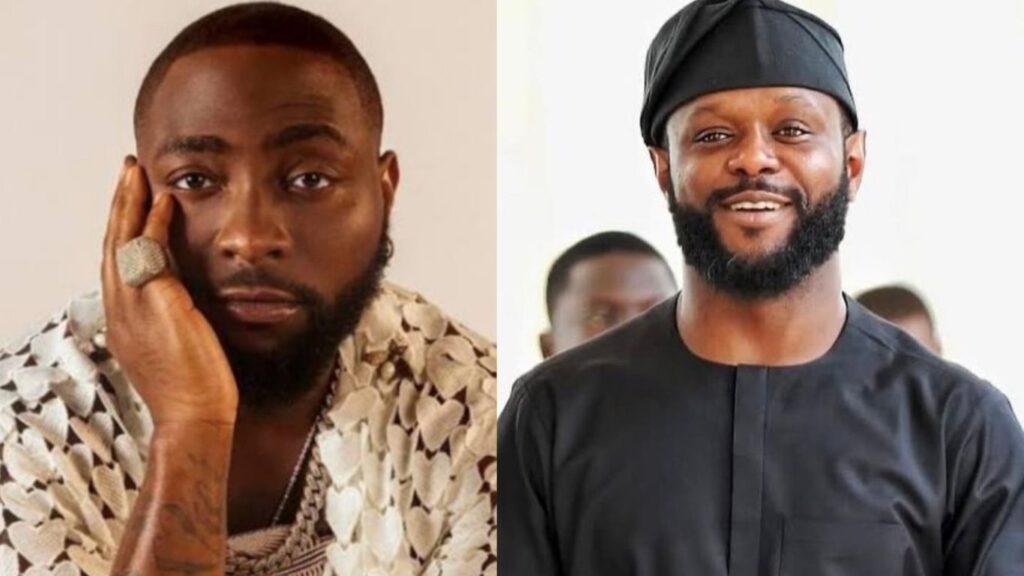
Afrobeats superstar Davido has once again found himself at the center of a national conversation, this time blending celebrity culture, political perception, and public frustration over Nigeria’s worsening security situation. The singer’s recent comments on social media, made in reaction to disturbing reports of abductions and violence across parts of the country, sparked both praise and backlash, ultimately forcing him to clarify where he stands politically and personally.
The controversy began after Davido expressed his emotions on X, formerly Twitter, in response to the recent wave of insecurity incidents, including the abduction of pupils and teachers in Oyo State. His post, which carried a tone of frustration and exhaustion, quickly gained traction as Nigerians debated the role of entertainers in speaking out during moments of national crisis.
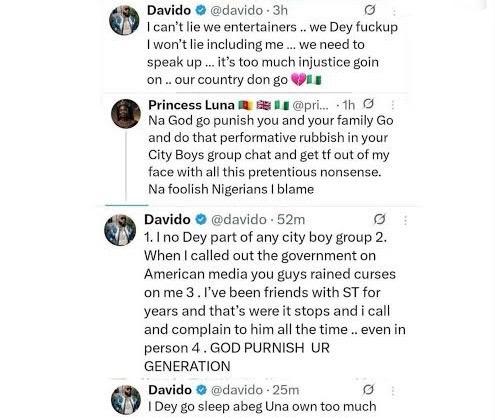
In his message, Davido admitted that he and other entertainers have not done enough to consistently speak up about the realities facing ordinary Nigerians. He openly criticized what he described as collective silence within the entertainment industry, acknowledging that even he has at times fallen short. His remarks struck an emotional chord, as he described the situation in the country as overwhelming and disheartening, adding that the constant reports of insecurity have left him mentally drained.
However, while many users commended him for using his platform to draw attention to pressing national issues, others were quick to question his sincerity. The backlash escalated when critics pointed to his known association with Seyi Tinubu, son of President Bola Tinubu, suggesting that his outcry was inconsistent with his personal relationships and therefore lacked credibility.
Social media users began framing the discussion around political loyalty, with some accusing the singer of maintaining close ties with individuals within the presidential circle while simultaneously criticizing government failures. The phrase “City Boys group,” a label associated with a political youth movement that supported President Tinubu during the 2023 elections, quickly resurfaced and became central to the online debate.
Read more on: “I Have the Right to Judge”: Peter Okoye
One particularly viral comment accused Davido of engaging in what was described as “performative activism,” suggesting that his statements were contradictory given his friendships. The comment reflected a broader sentiment among critics who believe celebrities must either align fully with political allies or avoid public criticism altogether, a position that further intensified the online argument.
As the debate grew louder, Davido responded directly to the allegations, taking time to clearly separate his personal relationships from political involvement. He categorically denied being part of any group, movement, or political association linked to the presidency or the so called City Boys circle.
According to him, there is no formal or informal political affiliation behind his friendship with Seyi Tinubu. He emphasized that his connection with the president’s son is purely personal and has existed long before the current political climate or election related conversations. He stressed that friendships should not automatically be interpreted as political endorsement or alignment.
Davido explained that while he does maintain a personal relationship with Seyi Tinubu, that relationship does not influence his public statements or opinions on governance and national issues. He noted that he often expresses his concerns directly and honestly, even within private conversations, especially when it comes to matters affecting the wellbeing of Nigerians.
He also addressed what he described as a recurring pattern of criticism directed at him regardless of his actions. According to Davido, when he speaks out, he is accused of seeking attention or performing activism, and when he remains silent, he is criticized for indifference. This, he suggested, creates a situation where public figures are constantly judged regardless of their intent or sincerity.
Read more on: ‘There’s Too Much Injustice in Nigeria,’ – Skepta
The singer maintained that he will continue to speak based on personal conviction and emotional response to national issues, rather than being guided by public opinion or assumptions about his friendships. He insisted that his concern for Nigeria remains genuine and that he has no intention of aligning his voice with any political faction.
The conversation surrounding Davido’s comments has also reignited a broader discussion about the role of celebrities in Nigeria’s political and social space. In recent years, entertainers have increasingly become vocal about governance, insecurity, and economic hardship, using their platforms to amplify public sentiment. However, this visibility has also exposed them to heightened scrutiny, particularly when their personal relationships intersect with political figures.
Observers note that Nigeria’s current political climate has made neutrality increasingly difficult for public figures. Every statement is analyzed through a political lens, and every association is often interpreted as endorsement, whether intentional or not.
In Davido’s case, his friendship with Seyi Tinubu became the focal point of a wider debate about influence, accountability, and the expectations placed on celebrities in moments of national distress. While some Nigerians continue to question his positioning, others argue that personal relationships should not automatically define political stance.
Read more on: Zlatan Moves to Settle Differences with Seyi Vibez After Online Tension
As the dust settles on the immediate backlash, the episode underscores a growing tension between celebrity expression and public expectation in Nigeria. It also highlights how quickly emotional commentary on national issues can evolve into politically charged debates in an already polarized environment.
For Davido, the message remains consistent. He is not part of any political group, he is not aligned with any movement, and his friendship does not define his stance on governance. What remains clear is that in today’s digital age, even a personal opinion can quickly become a national controversy.
Read more on: