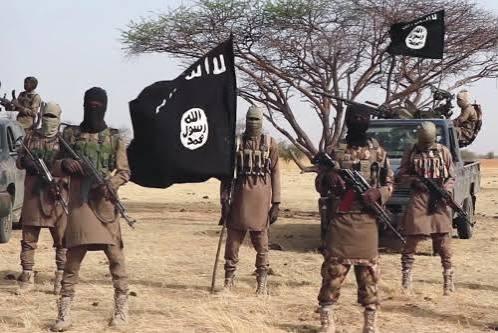
The Lake Chad Basin, long regarded as one of West Africa’s most complex and difficult counterterrorism theatres, has once again become the centre of a major security development. The Islamic State West Africa Province, ISWAP, has now officially confirmed the death of one of its most senior commanders, Abu-Bilal al-Mainuki, also known by aliases such as Abubakr Mainok and Abu Bakr al-Mainuki.
The confirmation comes nearly two weeks after a coordinated joint military operation carried out by United States Special Forces in collaboration with the Armed Forces of Nigeria. Although the group attempted to frame the incident through its own propaganda narrative, describing fallen fighters as martyrs, intelligence and security assessments indicate that the operation resulted in a significant setback for the organisation’s leadership structure and operational capacity.
The Night Operation in the Lake Chad Basin
The strike reportedly took place in remote and heavily fortified forest areas within the Lake Chad Basin in northeastern Nigeria, a region that has served for years as a stronghold for ISWAP and other insurgent factions. Military sources described the mission as a carefully planned and highly coordinated operation involving both ground forces and aerial support.
According to available reports and statements attributed to military officials as well as ISWAP’s own acknowledgement, intelligence gathering for the mission stretched over several months. The United States Africa Command, working closely with Nigerian intelligence agencies, is said to have tracked al-Mainuki’s movements using a combination of surveillance drones and human intelligence networks.
When the operation was finally launched, it unfolded under the cover of darkness. US Special Forces, operating alongside Nigerian troops, carried out a multi phase assault that included precision airstrikes, heavy weapons engagement, and targeted strikes on key infrastructure within the insurgent enclave. The primary objective was believed to be a command and media facility used by ISWAP for coordination and propaganda dissemination.
Reports suggest that the strike not only eliminated the targeted headquarters but also caused widespread disruption within the surrounding network of fighters. While ISWAP attempted to downplay the scale of the losses in its statement, security analysts argue that the impact was far more severe than publicly acknowledged. Some assessments indicate that several senior operatives were killed alongside al-Mainuki, including foreign linked ISIS affiliates, with estimates placing overall militant losses at more than one hundred fighters.
Read more on: Atiku Abubakar Visits Rotimi Amaechi After ADC Primary
Profile of Abu-Bilal al-Mainuki
Abu-Bilal al-Mainuki, born in Borno State in 1982, rose through the ranks of extremist networks in Nigeria during a period marked by the transformation of Boko Haram into more fragmented and globally connected insurgent factions.
His trajectory reflects the evolution of ISWAP itself. Initially involved in Boko Haram operations, he became more prominent following the internal split in 2016 that saw Abubakar Shekau’s faction break away from the group that later pledged allegiance to the Islamic State. Al-Mainuki is widely believed to have played a key role in shaping ISWAP’s early structure, particularly in areas related to financial management and organisational coordination.
Over time, he developed a reputation within the group for handling logistics, funding channels, and media related operations. His influence reportedly expanded beyond regional boundaries, eventually placing him within senior levels of ISIS aligned leadership structures. In recent years, he was associated with the Al Furqan media office and is believed to have had involvement with broader ISIS administrative frameworks responsible for coordinating activities across multiple regions.
Leadership Role and Global Significance
Following the raid, United States officials and AFRICOM sources described al-Mainuki as a highly influential figure within the wider ISIS network, referring to him as a senior operational coordinator and a key link in global communications and logistics. Some assessments even placed him in a central role within ISIS international coordination structures, responsible for overseeing financial and strategic support systems.
While some independent analysts have suggested that his influence may have been more regionally concentrated within the Sahel and Lake Chad Basin, United Nations monitoring reports have previously highlighted his growing importance within ISIS aligned operations, particularly in relation to financial flows and propaganda coordination.
His reported involvement in overseeing strategic communications and logistical planning made him a particularly valuable figure within the organisation, and his death is therefore being viewed as a significant disruption to ISWAP’s internal hierarchy.
Read more on: Tinubu’s Daughter Rejects Lagos APC Primaries Result
Implications of the Operation
The confirmation of al-Mainuki’s death is being interpreted by security observers as a major milestone in ongoing counterterrorism efforts in the region. One of the most notable aspects of the operation is the level of cooperation between United States forces and Nigerian military units, which reflects an increasingly coordinated approach to tackling insurgent activity in the Lake Chad Basin.
For years, the region has posed serious operational challenges due to its dense terrain, difficult geography, and the mobility of armed groups operating across porous borders. The success of this joint operation is therefore seen as evidence of improved intelligence sharing and enhanced tactical coordination between international and local forces.
Security experts also suggest that the removal of a figure involved in both financial management and media coordination could create immediate disruption within ISWAP’s command structure. Leadership vacuums of this nature often lead to internal uncertainty, competition among mid level commanders, and temporary breakdowns in communication channels.
Read more on: “You Are Not Forgotten” Tinubu Reassures Families of Abducted Pupils
Wider Security Impact
Beyond the immediate tactical outcome, analysts believe the strike may have broader implications for ISIS linked networks across Africa and beyond. If al-Mainuki indeed played a coordinating role between regional ISWAP operations and wider ISIS structures, his removal could interrupt financial transfers, strategic communication, and operational planning between different insurgent cells.
Such disruptions, however, are often temporary. Security observers caution that while leadership losses weaken operational efficiency in the short term, insurgent organisations in the Sahel have historically demonstrated an ability to adapt, restructure, and reassign responsibilities relatively quickly.
Looking Forward
Despite the significance of the operation, counterterrorism officials emphasise that sustained pressure will be necessary to prevent ISWAP from reestablishing its command capabilities in the Lake Chad Basin. The group’s history of decentralised leadership and resilience in difficult terrain means that no single operation is likely to fully dismantle its network.
Nevertheless, the joint US Nigerian raid represents one of the most consequential blows against the group’s leadership in recent years. For now, the message from both Abuja and Washington appears clear, the era of relatively unchallenged insurgent control in key forest enclaves is being increasingly contested by coordinated international and regional military action.
Read more on: