In 2015, Barcelona stood at the summit of European football. At Berlin’s Olympiastadion, they defeated Juventus 3-1 to claim their fifth UEFA Champions League title, completing a memorable treble in the process. That team, powered by the devastating attacking trio of Lionel Messi, Luis Suárez, and Neymar, looked set to dominate Europe for years to come. Everything pointed toward the beginning of a sustained era of supremacy.
However, what followed was not continued dominance, but an unexpected decline on the continental stage. More than a decade later, Barcelona are still waiting for another Champions League triumph. In that time, the club has endured a series of painful exits in Europe, including heavy defeats, dramatic comebacks against them, financial turmoil, and the eventual departure of Lionel Messi. The team that once defined European football has been searching for stability and identity ever since.
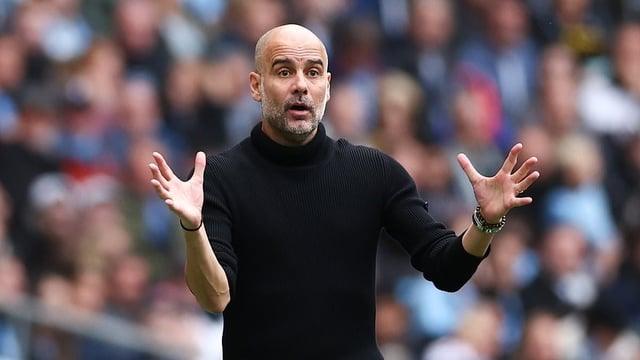
While many analysts have pointed to boardroom instability, tactical shortcomings, and defensive weaknesses as reasons for the decline, former manager Pep Guardiola has offered a deeper and more reflective explanation for Barcelona’s long absence from the top of Europe.
Guardiola’s View: The Pressure of Europe Can Undermine Progress
Speaking about Barcelona’s ongoing rebuilding phase under Hansi Flick, Guardiola addressed the club’s continued struggles in the Champions League. His central argument was that an excessive fixation on winning Europe’s biggest prize can actually damage long term development.
In his view, the Champions League should not be treated as the sole measure of success or failure. He warned that placing too much importance on it can distort decision making within a club.
Guardiola explained that the competition itself can be unforgiving to long term projects, stating that “the Champions League is a competition that destroys projects, and I hope that’s not the case at Barça.” He added that clubs should not dismiss everything they have built simply because they fail to win the tournament in a given season.
His comments reflect a broader concern that Barcelona, in recent years, have judged themselves almost entirely on European outcomes, often overlooking progress made in domestic competitions.
Read more on: US and Iran Exchange Strikes Despite World Cup Visa Approval
Three Key Reasons Behind Barcelona’s European Decline
Guardiola’s explanation for Barcelona’s struggles can be understood through three major factors that he believes are essential for Champions League success. Since 2015, he argues, Barcelona have consistently fallen short in these areas.
- The Difference Between League Stability and Knockout Pressure
According to Guardiola, there is a fundamental difference between performing in a domestic league and succeeding in the Champions League. League football rewards consistency over a long season, while the Champions League is decided by small details in high pressure knockout matches.
In domestic competition, teams have time to recover from mistakes, adjust tactics, and maintain rhythm across many months. Barcelona, even during their post-2015 decline, remained strong in La Liga and continued to collect domestic titles.
However, Guardiola suggests that the club began to place disproportionate importance on European success, leading to frustration when knockout matches did not follow expected patterns. This shift in mindset, he argues, contributed to instability in planning and decision making, especially when short term reactions replaced long term structure.
- Physical Demands and Squad Limitations
Another major issue highlighted is the physical intensity required to compete at the highest level in Europe. In several of Barcelona’s Champions League exits since 2015, the team appeared to struggle with pace, stamina, and physical resilience, particularly in the later stages of matches and across two legged ties.
Heavy defeats against teams such as Liverpool and Bayern Munich exposed this weakness clearly. In those matches, Barcelona were often overrun in midfield, unable to maintain intensity, and vulnerable under sustained pressure.
Guardiola pointed out that reaching the decisive stages of the competition requires squads to be in peak physical condition, free from excessive fatigue and major injuries. After 2015, Barcelona relied heavily on an aging core of key players, and the squad often lacked the depth needed to maintain elite performance levels deep into the season.
As injuries accumulated and fatigue set in during the spring months, Barcelona frequently found themselves unable to respond to high intensity opposition.
- Fine Margins and Unpredictable Moments
Guardiola also emphasized the unpredictable nature of knockout football, where matches can be decided by very small incidents. Refereeing decisions, moments of individual brilliance, or sudden lapses in concentration can completely change the outcome of a tie.
He noted that refereeing decisions can have a significant influence in tightly contested matches, especially when teams are evenly matched.
During Barcelona’s dominant era, their control of possession and midfield tempo often reduced the impact of such randomness. However, in recent years, as that control weakened, matches became more chaotic and less predictable. In that environment, small errors proved costly, and Barcelona found themselves repeatedly on the wrong side of decisive moments.
Read more on: Mourinho Urges Real Madrid to Move for Manchester United Target
A Timeline of European Disappointment
Barcelona’s Champions League history since 2015 reflects a consistent pattern of disappointment, with each exit revealing different weaknesses within the team.
In the 2015 to 2016 season, they were eliminated by Atletico Madrid in the quarter finals after struggling to break down a disciplined defensive system. The following year, Juventus knocked them out with a strong defensive performance and a commanding away display.
The 2017 to 2018 campaign saw one of the most shocking collapses in modern Champions League history, as Barcelona surrendered a four one aggregate lead to Roma after a dramatic second leg defeat in Italy.
A year later, Liverpool produced another famous comeback at Anfield, overturning a three nil first leg deficit in a match defined by intensity and physical dominance.
In 2019 to 2020, Bayern Munich delivered a devastating eight two defeat that exposed deeper structural problems within the squad and marked one of the darkest nights in the club’s modern history.
Following these repeated failures, Barcelona responded with aggressive spending in the transfer market, bringing in high profile players such as Philippe Coutinho, Antoine Griezmann, and Ousmane Dembélé in an attempt to quickly restore European dominance.
However, these signings disrupted wage structures, created imbalance within the squad, and contributed to long term financial instability. Eventually, the situation escalated to the point where the club could no longer retain Lionel Messi, marking the end of an era.
Read more on: Oshoala and Payne Lead Super Falcons to Victory Over Senegal in Ikenne Friendly
The New Era Under Hansi Flick
Today, Barcelona are attempting to rebuild under Hansi Flick with a renewed focus on youth development and long term planning. Emerging talents such as Lamine Yamal, Pedri, and Gavi represent a new generation that the club hopes will restore stability and identity.
Guardiola’s message serves as a reminder that success in Europe cannot be forced through urgency or short term pressure. Instead, he suggests that it must be built gradually through strong domestic foundations, consistent development, and squad balance.
He warns that if Barcelona once again become consumed by the urgency of winning the Champions League at all costs, they risk repeating the same mistakes that have defined their last decade in Europe.
For now, the challenge is not only to return to the top of European football, but to do so in a way that preserves the structure and philosophy that once made Barcelona dominant.
Read more on:
- Manchester City Face Legal Battle Over Haaland Claims as £100m Transfer Setback Deepens Summer Pressure
- Chelsea Set Price Tag for Cucurella Amid Interest from Real Madrid and Barcelona
- Lionel Messi Wins Princess of Asturias Honour in Historic Recognition
- Poland Equalize With the Last Kick of the Game to Deny Super Eagles Victory