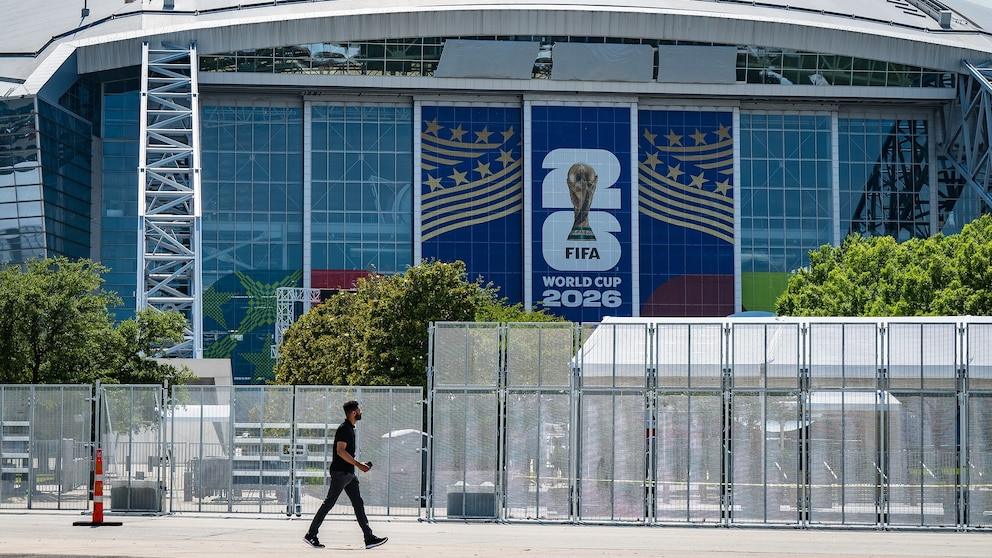
In a development that captures both the unifying power of sport and the harsh realities of global politics, the United States and Iran have exchanged military strikes in the Middle East just hours after a major breakthrough confirmed that Iran’s national football team, widely known as Team Melli, has been granted visas to participate in the FIFA World Cup 2026.
With the expanded 48 team tournament set to begin in just ten days, the situation presents a striking contradiction. On one hand, preparations for the world’s biggest football event are reaching their peak. On the other, tensions between two nations involved in the tournament have escalated into active confrontation. It marks an unprecedented moment in World Cup history, as a host country prepares to welcome a team from a nation with which it is currently engaged in direct military hostility.
Renewed Tensions Threaten Fragile Calm
The latest escalation comes amid a delicate ceasefire that had been in place for roughly two months following earlier hostilities that began in early April. That temporary calm now appears increasingly uncertain after events that unfolded late Friday night.
According to the United States Central Command, four Iranian attack drones were intercepted over the Strait of Hormuz. The drones were described as posing an immediate risk to international maritime traffic, prompting a swift response. US forces carried out targeted airstrikes against Iranian coastal radar installations located in Goruk and on Qeshm Island, which they identified as part of the operational network supporting the drone activity.
Iran responded within hours. The Islamic Revolutionary Guard Corps launched seven ballistic missiles toward locations in Kuwait and Bahrain, areas known to host strategic military facilities linked to US operations in the region. Air raid sirens sounded across parts of the Gulf as defense systems were activated. US officials reported that six of the missiles were intercepted and confirmed that no American personnel were injured. However, Iranian state media presented the strike as a successful retaliation against what it described as hostile actions on its territory.
The exchange has significantly strained the already fragile ceasefire, raising concerns about a potential broader escalation at a time when global attention is increasingly turning toward the World Cup.
Read more on: Mourinho Urges Real Madrid to Move for Manchester United Target
Unexpected Progress on the Diplomatic Front
In a surprising turn of events, diplomatic efforts continued quietly in parallel with the rising tensions. Overnight, a White House official confirmed that the United States had finalized and issued travel visas for Iran’s national team, effectively clearing the way for their participation in the tournament.
The decision followed months of uncertainty. Iran had previously hinted at the possibility of withdrawing from the competition, citing concerns over access and political tensions. The Football Federation of Iran had also appealed to FIFA, urging the governing body to ensure that the host nation upheld its responsibility to provide fair access to all qualified teams.
The approval of visas represents a significant breakthrough, ensuring that Team Melli will take its place in the competition despite the volatile political environment.
Restrictions and Complications Remain
Although the players themselves have been granted entry, the situation remains far from straightforward. US authorities have made it clear that strict restrictions will apply to individuals with links to the Islamic Revolutionary Guard Corps, which the United States designates as a terrorist organization.
This policy has already affected several members of Iran’s football delegation. A number of technical and administrative staff have reportedly been denied visas due to alleged affiliations. Among the most notable cases is Mehdi Taj, the president of Iran’s football federation, who has been barred from entering the United States due to his past connection with the IRGC. He was also unable to attend the official tournament draw held earlier in Washington.
There are also concerns that some players could face additional scrutiny. In Iran, military service is compulsory, and many individuals complete their service under institutions connected to the IRGC. This could complicate entry procedures for certain members of the squad, even as the tournament approaches.
Read more on: Oshoala and Payne Lead Super Falcons to Victory Over Senegal in Ikenne Friendly
Tijuana Chosen as Operational Base
In order to navigate the political and security challenges, Iran has adjusted its logistical plans for the tournament. Instead of establishing a training base within the United States, the team will now operate out of Tijuana, Mexico.
The squad is expected to arrive in Mexico in the early hours of Sunday, June 7. From there, they will travel across the border into the United States strictly for match fixtures. This arrangement is intended to minimize complications related to security and diplomatic sensitivities while still allowing the team to fulfill its tournament commitments.
Iran’s Fixtures in Group G
Iran has been placed in Group G, with all three of its matches scheduled to take place on the west coast of the United States. Their campaign will begin in Los Angeles, where they will face New Zealand on June 15. They will remain in the same city for their second match against Belgium on June 20 before traveling to Seattle, Washington, for their final group stage match against Egypt on June 25.
The schedule means that the team will need to manage not only the physical demands of competition but also the logistical complexities of cross border travel throughout the tournament.
Read more on: Manchester City Face Legal Battle Over Haaland Claims as £100m Transfer Setback Deepens Summer Pressure
Sport and Politics on a Collision Course
For decades, FIFA has maintained a firm stance that football should remain separate from political conflicts. However, the circumstances surrounding the 2026 World Cup are testing that principle in ways rarely seen before.
The presence of Iran in the tournament, despite ongoing hostilities with the host nation, highlights the complicated intersection of sport, diplomacy, and global politics. While officials on both sides continue to engage in political messaging, many fans and observers are holding onto the hope that football can still provide a rare moment of unity.
Whether Team Melli’s participation will serve as a symbol of peaceful engagement or simply a temporary distraction from deeper conflicts remains to be seen. What is clear, however, is that this World Cup will be remembered not only for the action on the pitch but also for the extraordinary global tensions unfolding around it.
Read more on: