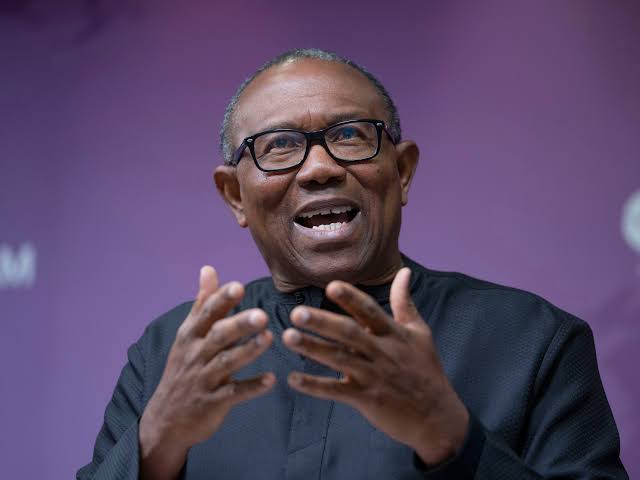
Nigeria’s political climate has become increasingly heated following a strong and detailed criticism from the presidential candidate of the Nigeria Democratic Congress, Peter Obi. In a statement that has quickly gained national attention, the former Anambra State governor openly condemned President Bola Tinubu’s recent approval of 1,000 forest guards for Oyo State, describing the decision as a clear reflection of poor leadership and what he considers a reactive, short-term approach to governance.
Obi’s position was articulated in a strongly worded statement titled “What Our Pervasive Insecurity Requires: A Holistic Not Reactive Approach.” In it, he challenged the Federal Government’s tendency to respond to crises with urgent but isolated measures rather than implementing a coordinated, nationwide security strategy.
The Incident That Sparked Urgent Action
The Federal Government’s decision did not emerge in isolation. It followed a deeply troubling incident that occurred on May 15, 2026, in Oriire Local Government Area of Oyo State.
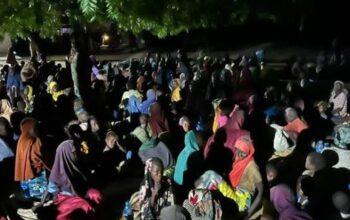
On that day, armed bandits reportedly launched coordinated attacks on the Esiele and Yawota communities. The attackers targeted educational institutions, forcefully abducting pupils, teachers, and school administrators from three schools. These included Community Grammar School, Baptist Nursery and Primary School, and L.A. Primary School.
The incident sent shockwaves across Oyo State and beyond, triggering widespread fear among residents and renewed concerns about the safety of schools in rural communities. Parents, civil society groups, and education stakeholders expressed outrage, while the Nigeria Union of Teachers intensified calls for immediate government intervention and stronger protection for schools.
As days passed without the safe return of the victims, frustration grew. Protests erupted in some areas, with community members demanding decisive action from both state and federal authorities.
Read more on: Middle East Tensions Persist as Ceasefires Fail and Humanitarian Crisis Worsens
Federal Government’s Emergency Response
In response to mounting pressure, a high-level delegation from the Federal Government visited the affected communities. The team was led by Chief of Staff Femi Gbajabiamila and National Security Adviser Nuhu Ribadu, signaling the seriousness of the situation.
During the visit, the government announced the approval of 1,000 forest guards to be recruited and deployed in Oyo State. The primary objective of this new security force is to comb forests in and around Oriire Local Government Area, which are believed to serve as hideouts for bandits and kidnappers.
Officials described the move as a necessary and urgent step to dismantle criminal networks, restore public confidence, and support ongoing rescue operations for the abducted victims.
Obi’s Criticism: A Question of Strategy and Consistency
While acknowledging that increasing security personnel can be helpful, Peter Obi argued that the decision exposes deeper weaknesses in national security planning. According to him, responding to each crisis with a fresh, localized initiative reflects a lack of coordination and long-term vision.
He emphasized that insecurity in Nigeria is not confined to a single state. Across the country, communities continue to face threats ranging from banditry and kidnapping to insurgency and communal violence. States such as Plateau, Kwara, Kogi, Borno, Katsina, Anambra, Niger, Imo, and Sokoto were highlighted as regions experiencing similar or even more severe challenges.
Obi questioned whether the Federal Government intends to replicate the same approach nationwide. He raised concerns about whether each state would receive approval to recruit a similar number of forest guards, which could result in tens of thousands of new personnel across the federation.
He also questioned the criteria used in making such decisions, suggesting that selective interventions risk creating inequality and confusion in national security management.
Read more on: Crisis in Oyo State as Massive Manhunt Intensifies as Kidnappers Demand ₦1 Billion and Push for Sharia Law
Link to Broader Economic Decisions
In his critique, Obi went beyond security and drew parallels with past economic policies implemented by the current administration. He referenced decisions such as the removal of fuel subsidy and the floating of the naira, arguing that these measures were introduced abruptly and without sufficient planning for their social and economic consequences.
According to him, these policies have contributed to rising living costs and increased hardship for ordinary Nigerians. He warned that applying a similar reactive approach to security could further complicate an already fragile situation.
The Amotekun Factor and Institutional Overlap
Another key concern raised in Obi’s statement relates to the potential overlap between the newly approved forest guards and existing regional security structures.
The South West region already operates the Western Nigeria Security Network, widely known as Amotekun. This outfit has been actively involved in community policing, intelligence gathering, and forest patrol across several states, including Oyo.
Obi questioned how the new federal initiative would integrate with Amotekun’s operations. He expressed concern that unclear lines of authority could lead to duplication of roles, operational conflicts, and reduced efficiency.
He also raised the possibility that the introduction of a new force might undermine the efforts of Amotekun or create uncertainty about its future role in Oyo State.
Read more on: NCDC Steps Up Preparedness as Ebola Threat to Nigeria Remains High
A Deeper Structural Problem
Beyond immediate policy concerns, Obi framed Nigeria’s insecurity as part of a broader structural crisis. He pointed out that the country has lost more than 10,000 lives to violent incidents since 2023, a figure that underscores the scale of the challenge.
According to him, security cannot be addressed in isolation from socio-economic realities. He argued that rising poverty, high unemployment, and declining public trust in government institutions are key drivers of insecurity.
He stressed that without addressing these underlying issues, efforts such as recruiting additional security personnel may provide only temporary relief rather than lasting solutions.
Current Security Efforts in Oyo State
Despite the controversy, security operations in Oyo State are ongoing. The Amotekun Corps continues to play a central role in maintaining local security through patrols and intelligence gathering.
The newly approved forest guard initiative is in its early stages, with recruitment expected to begin soon. The focus will be on identifying individuals familiar with the terrain who can assist in tracking and dismantling criminal hideouts.
At the same time, a joint tactical rescue team comprising multiple security agencies remains active in the affected areas. Their primary mission is to secure the safe release of the abducted pupils, teachers, and school staff.
Political Implications Ahead of 2027
As the Federal Government defends its decision as a necessary response to an urgent crisis, the debate has taken on a broader political dimension. With the 2027 general elections approaching, issues of national security, economic management, and leadership style are expected to dominate public discourse.
Obi’s criticism reflects a growing divide between the government and opposition figures over how best to address Nigeria’s challenges. While the administration emphasizes swift action in response to emergencies, critics continue to call for more comprehensive and coordinated strategies.
For many Nigerians, the central question remains whether current approaches can deliver lasting security and stability or whether a fundamental shift in policy direction is needed.
Read more on: