A tense calm that had held for nearly a month between the United States and Iran has been shaken by a dramatic escalation in military activity, raising fresh concerns about stability in one of the world’s most critical waterways. On Thursday, May 7, the United States carried out a series of military strikes against Iranian installations following what officials described as a coordinated and aggressive attack on American naval vessels moving through the Strait of Hormuz.
The development marks one of the most serious confrontations between both nations since the ceasefire arrangement came into effect, and it has once again drawn global attention to the fragile security situation in the Gulf region. While both sides have stopped short of declaring a full breakdown of the ceasefire, the scale and intensity of the exchange have cast doubt on how long the uneasy truce can hold.
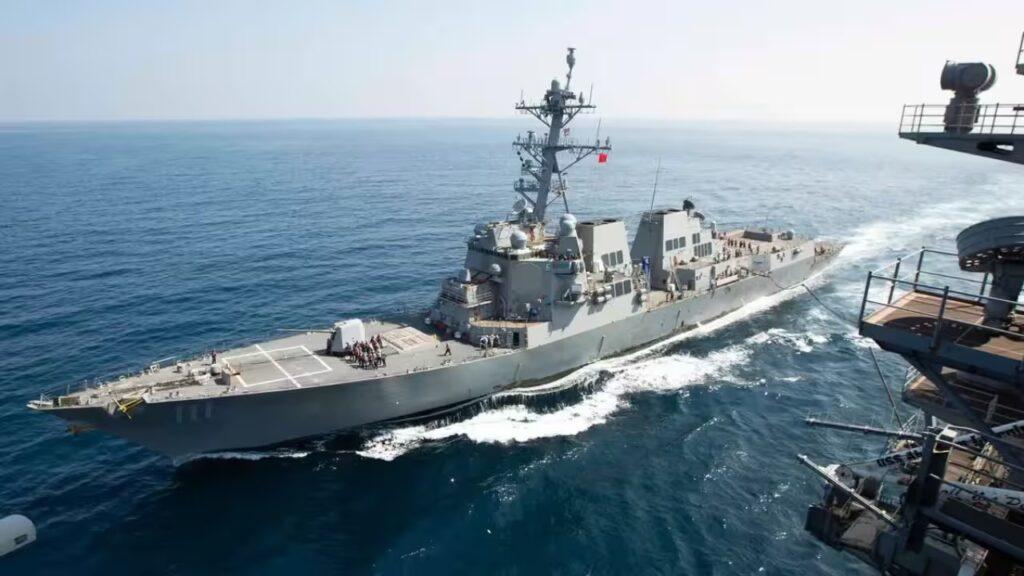
The confrontation began as a group of US Navy destroyers made their way through the narrow but strategically vital Strait of Hormuz, a route that serves as a major artery for global oil shipments. The vessels involved in the transit included the USS Truxtun, USS Mason, and USS Rafael Peralta, all of which are part of the Arleigh Burke class of guided missile destroyers known for their advanced defensive capabilities.
Read more on: Oshiomhole Calls for Akpabio’s Resignation as Senate Rule Controversy Sparks Crisis
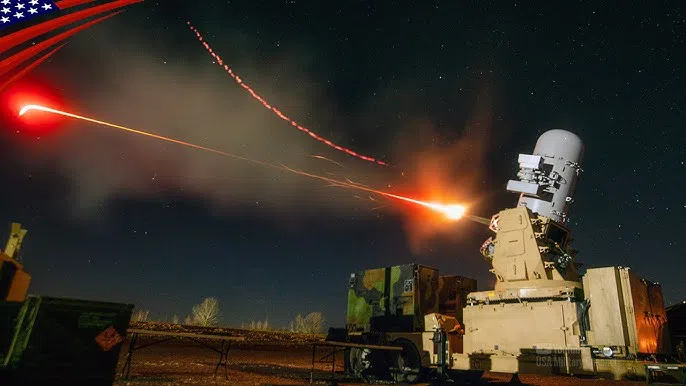
According to the United States Central Command, the ships were suddenly confronted with a complex and highly coordinated assault involving multiple forms of weaponry. Officials reported that ballistic missiles, cruise missiles, unmanned aerial vehicles, and fast moving boats associated with Iran’s Islamic Revolutionary Guard Corps were deployed simultaneously in what appeared to be a calculated attempt to overwhelm the ships’ defenses.
Despite the scale of the attack, US forces managed to respond swiftly and effectively. Military officials stated that all incoming threats were successfully intercepted or neutralized before they could cause any damage. No American personnel were injured, and none of the ships sustained any hits. The outcome, as described by US authorities, demonstrated the effectiveness of their defensive systems and the preparedness of the naval crews operating in the region.
However, the narrative surrounding the incident is sharply contested. While Washington has described the assault as unprovoked and a clear violation of the ceasefire agreement, Iranian officials have presented a different version of events. According to statements from Tehran, the United States had allegedly initiated hostilities by targeting an Iranian oil tanker the previous day as it approached the Strait. Iranian authorities claim that their actions were a response to that earlier incident, framing the confrontation as a defensive measure rather than an act of aggression.
This divergence in accounts has added another layer of complexity to an already volatile situation, making it more difficult for diplomatic channels to establish a clear path toward deescalation. As both sides maintain their positions, the risk of further misunderstandings or retaliatory actions remains high.
Read more on: Six Killed in Suspected Bandit IED Explosion
In the immediate aftermath of the attack on its naval convoy, the United States moved quickly to carry out what it described as self defense strikes against Iranian military infrastructure. The operation targeted several locations believed to be directly linked to the launch and coordination of the assault.
Among the primary areas hit were Qeshm Island, Bandar Abbas, and a naval installation in Minab. These sites are considered strategically significant within Iran’s military network, particularly in relation to operations in the Strait of Hormuz. US officials stated that the strikes focused on dismantling key capabilities used in the attack, including missile launch platforms, drone deployment sites, command and control centers, and intelligence gathering facilities.
The Pentagon indicated that the objective of the operation was to degrade Iran’s ability to carry out similar attacks in the near future, while also sending a clear message about the consequences of targeting US forces. Early reports suggest that the strikes caused substantial damage to the targeted infrastructure, although independent verification of the extent of the destruction remains limited.
There are also indications that the United States did not act alone in its response. Regional partners are believed to have played a supporting role in the broader security effort. Notably, the United Arab Emirates reportedly intercepted separate missile and drone threats aimed at its Fujairah oil facilities around the same time. This suggests a wider pattern of heightened military activity in the region, with multiple actors responding to perceived threats almost simultaneously.
Read more on: El-Rufai Case Adjourned as Court Sets June 1 for Pre-Trial Arguments
The political fallout from the confrontation has been immediate and intense. US President Donald Trump addressed the situation publicly, using strong language to describe the American response. He emphasized that US forces had successfully defended themselves and inflicted significant damage on Iranian assets involved in the attack. His remarks underscored a firm stance on protecting American interests while also projecting confidence in the military’s capabilities.
At the same time, the president indicated that the ceasefire has not been formally abandoned, suggesting that there is still room for diplomatic engagement despite the recent violence. This position reflects a delicate balancing act between demonstrating strength and avoiding a full scale escalation that could draw the region into a broader conflict.
On the Iranian side, President Masoud Pezeshkian responded with equally strong rhetoric, warning that continued actions by the United States and its allies could have far reaching consequences for global stability. He rejected any notion of submission or concession, framing Iran’s position as one of resistance against external pressure. His comments highlight the deep mistrust that continues to define relations between the two countries, even during periods of relative calm.
Beyond the immediate military and political dimensions, the incident has significant implications for the global economy, particularly in the energy sector. The Strait of Hormuz is one of the most important chokepoints in the world, with a substantial portion of global oil supplies passing through its waters. Any disruption to traffic in the strait can have ripple effects across international markets, influencing prices and creating uncertainty for businesses and governments alike.
Read more on: Nigeria and South Africa Hold Emergency Talks as Xenophobic Violence Sparks Diplomatic Crisis
In the wake of the confrontation, reports have emerged that a large number of commercial vessels are currently delayed within the Persian Gulf, waiting for clearer security conditions before proceeding. This bottleneck has raised concerns about potential supply chain disruptions, especially if tensions continue to escalate.
Adding to these concerns is Iran’s recent decision to establish a regulatory mechanism for ships seeking passage through the strait. The new system reportedly involves vetting and taxing vessels, a move that has drawn criticism from the international community. Many observers view it as an attempt to exert greater control over a critical global trade route, potentially increasing costs and complicating navigation for shipping companies.
At the same time, a confidential analysis attributed to the Central Intelligence Agency suggests that the economic pressure on Iran, partly driven by ongoing restrictions and naval enforcement measures, could intensify in the coming months. The assessment indicates that while Iran may be able to sustain its current position for a limited period, prolonged constraints could lead to significant economic challenges.
Diplomatic efforts to address the situation are ongoing, with talks reportedly taking place in Islamabad as part of a broader attempt to stabilize relations and prevent further escalation. However, the success of these efforts remains uncertain, particularly given the recent exchange of hostilities and the entrenched positions on both sides.
Read more on: Former President Goodluck Jonathan Weighs Possible 2027 Presidential Bid
Domestic politics within the United States are also playing a role in shaping the response. A new legislative proposal introduced by Representative Tom Barrett seeks to authorize continued military operations through July, signaling that some policymakers are preparing for the possibility of sustained engagement in the region. This development adds another layer of complexity, as it reflects differing perspectives within the US government on how best to handle the situation.
Taken together, these events paint a picture of a region on edge, where a single incident can quickly escalate into a broader confrontation with global implications. While the ceasefire technically remains in place, its durability is now in question, and the margin for error appears increasingly narrow.
As the world watches closely, the coming days will be critical in determining whether both sides can step back from the brink or whether the Strait of Hormuz will once again become the focal point of a deeper and more dangerous conflict.
Read more on: