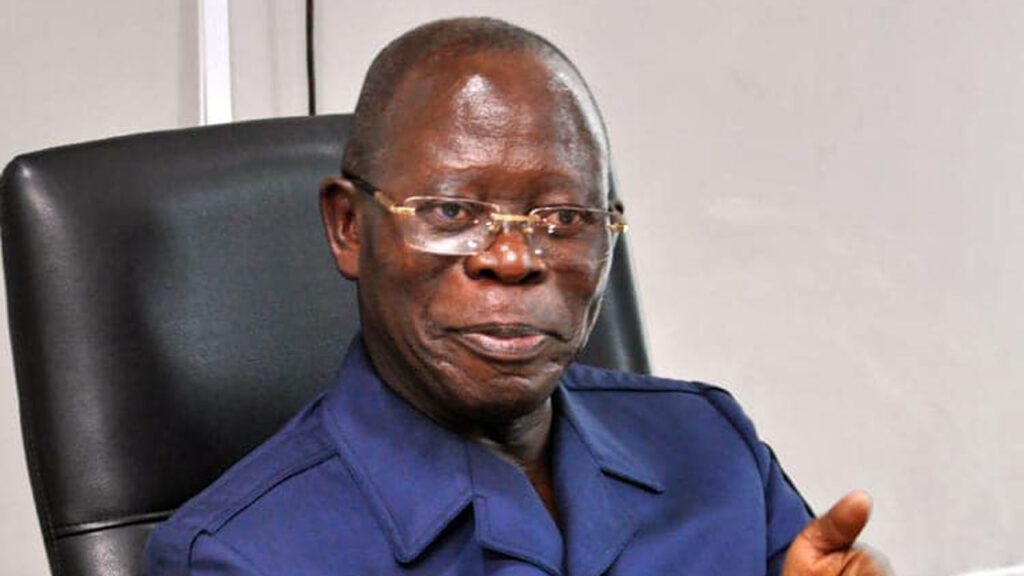
Nigeria’s Senate has been thrown into a fresh wave of controversy following a tense and highly public disagreement between Senate President Godswill Akpabio and Senator Adams Oshiomhole, who represents Edo North. What began as an internal legislative adjustment has quickly escalated into a broader debate about fairness, legality, and political control within the 10th National Assembly.
At the center of the storm are newly introduced amendments to the Senate Standing Orders, which Oshiomhole and several observers believe were designed to shape the future leadership structure of the Senate ahead of the 2027 general elections. The situation has triggered accusations of bias, selective rulemaking, and an attempt to sideline potential contenders.
Oshiomhole has gone a step further than mere criticism. In a bold and direct challenge, he has called on Akpabio to resign from his position, arguing that the Senate President himself would not meet the very criteria outlined in the controversial amendments. His remarks have added a new layer of tension to an already delicate political environment.
Read more on: Six Killed in Suspected Bandit IED Explosion
The Controversial Rule Changes and Their Implications
The disputed amendments to the Senate Standing Orders were reportedly adopted earlier in the week during a closed session. While such sessions are not unusual, the content and implications of the changes have raised serious concerns among lawmakers and political analysts.
One of the most contentious aspects of the new rules is the introduction of a requirement that only senators who have served two consecutive terms, amounting to at least eight years, would be eligible to contest for key leadership positions within the Senate. These positions include the Senate President, Deputy Senate President, and other principal offices that play crucial roles in legislative decision making.
In addition to this, the amendments introduced another condition tied specifically to the transition between the 10th and 11th Assemblies. According to the revised rules, any senator aspiring to a leadership position in the next Assembly must not only be a current member of the 10th Assembly but must also secure reelection in 2027.
Taken together, these provisions significantly narrow the pool of eligible candidates. First time senators, returning lawmakers who were not part of the current Assembly, and even influential political figures such as outgoing governors seeking to move into the Senate would effectively be excluded from contesting for leadership roles.
This development has sparked widespread speculation about the motivations behind the changes. Critics argue that the amendments appear strategically designed to limit competition and consolidate power within a select group of lawmakers who already meet the criteria.
Oshiomhole’s Position and Call for Accountability
Adams Oshiomhole has emerged as one of the most vocal opponents of the amended rules. Speaking to journalists in Abuja, he described the situation as a moral dilemma for the Senate and questioned the integrity of a system that appears to impose restrictions that even its current leaders do not satisfy.
He pointed out what he sees as a clear inconsistency in Akpabio’s political trajectory. According to Oshiomhole, Akpabio rose to a significant leadership role during his first term in the Senate when he served as Minority Leader. Under the newly proposed rules, such an achievement would not have been possible.
This, Oshiomhole argued, highlights the unfairness of introducing stricter eligibility requirements after individuals have already benefited from a more flexible system. In his view, leadership should not be about changing the rules to suit current interests but about maintaining consistency and fairness.
He went further to question whether Akpabio himself meets the eight year consecutive service requirement stipulated in the amendments. Oshiomhole maintained that if the Senate is serious about enforcing such a rule, then it must apply it universally, including to those currently in leadership positions.
Based on this reasoning, he called on Akpabio to demonstrate integrity by stepping aside. According to him, true leadership requires setting an example, especially when advocating for standards that others are expected to follow.
His remarks have resonated with some lawmakers and political observers who share concerns about the potential misuse of legislative procedures for political advantage. However, others see his position as part of a broader political contest rather than a purely principled stance.
Read more on: El-Rufai Case Adjourned as Court Sets June 1 for Pre-Trial Arguments
Swift Reversal by the Senate
Amid the growing backlash, the Senate took a surprising turn by moving to reverse the controversial amendments. This decision came shortly after concerns were raised about the constitutional validity of the new rules.
Senate Leader Opeyemi Bamidele introduced a motion to rescind specific sections of the amended Standing Orders. The motion focused on provisions that appeared to conflict with the Nigerian Constitution, particularly Section 52 of the 1999 Constitution, which governs legislative procedures.
A review of the amendments reportedly revealed that enforcing such restrictive eligibility criteria could create legal inconsistencies and potentially undermine the constitutional framework within which the Senate operates.
The decision to roll back the changes was seen by many as an attempt to deescalate tensions and avoid a prolonged institutional crisis. It also reflected the recognition that pushing forward with the amendments could expose the Senate to legal challenges and further damage its credibility.
Despite this reversal, the episode has left a lasting impression on the political landscape. The fact that such amendments were introduced in the first place has raised questions about internal dynamics within the Senate and the extent to which legislative processes can be influenced by political calculations.
The Broader Political Context and 2027 Calculations
Beyond the immediate controversy, the debate over the Senate rules is closely tied to the political maneuvering already underway ahead of the 2027 general elections. For many politicians, the Senate represents not just a legislative platform but also a pathway to national influence and leadership.
Reports suggest that a significant number of current and former governors are preparing to contest for Senate seats in 2027. Some of these individuals are believed to have ambitions that extend beyond simply becoming senators, with the Senate Presidency being a key target.
One notable example is Imo State Governor Hope Uzodimma, who has reportedly taken steps toward securing a senatorial ticket. His potential entry into the Senate has fueled speculation that he may be positioning himself for a leadership role once his tenure as governor concludes.
If the amended rules had remained in place, such aspirations would have faced substantial obstacles. The requirement for continuous service within the current Assembly would have effectively shut out many of these high profile entrants, limiting their ability to compete for top positions.
This has led analysts to interpret the amendments as a preemptive move aimed at controlling the influx of new power players into the Senate’s leadership structure. By setting strict eligibility criteria, the existing leadership could maintain a tighter grip on the institution and reduce the risk of being challenged by newcomers with strong political backing.
Read more on: Nigeria and South Africa Hold Emergency Talks as Xenophobic Violence Sparks Diplomatic Crisis
A Growing Rift Within the Senate
Although the Senate has stepped back from enforcing the controversial rules, the disagreement between Akpabio and Oshiomhole has exposed deeper divisions within the chamber. What might have been handled as a routine legislative adjustment has instead highlighted underlying tensions and competing interests.
For Akpabio, the situation presents a test of leadership and political resilience. While he has not publicly indicated any intention to resign, the calls from Oshiomhole and the surrounding debate have placed him under increased scrutiny.
For Oshiomhole, the episode reinforces his reputation as a vocal and sometimes confrontational figure within Nigerian politics. His willingness to challenge the Senate leadership openly sets him apart, though it also raises questions about the broader implications of such confrontations for party unity.
As the Senate continues its legislative work, the impact of this dispute is likely to linger. Trust within the chamber may take time to rebuild, and future attempts to amend internal rules could face greater resistance.
Read more on: Former President Goodluck Jonathan Weighs Possible 2027 Presidential Bid
Conclusion
The controversy over the Senate Standing Orders serves as a reminder of how procedural changes can carry significant political weight. What may appear on the surface as technical adjustments can, in reality, shape the balance of power and influence within a legislative body.
While the immediate crisis has been partially defused by the reversal of the amendments, the underlying issues remain unresolved. Questions about fairness, transparency, and the proper use of legislative authority continue to hang over the Senate.
As Nigeria moves closer to the 2027 elections, such disputes are likely to become more frequent and more intense. The challenge for the Senate will be to navigate these pressures while maintaining its credibility and commitment to democratic principles.
Read more on: