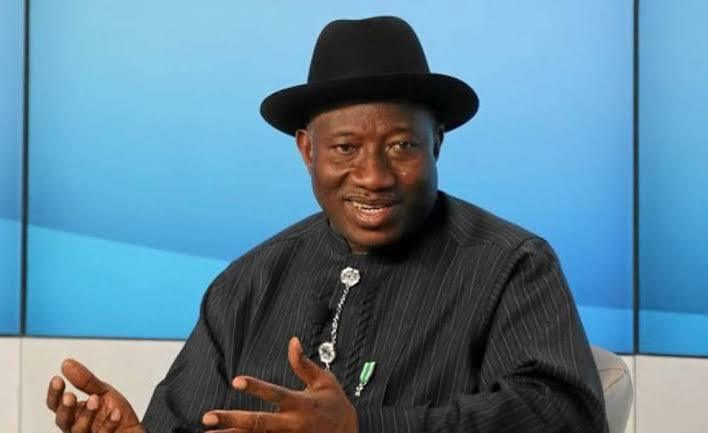
Nigeria’s political atmosphere is gradually building toward what many expect to be a highly competitive and defining 2027 general election, and former President Goodluck Ebele Jonathan has once again found himself at the center of national attention. Recent developments indicate that the former leader is no longer remaining on the sidelines as legal and political forces attempt to shape the field ahead of the next presidential race.
Although Jonathan has not publicly declared any intention to run for office, his latest move suggests that he is not willing to allow legal challenges to go unanswered. His legal team has now stepped forward to contest a suit filed at the Federal High Court in Abuja, a case that seeks to prevent him from contesting in 2027. This development has sparked renewed debate across political and legal circles, with many interpreting it as a clear signal that the former president is keeping his options open.
At the heart of the matter is a legal argument that has surfaced before and was previously addressed by the judiciary. The current case in Abuja is widely seen by legal analysts as an attempt to reopen a question that had already been settled in a different court. In 2022, a Federal High Court sitting in Yenagoa, Bayelsa State, delivered a ruling that directly addressed Jonathan’s eligibility to contest for the presidency. That judgment concluded that he remains constitutionally qualified to seek election, a position that continues to influence the ongoing debate.
The reasoning behind the Yenagoa ruling centers on the interpretation of Nigeria’s constitutional provisions regarding presidential tenure. Goodluck Jonathan first assumed office in 2010 following the death of then President Umaru Musa Yar’Adua. He subsequently contested and won the presidential election in 2011, securing his own mandate from the electorate. However, he lost his re-election bid in 2015 to Muhammadu Buhari.
Read more on: Gunmen Strike Again in Plateau, Kill Pregnant Women and 13 Others
The key issue raised by those seeking to disqualify him is whether his initial period in office, which began as a result of succession rather than election, should count as a full term under the constitution. Those opposing his eligibility argue that allowing him to run again would effectively give him more than the constitutionally permitted number of years in office.
On the other side of the argument, Jonathan’s supporters and several legal experts maintain that the constitution clearly distinguishes between a term gained through election and one assumed through succession. According to this interpretation, Jonathan has only been elected president once, which occurred in 2011. Therefore, they argue, he remains eligible to contest for one more elected term.
This position was upheld by the Yenagoa court, which ruled that applying restrictions retroactively in a way that would disqualify him would be inconsistent with constitutional principles. Importantly, that judgment was not overturned on appeal, meaning it continues to stand as a valid legal precedent.
It is against this backdrop that the new suit in Abuja has emerged. Senior Advocate of Nigeria Oba Maduabuchi has been among those who have strongly criticized the case, describing it as an abuse of court process. His argument is that once a competent court has ruled on a matter and that decision has not been successfully challenged at a higher level, it should not be repeatedly brought before different courts in search of a different outcome.
Read more on: US Navy Hits Iranian Missile Sites Following Attack on Ships
Legal practitioners who share this view believe that the Abuja case is unlikely to succeed unless new legal arguments or constitutional interpretations are introduced. However, they also acknowledge that the persistence of such lawsuits reflects the high stakes involved in the 2027 election and the level of interest surrounding Jonathan’s potential candidacy.
Beyond the courtroom, the political implications of this situation are becoming increasingly evident. In recent weeks, there has been a noticeable rise in calls from various groups urging Jonathan to return to active politics. Civil society organizations, youth groups, and some political stakeholders have openly appealed to him to consider running, arguing that his previous administration offered a level of stability and economic conditions that they believe are worth revisiting.
On May 7, 2026, several of these groups organized gatherings in Abuja to amplify their message. These events were framed as grassroots efforts, with participants emphasizing what they described as organic support for Jonathan’s return. Many of them pointed to issues such as economic challenges, governance concerns, and national unity as reasons why they believe his leadership could be beneficial at this time.
The growing momentum behind these calls has added another layer of complexity to Nigeria’s already dynamic political environment. Political parties are beginning to position themselves strategically, even as internal challenges continue to shape their preparations for the next election cycle. Reports of defections between parties, including movements from the African Democratic Congress to the National Democratic Congress, have highlighted the fluid nature of political alliances at the moment.
At the same time, both the ruling All Progressives Congress and the main opposition People’s Democratic Party are dealing with their own internal issues. Leadership disputes, questions about party direction, and the need to present strong candidates have all contributed to an atmosphere of uncertainty. In this context, the possibility of Jonathan entering the race introduces a new variable that could significantly alter existing calculations.
Read more on: Oshiomhole Calls for Akpabio’s Resignation as Senate Rule Controversy Sparks Crisis
For the APC, which currently holds power, the emergence of a figure like Jonathan could present both challenges and opportunities. President Bola Ahmed Tinubu’s position within the party remains a key factor, particularly following decisions such as the reported waiver of certain screening requirements. Any potential candidacy by Jonathan would likely influence how the ruling party approaches its campaign strategy and voter outreach.
For opposition parties, the situation is equally complex. While Jonathan is a member of the PDP by political history, his potential candidacy could reshape alliances and possibly lead to unexpected coalitions. There is also the question of whether he would run under the PDP platform or explore alternative arrangements, a scenario that has fueled further speculation among political observers.
By choosing to actively challenge the disqualification suit, Jonathan has effectively sent a message that he is not dismissing the idea of a return to the presidency. Even without a formal declaration, his actions indicate a willingness to engage with the political and legal processes that would shape such a decision. This approach allows him to maintain strategic flexibility while also responding to growing public interest in his potential candidacy.
The broader constitutional debate surrounding his eligibility is likely to continue, particularly as the election approaches and more stakeholders weigh in. While the existing legal precedent appears to favor his eligibility, the persistence of opposing views ensures that the issue will remain a topic of discussion in both legal and political circles.
Read more on: Six Killed in Suspected Bandit IED Explosion
For many Nigerians, the situation represents more than just a legal question. It also reflects deeper concerns about leadership, governance, and the direction of the country. The fact that a former president is being encouraged to return to office speaks to the level of dissatisfaction or nostalgia that exists within certain segments of the population.
As events continue to unfold, attention will remain focused on both the courts and the political arena. The outcome of the Abuja case could either reinforce the existing legal position or introduce new complexities into the debate. At the same time, Jonathan’s next steps will be closely watched, as they will provide clearer insight into whether he intends to translate the growing calls for his return into an actual campaign.
For now, what is certain is that the road to 2027 is already taking shape, and Goodluck Ebele Jonathan has once again become a central figure in Nigeria’s evolving political story.
Read more on:
- El-Rufai Case Adjourned as Court Sets June 1 for Pre-Trial Arguments
- Nigeria and South Africa Hold Emergency Talks as Xenophobic Violence Sparks Diplomatic Crisis
- Former President Goodluck Jonathan Weighs Possible 2027 Presidential Bid
- Akpabio and Oshiomhole Clash in Senate Over Controversial New Leadership Rules