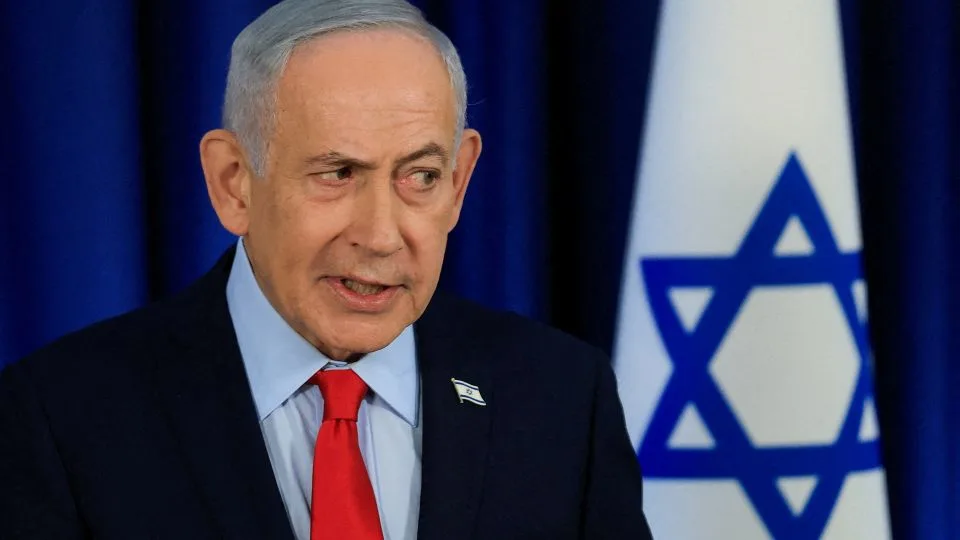
In a development that is likely to deepen tensions and further destabilize an already fragile situation, Israeli Prime Minister Benjamin Netanyahu has announced that he has directed the Israel Defense Forces to expand their territorial control to cover up to 70 percent of the Gaza Strip. The decision has sparked widespread concern among international observers, humanitarian organizations, and political analysts who fear that it could effectively collapse the existing ceasefire framework and push the region closer to a renewed phase of full-scale conflict.
Netanyahu made this declaration during a conference held in a settlement in the occupied West Bank. His remarks were delivered with unusual clarity regarding the scale and intent of the military directive, leaving little doubt about the government’s immediate objectives. For many observers, the announcement represents a sharp escalation in both rhetoric and strategy, especially given the delicate state of the truce that has been in place since late 2025.
Netanyahu Details Strategy to Expand Military Footprint
Speaking in a televised address broadcast by Israel’s Channel 12, the Prime Minister outlined the progress already made by Israeli forces and emphasized that further expansion is not only planned but actively underway. According to him, the military has steadily increased its presence beyond earlier agreed limits and is continuing to advance deeper into Gaza.
“We are currently squeezing Hamas,” Netanyahu said during the broadcast. “We now control 60 percent of the territory in the strip. We moved from 50 to 60, and my directive is to move to 70 percent. We are applying pressure from all sides and will deal with what remains afterward.”
The language used in the address has drawn significant attention, particularly because it frames the expansion as part of a broader strategy to weaken Hamas by limiting its operational space. However, critics argue that such an approach inevitably comes at a heavy cost to civilians who remain trapped within the territory.
The timing of the announcement is also politically significant. Netanyahu is currently navigating a challenging domestic landscape, with elections expected in the coming months. Analysts suggest that his firm stance may be partly influenced by pressure from far-right factions within his governing coalition, many of whom have consistently called for a more aggressive military approach in Gaza.
Read more on: ISWAP Confirms Leader Al-Mainuki Killed Following US Strike
Ceasefire Agreement Faces Possible Breakdown
The directive to extend control to 70 percent of Gaza appears to directly contradict the terms of the ceasefire agreement brokered by the United States, which took effect on October 10, 2025. That agreement was backed by a United Nations Security Council resolution and formed part of a broader effort to reduce hostilities and create conditions for longer-term negotiations.
Under the original arrangement, Israeli forces were expected to withdraw to a specific boundary known as the yellow line. This demarcation allowed Israel to maintain control over approximately 53 percent of the territory while leaving the remainder under Palestinian administration, with the understanding that further adjustments would be negotiated in subsequent phases.
Progress toward the second phase of the agreement has been stalled for several months. That phase was intended to include a gradual Israeli withdrawal alongside steps aimed at disarming Hamas and stabilizing governance within Gaza. Instead, both sides have repeatedly accused each other of violating the terms of the truce.
Despite the ceasefire technically remaining in place, violence has persisted. Reports indicate that more than 900 Palestinians have been killed in Israeli strikes since the agreement began, underscoring the fragile and often contradictory nature of the current situation.
Humanitarian Impact Raises Alarm
Perhaps the most immediate and concerning consequence of the proposed expansion is its impact on the civilian population. Gaza is already one of the most densely populated regions in the world, and the ongoing conflict has severely strained its infrastructure and basic services.
If Israeli control expands to 70 percent of the territory, it would leave approximately 2.2 million Palestinians confined to less than 30 percent of the land. This drastic reduction in available space would likely intensify overcrowding and worsen living conditions for an already vulnerable population.
Large portions of the areas currently under Israeli control have reportedly been cleared or heavily damaged during military operations. Homes, schools, hospitals, and essential infrastructure have been affected, leaving many residents displaced and dependent on limited humanitarian assistance.
Experts warn that further territorial compression could push the humanitarian situation beyond a critical threshold. Muhammad Shehada, a visiting fellow at the European Council on Foreign Relations, described the conditions in Gaza as already extremely dire. He noted that many families are living in makeshift shelters with very limited access to basic necessities such as clean water, food, and medical care.
According to Shehada, reducing the available living space even further could create a situation where large numbers of people simply have nowhere safe to go. This, he warned, could lead to severe humanitarian consequences, including increased mortality and widespread suffering.
Read more on: Atiku Abubakar Visits Rotimi Amaechi After ADC Primary
Reports Point to Ongoing Military Activity
Developments on the ground suggest that efforts to expand territorial control are already in motion. Leaked briefings from the United Nations indicate that Israeli forces have been conducting daily operations near the ceasefire boundary, including tank movements and drone surveillance in northern areas such as Jabalia and regions east of Khan Younis.
In addition, monitoring groups such as the Armed Conflict Location and Event Data Project have reported an increase in activity by armed groups believed to be aligned with Israeli forces. These groups have reportedly been involved in clearing residential neighborhoods and directing civilians to relocate further west, often under urgent and difficult conditions.
Residents in affected areas have described being given little time to gather their belongings before being forced to move. Such accounts, while difficult to independently verify in all cases, have contributed to growing concerns about the humanitarian impact of the ongoing operations.
When questioned about the broader military rationale behind the expansion, an Israel Defense Forces spokesperson declined to provide specific details, stating that such decisions fall under the purview of political leadership.
International Reaction and Growing Concern
Statements from senior Israeli officials have added to the unease surrounding the situation. Just one day before Netanyahu’s announcement, Defense Minister Israel Katz spoke about the possibility of facilitating what he described as voluntary migration of Palestinians out of Gaza. While presented as an option, such proposals have been strongly criticized by human rights organizations, which argue that they could amount to indirect forced displacement.
The international community is now facing increasing pressure to respond. Governments, diplomatic bodies, and humanitarian agencies are closely monitoring developments, with many calling for renewed efforts to preserve the ceasefire and prevent further escalation.
There are growing concerns that without immediate diplomatic intervention, the situation could deteriorate rapidly. A breakdown of the ceasefire would not only have devastating consequences for those living in Gaza but could also have wider implications for regional stability.
Read more on: Tinubu’s Daughter Rejects Lagos APC Primaries Result
Uncertain Path Forward
As tensions continue to rise, the future of the ceasefire agreement remains uncertain. The gap between the stated objectives of both sides appears to be widening, making a return to meaningful negotiations increasingly difficult.
For now, the focus remains on whether diplomatic channels can be reactivated in time to prevent further escalation. The coming days and weeks are likely to be critical in determining whether the region moves toward renewed conflict or finds a way to stabilize the current situation.
What remains clear is that the stakes are extremely high. Decisions made at this stage will not only shape the immediate trajectory of the conflict but will also have long-term consequences for millions of people whose lives are already deeply affected by the ongoing crisis.
Read more on: