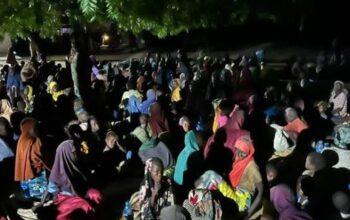
Nigeria’s Christian community has been thrown into grief and outrage following a deadly attack on a religious gathering in Ekiti State. The Christian Association of Nigeria, widely known as CAN, has strongly denounced the killing of a pastor and the abduction of several worshippers during a violent raid on an open air crusade in Eda Oniyo, a community in Ilejemeje Local Government Area.
In an official statement released on Wednesday, CAN President Archbishop Daniel Okoh described the incident as deeply disturbing and unacceptable, calling it a brutal violation of both human dignity and the constitutional right to worship freely. He urged both federal and state authorities to act swiftly and decisively, stressing that statements of condemnation alone are no longer enough in the face of repeated attacks on vulnerable communities.
According to him, what happened in Eda Oniyo is not just an isolated tragedy but part of a growing pattern of insecurity that continues to threaten lives, especially in rural areas where security presence is often limited. His remarks reflect a wider frustration among citizens who feel that religious gatherings, once considered safe spaces, are increasingly becoming targets for criminal elements.
Read more on: Five Ogun Polytechnic Students Freed After Kidnapping
A Night That Turned Deadly
The attack unfolded late on Tuesday evening during what was meant to be a peaceful religious programme organized by members of the Christ Apostolic Church. Worshippers had gathered in large numbers for prayers, songs, and preaching, unaware that danger was lurking nearby.
Eyewitnesses recount that at about 8:30 pm, the atmosphere suddenly shifted from one of worship to chaos. Armed men reportedly emerged from the surrounding bushes, catching the congregation off guard. Without warning, they began firing into the air and towards the crowd, sending people running in different directions in a desperate attempt to escape.
Amid the confusion and panic, a prominent cleric who was leading the service was shot. Reports suggest he may have been trying to shield members of his congregation when he was hit. He died at the scene, leaving behind a grieving community and raising further concerns about the vulnerability of religious leaders in such attacks.
As the gunmen tightened their grip on the situation, they began to round up worshippers. Several individuals, including women and children, were forcefully taken away and marched into the nearby forest. The exact number of abducted persons has not yet been officially confirmed, but residents say the figure could be significant.
By the time the attackers retreated, the once lively gathering had been reduced to a scene of fear, sorrow, and confusion. Many residents of Eda Oniyo spent the night in hiding, while others fled the area entirely, worried that the attackers might return.
Read more on: Supporters Back Tinubu’s Second Term Push with N100m APC Nomination Forms
Community in Fear and Shock
Eda Oniyo is a relatively quiet community, not typically associated with high levels of violent crime. This has made the incident even more shocking for residents, many of whom are struggling to come to terms with what has happened.
Local sources indicate that families are now afraid to gather publicly, whether for religious or social purposes. Some have begun relocating to neighboring towns, while others are calling on authorities to provide immediate and visible security presence.
The psychological impact of the attack cannot be overstated. Survivors are dealing with trauma, and families of the abducted are left in agony, unsure of the fate of their loved ones. The killing of a religious leader has also struck a deep emotional chord, as such figures often play central roles in community life beyond the church.
CAN Speaks Out
In his statement, Archbishop Daniel Okoh did not mince words. He described the attack as heinous and reprehensible, emphasizing that it represents a direct assault on humanity itself.
He stressed that places of worship should never become targets for violence, noting that churches, mosques, and other religious spaces are meant to provide refuge, hope, and spiritual comfort. Turning such spaces into scenes of terror, he said, is a dangerous sign of a society struggling with deep security challenges.
He also pointed out that Nigerians are increasingly living in fear, particularly in rural communities where attacks often occur without warning and with little immediate response from security agencies. According to him, the situation demands urgent attention and a shift from reactive measures to proactive strategies.
CAN further expressed concern that this incident is not an isolated case. The association referenced a recent attack in Yagba West Local Government Area of Kogi State, where clergy members and their families were also kidnapped. Such recurring incidents suggest a troubling trend that requires a coordinated and sustained response.
Read more on: US Reviews New Iranian Peace Proposal Amid Ongoing Tensions
A Clear Set of Demands
In response to the Ekiti attack, CAN outlined a series of demands directed at the government and security agencies. These demands are aimed at addressing both the immediate crisis and the broader issue of insecurity affecting religious communities.
First and foremost, the association called for the immediate and unconditional rescue of all abducted worshippers. The safety of those taken into the forest remains the top priority, and CAN insists that every available resource must be deployed to secure their release.
Secondly, CAN emphasized the need for swift justice. The perpetrators of the attack must be identified, apprehended, and prosecuted without delay. The association warned that failure to hold criminals accountable only encourages further acts of violence and undermines public trust in the justice system.
Another key demand is the improvement of intelligence gathering. CAN highlighted the importance of proactive measures, especially in rural and border communities where attacks are often planned and executed with little resistance. Better intelligence, they argue, could help prevent such incidents before they occur.
Finally, the association called for enhanced security presence in vulnerable areas. This includes deploying more personnel, establishing rapid response units, and working closely with local communities to identify potential threats.
Read more on: Reps Grant Approval for Tinubu’s $516m Loan Request
Broader Security Concerns
The attack in Ekiti is part of a wider pattern of insecurity affecting several states across Nigeria. In Kogi State, particularly in Yagba West, there have been reports of similar kidnappings targeting religious figures and their families. In Kwara State, areas like Eruku have also experienced violent incidents involving places of worship.
These developments point to a growing concern about the safety of religious gatherings, especially in regions where security infrastructure is weak. Analysts note that attackers often exploit remote locations, poor road networks, and limited law enforcement presence to carry out their operations.
The situation has led to calls for a more comprehensive approach to security, one that goes beyond deploying forces after an attack has occurred. Experts suggest that community engagement, intelligence sharing, and technological tools could play a crucial role in addressing the problem.
Government Response and Public Skepticism
The Ekiti State Police Command has confirmed that efforts are underway to rescue the abducted worshippers. According to officials, a joint operation involving tactical police units and local hunters has been launched to track the attackers into the forest.
While this response is seen as a step in the right direction, many Nigerians remain skeptical. Past incidents have shown that rescue operations can be slow and sometimes unsuccessful, raising questions about the effectiveness of current security strategies.
There is also growing pressure on political leaders to match their promises with tangible results. The current political climate has seen repeated assurances of improved security, but incidents like the one in Eda Oniyo continue to challenge those claims.
Citizens are increasingly demanding accountability and transparency. They want to see not only immediate action but also long term solutions that address the root causes of insecurity.
Read more on: Reps Grant Approval for Tinubu’s $516m Loan Request
The Way Forward
The attack on the church in Eda Oniyo serves as a painful reminder of the challenges facing Nigeria in its fight against insecurity. It highlights the urgent need for a coordinated effort involving government, security agencies, community leaders, and civil society.
Protecting places of worship must become a priority, not just for religious reasons but because these spaces are central to community life. Ensuring their safety is essential for maintaining social cohesion and public confidence.
There is also a need for better support systems for victims and affected communities. Counseling services, financial assistance, and community rebuilding efforts can help restore a sense of normalcy after such traumatic events.
At the national level, policymakers must take a closer look at existing security frameworks and identify areas for improvement. This includes investing in training, equipment, and technology for security personnel, as well as strengthening collaboration between different agencies.
A Nation Watches and Waits
As the search for the abducted worshippers continues, the nation watches with hope and चिंता. Families are praying for the safe return of their loved ones, while communities are calling for justice and lasting change.
The words of CAN echo a sentiment shared by many Nigerians. No one should have to live in fear, especially not in a place of worship. The challenge now lies in turning those words into action and ensuring that tragedies like the one in Eda Oniyo do not become the norm.
The coming days will be critical, not only for the victims and their families but also for the credibility of the country’s security response. What happens next will send a strong message about the nation’s commitment to protecting its people and upholding their fundamental rights.
Read more on:
- South Africa: Nigeria Demands Justice and Protection for Its Citizens After Two Killings
- Sanwo-Olu Backs Deputy Governor Hamzat for Lagos 2027 Governorship Election
- Gunmen Invade Kogi Orphanage, Kidnap 23 Children in Midnight Raid
- Iran Foreign Minister Arrives in Russia Amid Ongoing Stalemate in U.S. Talks