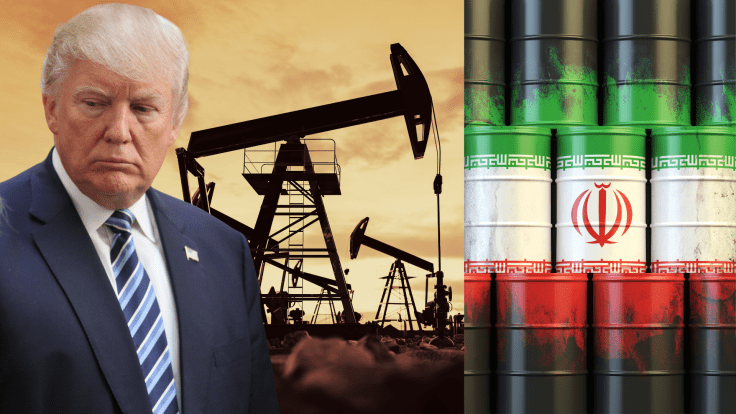
The global energy market has been thrown into a state of intense uncertainty as crude oil prices surged sharply, reaching their highest levels in four years. This sudden spike has been triggered by mounting geopolitical tensions in the Middle East, particularly following reports that United States President Donald Trump is preparing to review a range of military options targeting Iran. The development has sent shockwaves through financial markets, reigniting fears of a prolonged energy crisis with far-reaching global consequences.
Brent crude, which serves as the international benchmark for oil pricing, climbed past the 126 dollar per barrel mark during trading earlier today. This is the highest level recorded since the early days of the Russia and Ukraine conflict in 2022, a period that was also marked by severe volatility in global energy markets. Although prices eased slightly later in the day due to routine futures contract adjustments, the overall direction remains upward, signaling deeper concerns among investors and policymakers alike.
At the heart of the surge is a growing sense that the fragile balance in the Middle East could tip into a more dangerous phase. Market participants are reacting not only to current supply disruptions but also to the looming threat of a wider conflict that could further constrain global oil flows.
Read more on: Lagos 2027: Jandor Withdraws From APC Governorship Contest
Rising Tensions Between the United States and Iran
The immediate trigger for the latest price rally was a report indicating that US Central Command has developed a series of strategic military options for President Trump. These proposals are expected to be presented during a high level briefing, and they outline possible responses to Iran’s continued actions in the region.
Among the reported strategies are plans for targeted military strikes described as short but highly impactful. These operations are designed to deliver a decisive message while avoiding a prolonged engagement. Another option under consideration involves taking direct action to reopen the Strait of Hormuz, a critical maritime route that has been heavily disrupted in recent months.
There are also indications that more sensitive targets could be considered, including facilities linked to Iran’s nuclear program. While such actions would represent a significant escalation, they highlight the seriousness of the current situation and the willingness of US leadership to consider a wide spectrum of responses.
Analysts say the release of these options has fundamentally altered market sentiment. For weeks, many traders had been operating under the assumption that tensions might gradually ease through diplomatic channels. That expectation has now been replaced by a more cautious outlook, with many preparing for the possibility of further escalation.
A senior commodities strategist at a major financial institution noted that the sense of security that once supported the market has effectively disappeared. According to him, investors are now facing a much harsher reality, one in which geopolitical risks are likely to remain elevated for the foreseeable future.
Read more on: 2027 Elections: ADC and PDP Await Key Supreme Court Ruling Today
The Strategic Importance of the Strait of Hormuz
Central to the current crisis is the Strait of Hormuz, a narrow but vitally important waterway that connects the Persian Gulf to the global ocean system. Under normal circumstances, this passage handles roughly one fifth of the world’s oil and liquefied natural gas shipments, making it one of the most critical arteries in the global energy network.
However, the situation has changed dramatically over the past three months. Iranian actions have significantly reduced the flow of oil through the strait, with current estimates suggesting that it is operating at just four percent of its usual capacity. This sharp decline has placed enormous strain on global supply chains and depleted many of the buffers that countries rely on during times of disruption.
Strategic reserves that were initially released to stabilize markets have largely been exhausted, while floating storage options are no longer sufficient to offset the shortfall. As a result, even minor developments in the region are now capable of triggering significant price movements.
The possibility of military intervention to reopen the strait adds another layer of complexity. While such an operation could restore the flow of oil, it also carries the risk of further destabilizing the region and provoking a broader conflict.
Read more on: Outrage in Ibadan After Motorcyclist Dies in Police Encounter, Two Officers Arrested
Market Performance and Key Figures
The impact of these developments has been clearly reflected in market data. Brent crude recorded an intraday peak of 126.31 dollars per barrel, representing a gain of more than seven percent. Meanwhile, West Texas Intermediate, the benchmark for US oil, climbed to around 111 dollars per barrel, marking an increase of over six percent.
These gains are particularly significant because they break through key psychological thresholds that traders closely monitor. Crossing the 110 dollar level for US crude, for example, is seen as a signal that bullish momentum is gaining strength.
Although some of the gains were trimmed later in the trading session, analysts emphasize that the underlying trend remains firmly upward. The combination of supply constraints and geopolitical uncertainty continues to support higher prices, and there is little indication that this dynamic will change in the immediate future.
Read more on: President Tinubu Appoints Bianca Odumegwu Ojukwu as Nigeria’s Foreign Affairs Minister
Global Economic Consequences
The surge in oil prices is not confined to financial markets. It is already having tangible effects on economies around the world, influencing everything from transportation costs to food prices.
In the United Kingdom, for instance, the average price of petrol has risen sharply, reaching approximately 157 pence per litre. This represents a substantial increase compared to pre crisis levels and is placing additional pressure on households that are already dealing with the broader cost of living challenges.
Emerging markets are facing even greater difficulties. In countries such as Indonesia, government officials have warned that fuel prices could rise by more than thirty percent if crude oil remains above the 100 dollar mark. Such increases could have a cascading effect on other sectors, driving up the cost of goods and services and potentially leading to higher inflation.
Nigeria, despite being a major oil producer, is not immune to these pressures. The country relies heavily on imported refined petroleum products, meaning that global price increases translate directly into higher domestic costs. In addition, rising shipping expenses and currency fluctuations further complicate the situation.
Economists warn that sustained high oil prices could slow economic growth, particularly in regions that are heavily dependent on energy imports. Central banks may also face difficult decisions as they attempt to balance inflation control with the need to support economic activity.
Read more on: Tinubu Replaces NMDPRA Chief, Nominates Rabiu Umar to Lead Reforms
Is 150 Dollar Oil Within Reach
As the situation continues to evolve, many analysts are revising their forecasts for oil prices. Some now believe that a move toward 140 or even 150 dollars per barrel is entirely possible if tensions escalate further.
One prominent energy investor suggested that the market is entering a phase where traditional models may no longer apply. In his view, geopolitical developments are now the dominant factor, and price movements could become more extreme as a result.
The prospect of direct military confrontation between the United States and Iran is a key variable. Such a scenario would likely disrupt supply on an even larger scale, pushing prices significantly higher and potentially triggering a global economic slowdown.
At the same time, there are still voices calling for caution. Some analysts argue that high prices could eventually lead to demand destruction, as consumers and businesses adjust their behavior in response to rising costs. This could, in turn, place a natural level on how high prices can go.
Read more on: Delta Police Officer Faces Murder Charge After Fatal Shooting of Suspect in Custody in Effurun
Trump’s Position and Strategic Messaging
President Trump has maintained a firm stance throughout the crisis, emphasizing that the United States is prepared to take decisive action if necessary. In recent statements shared through his preferred communication channels, he described the current blockade measures as highly effective, suggesting that they are achieving strategic objectives without the need for immediate military escalation.
However, he also made it clear that all options remain available. This dual message of restraint and readiness has added to the uncertainty, leaving markets unsure about the next шаг.
Political analysts note that such messaging is often designed to maintain flexibility while applying pressure on adversaries. By keeping multiple options on the table, the administration can respond quickly to changing circumstances.
What Happens Next
The coming days are expected to be critical in determining the direction of both the geopolitical situation and the energy market. As new futures contracts become the primary benchmarks for trading, investors will be closely monitoring any signals from Washington.
The anticipated briefing at the White House is likely to play a central role in shaping expectations. Decisions made during this period could either calm markets or trigger further volatility, depending on the nature of the chosen strategy.
Diplomatic efforts may also continue behind the scenes, although progress has been limited so far. The complexity of the issues involved means that any resolution is likely to take time.
For now, the global community remains on edge. The combination of constrained supply, heightened tensions, and uncertain policy decisions has created an environment in which even small developments can have outsized effects.
Read more on: US Reviews New Iranian Peace Proposal Amid Ongoing Tensions
A World at a Crossroads
The current situation highlights the interconnected nature of the global economy. Events in one region can quickly ripple outward, affecting markets and livelihoods thousands of miles away.
As oil prices continue to climb, governments, businesses, and consumers are all being forced to adapt. The choices made in the coming weeks will have lasting implications, not only for the energy sector but for the broader economic landscape.
The key question is whether the crisis will move toward de escalation or escalate into a more serious conflict. A peaceful resolution could stabilize markets and provide some relief, while further confrontation could push the world into uncharted territory.
For now, uncertainty remains the defining feature of the situation. The only certainty is that the stakes are exceptionally high, and the outcome will shape the global energy landscape for years to come.
Read more on:
- Ekiti Church Attack: CAN Expresses Outrage, Calls for Immediate Action
- Five Ogun Polytechnic Students Freed After Kidnapping
- Supporters Back Tinubu’s Second Term Push with N100m APC Nomination Forms
- Reps Grant Approval for Tinubu’s $516m Loan Request
- South Africa: Nigeria Demands Justice and Protection for Its Citizens After Two Killings