Nigeria’s political landscape has once again been thrown into a state of uncertainty following reports that two of the country’s most influential opposition figures, Peter Obi and Senator Rabiu Musa Kwankwaso, are preparing to formally exit the African Democratic Congress, ADC, on Monday. The revelation, made by veteran political strategist Buba Galadima, has triggered widespread discussion across political circles and renewed speculation about the future of opposition unity ahead of the 2027 general elections.
According to Galadima, the anticipated exit marks the end of a short lived but highly publicised coalition arrangement that had initially raised hopes among supporters that a stronger, united opposition force was finally taking shape. The ADC, which only recently became a gathering point for major political actors across different regions and ideological backgrounds, now appears to be struggling with internal disagreements that have weakened its foundation.
The development has sent shockwaves through political observers, especially given the high expectations that followed the formation of the coalition just a few weeks ago. What was once described as one of the most promising attempts at consolidating opposition strength in recent Nigerian history now appears to be unraveling under the weight of competing ambitions and unresolved leadership questions.
Read more on: Fresh Police Killing in Oyo Triggers Nationwide Anger
How the ADC Coalition Rose to National Attention
The African Democratic Congress became a focal point of national attention earlier in 2026 when Senator Rabiu Musa Kwankwaso formally aligned himself with the party after leaving the New Nigeria People’s Party. His defection was widely regarded as a major political shift, particularly because of his strong influence in northern Nigeria through the Kwankwasiyya Movement.
Kwankwaso’s move was quickly followed by the involvement of other prominent political figures, including former Senate President David Mark, former Sokoto State Governor Aminu Tambuwal, and former Anambra State Governor Peter Obi. Their collective presence gave the impression that a powerful new opposition bloc was emerging, one that could potentially challenge the dominance of the ruling All Progressives Congress in the next general election.
The formal gathering at Gidan Kwankwasiyya in Kano was particularly symbolic. It brought together leaders from different political backgrounds and regions, creating an image of unity that many opposition supporters had long desired. The event was widely covered in the media and interpreted as a turning point in Nigeria’s opposition politics.
At the time, optimism was high. Party officials and supporters described the ADC as a platform capable of reshaping Nigeria’s political future. Kenneth Okonkwo, a prominent voice within the coalition, publicly declared that the ADC had already positioned itself as the leading opposition party in the country. His statement reflected the growing confidence within the camp that a new political era was beginning.
This optimism reached another peak during the ADC’s April 2026 convention, where David Mark described the coalition as the beginning of a structured political journey toward the presidency in 2027. His remarks were seen as a clear indication that serious preparations were underway to challenge the ruling government in the next electoral cycle.
Read more on: Nigeria Launches Free Evacuation Flights as xenophobia Crisis Increase
Early Signs of Internal Strain
Despite the public display of unity, political observers soon began to notice early signs of internal tension within the coalition. While leaders presented a united front at public events, behind the scenes there were growing concerns about leadership structure, candidate selection, and long term political strategy.
One of the first major points of tension emerged shortly after the so called Ibadan Declaration, a political agreement aimed at ensuring that opposition parties would field a single presidential candidate for the 2027 elections. The agreement was initially welcomed as a breakthrough in opposition politics, as it suggested that rival factions were willing to set aside personal ambitions for a common goal.
However, within days of the declaration, cracks began to appear. Supporters aligned with different political figures reportedly began engaging in early campaign activities that contradicted the spirit of unity the agreement was meant to promote. Campaign slogans, promotional materials, and political messaging started circulating on social media, often favouring different potential candidates.
Factions loyal to Peter Obi and supporters of former Vice President Atiku Abubakar were among those reportedly involved in early mobilisation efforts. This created confusion within the coalition and raised concerns about whether a single consensus candidate was realistically achievable.
Instead of strengthening unity, the Ibadan Declaration appears to have exposed underlying divisions that had previously been managed but not resolved. Political analysts note that while agreements of this nature are often intended to unify opposition forces, they can also highlight unresolved disagreements when implemented in practice.
Read more on: UNICROSS Mourns Loss of Three Students and Staff in Tragic Highway Crash
The Leadership Question and Rising Ambitions
A major underlying issue within the coalition has been the question of leadership and presidential ambition. Both Peter Obi and Rabiu Kwankwaso command significant political influence in their respective regions, and both enjoy strong grassroots support bases.
Political analysts have long speculated that a joint Obi Kwankwaso ticket would present one of the strongest possible opposition combinations heading into the 2027 elections. The idea is based on regional balance, with Obi drawing strong support from the South and Kwankwaso maintaining influence in the North.
However, despite the perceived electoral strength of such a partnership, negotiations over leadership hierarchy have reportedly been difficult. Neither side appears willing to take a subordinate position, and discussions about who would occupy the presidential ticket have become increasingly sensitive.
Prominent legal and political commentator Maxwell Opara has repeatedly argued that only a unified Obi Kwankwaso ticket could realistically challenge the incumbent administration. According to him, anything short of such a partnership risks splitting opposition votes and weakening their overall electoral strength.
Despite such analysis, insiders suggest that personal ambition, political calculation, and strategic uncertainty have slowed progress toward any formal agreement between the two camps.
Read more on: Delta Police Officer Faces Murder Charge After Fatal Shooting of Suspect in Custody in Effurun
Buba Galadima’s Statement and Its Political Impact
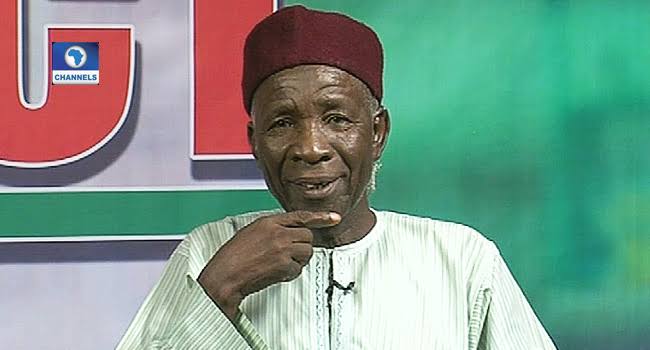
The latest development came to light through Buba Galadima, a veteran political actor known for his involvement in coalition building and party negotiations. According to his remarks, both Peter Obi and Rabiu Kwankwaso are expected to formally exit the ADC on Monday.
Although Galadima did not provide detailed explanations regarding the reasons behind the decision, his statement has already sparked widespread speculation about what comes next for the two political leaders.
Political observers are now divided on whether the exit signals the collapse of the coalition entirely or whether it represents a strategic repositioning ahead of a more structured political arrangement. Some believe that the move could be part of a broader plan to establish a new political platform that better aligns with the ambitions of both leaders.
Others suggest that the exit may indicate a return to familiar political structures, possibly involving the reactivation or reorganisation of existing parties under a new alliance framework.
Implications for Opposition Politics in 2027
The potential departure of Obi and Kwankwaso from the ADC carries significant implications for opposition politics in Nigeria. Without these two influential figures, the coalition risks losing much of its national appeal and electoral strength.
The ADC had been positioned as a unifying platform capable of bringing together diverse political interests under a single banner. However, the loss of key figures could weaken its structure and reduce its ability to function as a viable national alternative.
Political analysts warn that if opposition forces fail to maintain unity, the 2027 elections could once again be characterised by fragmented competition. In such a scenario, multiple opposition candidates may end up dividing votes across different regions, potentially strengthening the position of the ruling party.
This pattern is not new in Nigerian politics. Previous election cycles have often seen opposition groups struggle to maintain cohesion, leading to situations where internal divisions indirectly benefit the incumbent administration.
Read more on: President Tinubu Embarks on France, Kenya, Rwanda Trip for Strategic Summits
The Ruling Party Advantage and Strategic Positioning
While opposition parties continue to face internal disagreements, analysts note that the ruling All Progressives Congress appears to be maintaining organisational stability. According to political commentator Peter Akah, the ongoing fragmentation within opposition ranks could further strengthen the ruling party’s position ahead of 2027.
He argues that while opposition leaders focus on negotiations and realignments, the ruling party continues to consolidate its influence across federal and state institutions. This includes strengthening party structures, legislative control, and grassroots mobilisation efforts.
Such dynamics have historically played a significant role in determining electoral outcomes in Nigeria, where organisational strength and unity often prove decisive.
What Happens Next
Attention is now firmly focused on Monday, when Peter Obi and Rabiu Kwankwaso are expected to formally clarify their positions. The announcement is expected to provide insight into whether they intend to form a new political platform, return to previous party structures, or pursue a completely different political arrangement.
For supporters, the uncertainty is both concerning and hopeful. While some fear that the opposition is once again heading toward fragmentation, others believe that the current developments could eventually lead to a stronger and more strategically aligned political movement.
Read more on: Silence in Wike Camp as APC Stakeholders Present Fubara with Re-election Forms
Conclusion: A Defining Moment in Opposition Politics
Nigeria’s opposition politics has entered a critical and uncertain phase. The rise of the ADC coalition initially offered hope for a unified front capable of challenging the political status quo. However, internal disagreements, leadership ambitions, and strategic differences have now placed that vision in doubt.
The expected exit of Peter Obi and Rabiu Kwankwaso represents more than a routine political realignment. It reflects deeper structural challenges within opposition politics, including the difficulty of sustaining unity among leaders with strong individual support bases and competing ambitions.
As the country awaits Monday’s announcement, the political atmosphere remains tense. What unfolds next will likely shape the direction of opposition politics in the months leading up to the 2027 elections, and may determine whether Nigeria moves toward a more unified opposition structure or continues along a path of fragmentation and political rivalry.
Read more on:
- INEC Sets June 20 for Bye-Elections Across Six States
- Atiku and Amaechi Meet David Mark as INEC Confirms ADC Leadership
- Oil Prices Surge to Four-Year High as Trump Weighs Military Action Against Iran
- Lagos 2027: Jandor Withdraws From APC Governorship Contest
- 2027 Elections: ADC and PDP Await Key Supreme Court Ruling Today