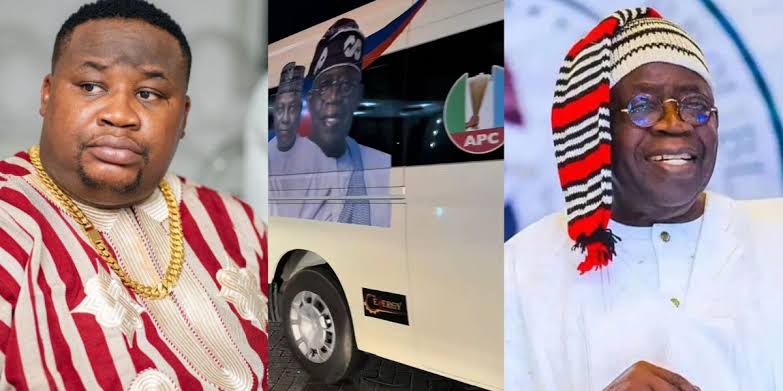
Pascal Okechukwu, widely known as Cubana Chiefpriest, is stepping away from the glitz of nightlife and into the demanding world of politics. The popular socialite and entrepreneur has formally declared his intention to contest for a seat in the House of Representatives in the 2027 general elections.
Known for his larger-than-life personality and strong presence in Nigeria’s entertainment and hospitality scene, Chiefpriest is now positioning himself as a serious political figure. He will be running under the platform of the All Progressives Congress, marking a significant shift in his public career and signaling a broader trend of celebrities moving into governance.
His declaration follows closely behind a recent political alignment that saw him and his associate Obi Cubana publicly identify with the pro-Tinubu City Boy Movement. The move has stirred conversations across both political and entertainment circles, raising questions about the evolving relationship between influence, business, and political power in Nigeria.
Read more on: Burna Boy,Wizkid and Davido Are My Biggest Source of Inspiration— Tiwa Savage
A Bold Entry into Politics
Chiefpriest made his ambition known through a series of widely circulated videos and social media posts. In the clips, he appeared alongside political stakeholders in Imo State, addressing supporters and outlining his vision for representation at the federal level.
Speaking to a crowd in Owerri, he emphasized that his decision was driven by a desire to move beyond commentary and become directly involved in shaping policy and development.
“I have spent years building businesses, creating opportunities, and empowering people through my work in the private sector,” he said. “Now I want to take that same drive into public service. We cannot keep complaining from the sidelines. It is time to be part of the system and fix what we can from within.”
He framed his candidacy as part of a larger movement aimed at increasing youth participation in governance. According to him, many young Nigerians feel disconnected from political structures, and his entry is meant to bridge that gap.
The City Boy Movement and Political Realignment
Chiefpriest’s declaration did not happen in isolation. It comes at the end of weeks of visible political repositioning. Earlier in April, he played an active role in promoting the City Boy Movement in the Southeast, a campaign platform linked to support for President Bola Ahmed Tinubu.
The movement is designed to mobilize young voters and expand the APC’s reach in regions where it has traditionally faced strong opposition. In the 2023 elections, the Southeast was largely aligned with the Obidient movement, which backed Labour Party candidate Peter Obi.
By aligning himself with the City Boy Movement, Chiefpriest has effectively placed himself at the center of efforts to reshape political loyalty in the region. His connection with Obi Cubana, who currently serves as the Southeast Coordinator for the initiative, adds another layer of influence to his political entry.
There has also been widespread speculation on social media regarding the level of funding behind the movement. Viral clips have fueled claims that significant financial resources are being deployed to drive mobilization in the Southeast. While no official figures have been confirmed, the conversation has added to the intrigue surrounding Chiefpriest’s political ambitions.
Read more on: “I Don’t See Myself Getting Married or Having Kids,” —BBNaija Star Phyna
Controversy and Public Reaction
Not everyone has welcomed his transition into politics. Chiefpriest’s past political stance has become a focal point for criticism. During the 2023 elections, he was publicly supportive of Peter Obi, even while holding a role as Special Adviser within the APC-led Imo State government.
His current alignment with the APC and his open support for the Tinubu administration have led some critics to accuse him of inconsistency or opportunism. Social media platforms have been filled with debates about whether his shift represents political growth or a calculated move to stay close to power.
Chiefpriest has responded directly to these criticisms. In one of his statements, he explained that his earlier support for Peter Obi was a personal choice, but his current position is based on a more strategic understanding of how governance works.
“I supported Obi before because I believed in his vision at the time,” he said. “But as someone who employs over a thousand people, I have come to understand that you cannot effectively help your people from outside the ruling structure. Power is essential. I am now fully committed to the APC and to working with Governor Hope Uzodinma to deliver results.”
His remarks reflect a pragmatic approach to politics, one that prioritizes access to power as a means of achieving development goals.
A New Style of Campaigning
Chiefpriest’s candidacy highlights a growing trend often described as influencer politics. With millions of followers across social media platforms, he has the ability to communicate directly with a large audience without relying solely on traditional campaign structures.
This digital advantage could prove to be a powerful tool, especially among younger voters who are more engaged online than through conventional political channels. His messaging is likely to blend entertainment, lifestyle branding, and policy discussions in a way that differs from traditional political campaigns.
At the same time, this approach raises questions about substance versus style. Critics argue that popularity does not automatically translate into effective governance, while supporters believe that fresh perspectives are exactly what the system needs.
Read more on: Portable’s Appearance Doesn’t Match His Wealth —Speed Darlington
Key Focus Areas of His Campaign
Chiefpriest has begun outlining what he describes as a practical and forward-looking agenda. While details are still emerging, several key priorities have already been highlighted.
One major focus is the development of hospitality and tourism. Drawing from his experience in the nightlife and entertainment industry, he plans to promote his constituency as a destination for both local and international visitors. This, he believes, will stimulate economic growth, create jobs, and attract investment.
Another priority is strategic engagement with the federal government. Chiefpriest has emphasized the importance of building strong relationships with decision-makers in Abuja in order to secure projects and resources for his region. He has also mentioned his intention to advocate on sensitive regional issues, including calls for the release of detained IPOB leader Nnamdi Kanu, which remains a significant concern for many in the Southeast.
Youth empowerment is also central to his message. He has spoken about creating opportunities for young people through digital training programs, entrepreneurship support, and access to funding. His goal is to equip youths with skills that are relevant in a modern economy, reducing unemployment and encouraging innovation.
Political Realities and Challenges Ahead
Despite the excitement surrounding his announcement, Chiefpriest faces a number of challenges. Nigerian politics is complex, and success often depends on more than popularity or financial strength.
Within the APC, he will need to secure the party’s ticket, which means navigating internal dynamics and competing against established politicians. Party primaries can be unpredictable, and influence alone does not guarantee victory.
Beyond the primaries, he will have to build a credible grassroots network. While social media reach is valuable, elections are still heavily influenced by on-the-ground mobilization, local alliances, and community engagement.
There is also the question of public perception. Some voters may view his background in entertainment as a disadvantage, questioning whether he has the experience needed for legislative work. Others may see it as a strength, arguing that his business success demonstrates leadership and innovation.
Read more on: Wumi Toriola responds to Amid Age Debate Following Enioluwa’s Alleged Red Carpet Disrespect
Support and Skepticism
Reactions from political observers have been mixed. Some analysts believe that his entry could energize young voters and introduce new ideas into the political space. They point out that individuals from non-traditional backgrounds have succeeded in politics in various parts of the world.
Others are more cautious. They warn that governance requires a deep understanding of policy, lawmaking, and public administration, areas that may take time for a newcomer to master.
Still, even skeptics acknowledge that Chiefpriest cannot be easily dismissed. His financial capacity, strong network, and visibility give him a platform that many first-time candidates lack.
A Reflection of a Changing Political Landscape
Chiefpriest’s move is part of a broader shift in Nigerian politics, where the lines between entertainment, business, and governance are becoming increasingly blurred. As more public figures explore political roles, the traditional pathways to power are evolving.
This trend raises important questions about representation, competence, and the future of leadership in the country. It also reflects a growing desire among younger Nigerians to see people they can relate to in positions of authority.
Whether this shift will lead to meaningful change or simply reshape the faces within the same system remains to be seen.
Read more on: Jude Okoye Speaks Out With Celebratory Post as Psquare Rift Continues
Looking Ahead to 2027
As the 2027 elections approach, all eyes will be on how Chiefpriest navigates the next stages of his political journey. From securing the APC ticket to building voter trust, each step will test his ability to transition from celebrity to statesman.
His campaign is likely to attract significant attention, not just because of who he is, but because of what his candidacy represents. For some, he symbolizes a fresh start and a break from the past. For others, he embodies the risks of prioritizing popularity over experience.
What is clear is that his entry has already sparked conversation and challenged assumptions about who can participate in governance.
The coming months will reveal whether Cubana Chiefpriest can translate his influence into electoral success and whether his vision resonates with the people he hopes to represent.
Read more on:
- Tonto Dikeh’s Ex Olakunle Churchill Breaks Silence on Divorce Rumours
- Zinoleesky Exits Naira Marley’s Camp, Starts His Own Record Label
- BNXN Claps Back at Fat Joe’s Claims He Influenced His Name Change
- Court Delivers Surprise Ruling in Mercy Johnson’s Defamation Case Against Angela Okorie
- Blessing CEO Starts Refunding Donors Amid Controversy Over Alleged Cancer Scam