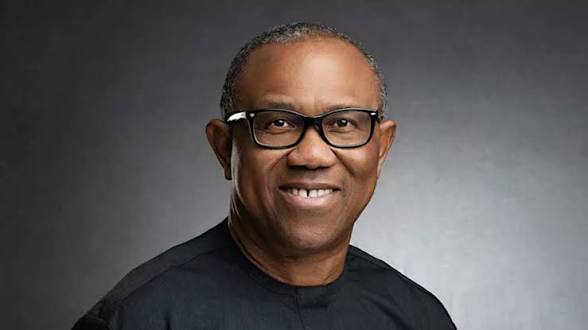
Nigeria’s political environment is gradually taking a more defined shape as the country edges closer to the 2027 general elections. In what many analysts have described as a major turning point for opposition politics, the Nigeria Democratic Congress, NDC, has officially confirmed former Governor of Anambra State, Mr. Peter Obi, as its presidential candidate.
The development, though widely anticipated in political circles, carries significant weight because it signals a deliberate attempt by opposition forces to consolidate their influence and avoid the fragmentation that has historically weakened their chances at the national level. With this ratification, Obi is no longer just a prominent political figure seeking a platform, but the central figure of a growing coalition positioning itself to challenge the ruling All Progressives Congress, APC.
A Carefully Managed and Uncontested Emergence
Obi’s path to securing the NDC ticket stands in contrast to the often turbulent and competitive primary elections that characterize Nigerian politics. Rather than a crowded field of aspirants battling for dominance, the process within the NDC was notably calm and structured.
When the party opened the sale of Expression of Interest and Nomination Forms, it became clear that Obi had a commanding influence within the emerging coalition. Party insiders confirmed that he was the only aspirant who obtained the presidential nomination form, effectively making him the consensus choice even before the formal processes were concluded.
Despite the absence of direct competition, the party proceeded with its constitutional procedures to ensure transparency and legitimacy. On May 19, 2026, a 17 member screening panel chaired by former Ebonyi State Governor, Senator Sam Egwu, conducted a formal assessment of Obi. The panel reviewed his credentials, political experience, and eligibility before clearing him to proceed.
Following this clearance, Obi was issued Nomination Form Serial Number 001, a symbolic but important gesture that underscored his status as the party’s leading figure. The process reached its final stage on May 29, 2026, when the party leadership formally ratified his candidacy, officially presenting him as the NDC’s flagbearer for the 2027 presidential election.
Read more on: Israel’s PM Netanyahu Instructs Military to Seize 70% of Gaza Strip
From Labour Party to NDC: A Strategic Political Journey
Peter Obi’s emergence under the NDC is the culmination of a broader political journey that began after the 2023 general elections. Having contested under the Labour Party in that election and built a significant grassroots following, Obi became one of the most influential opposition figures in the country.
However, the period that followed revealed structural limitations within the Labour Party, prompting discussions about the need for a broader and more inclusive political platform. In 2025, Obi parted ways with the Labour Party and moved to the African Democratic Congress, ADC, in what was initially seen as a step toward building a stronger coalition.
That arrangement, however, proved to be temporary. As political calculations intensified ahead of 2027, it became increasingly clear that a single, unified platform would be more effective than multiple smaller alliances. Acting on this realization, Obi resigned from the ADC on May 2, 2026.
In a swift and strategic move, he formally joined the NDC the following day, May 3, alongside former Kano State Governor, Rabiu Kwankwaso. Their entry into the party was marked by a formal reception at the NDC national secretariat in Abuja, where the National Chairman, Cleopas Moses Zuwoghe, personally welcomed them and issued their membership cards.
This transition was more than a routine party switch. It represented a calculated effort to merge different political structures and support bases into a single, more formidable force. By bringing together Obi’s nationwide appeal, the loyalty of his supporters, and the regional strength associated with figures like Kwankwaso, the NDC is attempting to build a coalition capable of competing more effectively on a national scale.
Building a Unified Opposition Front
One of the key lessons from the 2023 elections was the impact of vote splitting among opposition parties. Multiple candidates with overlapping support bases ultimately weakened the collective challenge against the ruling party. The NDC’s current strategy appears to be a direct response to that experience.
By rallying behind a single candidate early in the process, the party is projecting unity and clarity of purpose. Supporters of Obi, widely known as the Obidient movement, are expected to form a core part of this new coalition. At the same time, the inclusion of other political actors and grassroots networks is intended to broaden the party’s reach beyond its traditional bases.
Political observers note that while the strategy has potential advantages, it will also require careful coordination to manage differing interests within the coalition. Maintaining internal cohesion while expanding national appeal will be one of the major challenges facing the NDC as the election approaches.
Read more on: ISWAP Confirms Leader Al-Mainuki Killed Following US Strike
Clearing the Air on Viral Claims
The period leading up to Obi’s ratification was not without controversy. Social media platforms were flooded with unverified reports suggesting that he had secured an extraordinary 45 million votes in an alleged early virtual primary conducted by the NDC.
The claim quickly gained traction online, generating confusion and debate among political observers. In response, Obi publicly addressed the issue on May 26, firmly rejecting the report. He described it as false, misleading, and not reflective of the party’s actual processes.
Party officials also stepped in to clarify that no such vote took place. They emphasized that the selection of the presidential candidate followed established constitutional procedures, relying on screening and internal consensus rather than any form of unofficial or digital voting exercise.
Implications for Nigeria’s Political Landscape
With Obi now officially confirmed as the NDC’s presidential candidate, the focus is shifting toward what this means for the broader political contest ahead. His candidacy is expected to reshape the dynamics of the race, particularly within the opposition space.
For the NDC, the immediate priority is to strengthen its organizational structure and prepare for a nationwide campaign. The party has already indicated plans to finalize candidates for governorship, senatorial, and legislative positions across all 36 states, ensuring that its presidential bid is supported by a strong and coordinated presence at every level.
Within the ruling APC and other political parties, Obi’s emergence is likely to prompt strategic recalibrations. Campaign strategies, alliances, and messaging are expected to evolve as parties assess the new balance of power.
At the same time, voters and political stakeholders will be watching closely to see how the NDC translates its early momentum into sustained support. Issues such as policy direction, economic plans, and national unity are expected to play a central role in shaping public perception as the election draws nearer.
Read more on: Atiku Abubakar Visits Rotimi Amaechi After ADC Primary
Key Milestones in Obi’s Transition to the NDC
- May 2, 2026: Peter Obi resigns from the African Democratic Congress
- May 3, 2026: Obi and Rabiu Kwankwaso officially join the NDC in Abuja
- May 19, 2026: Screening committee led by Senator Sam Egwu clears Obi as sole aspirant
- May 29, 2026: NDC formally confirms Peter Obi as its presidential candidate
Looking Ahead
As Nigeria moves closer to another critical electoral cycle, the formal confirmation of Peter Obi as the NDC’s presidential candidate marks an important moment in the evolving political narrative. It highlights ongoing efforts to reshape opposition politics and presents a new configuration that could influence the direction of the 2027 elections.
While it is still early in the race, the coming months will reveal how effectively this coalition can translate its structure into electoral strength. For now, the NDC has made a clear statement of intent by placing Obi at the forefront of its presidential ambition, setting the stage for what is expected to be a closely watched and highly competitive contest.
Read more on: