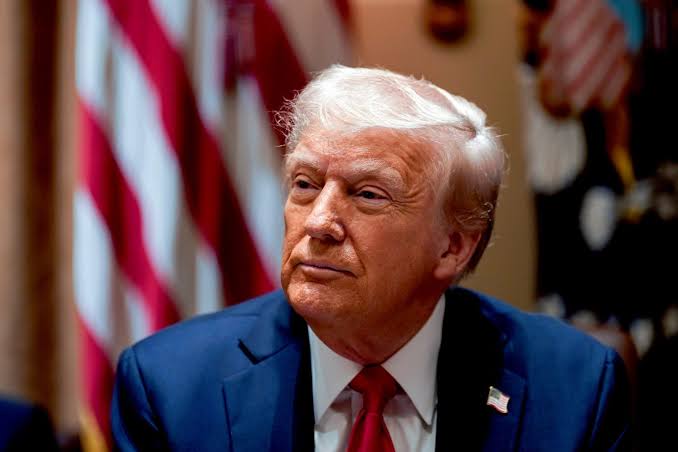
Tensions are running high in Washington after the U.S. House of Representatives delivered a significant political setback to President Donald Trump over his handling of the ongoing conflict with Iran. In a rare moment of bipartisan agreement, lawmakers voted to restrict the administration’s ability to continue military operations without explicit approval from Congress. The decision has triggered a sharp and emotional response from the president, who views the move as a direct attempt to undermine his authority at a critical moment.
Shortly after the vote, Trump took to his Truth Social platform to voice his frustration. He criticized the lawmakers involved, describing their actions as unpatriotic and accusing them of jeopardizing delicate negotiations aimed at ending hostilities with Iran. His reaction has further intensified an already heated debate over presidential war powers and the role of Congress in authorizing military action.
The controversy stems from a War Powers Resolution passed by the House on June 3 in a narrow 215 to 208 vote. The measure, introduced by Representative Gregory Meeks of New York, directs the administration to withdraw U.S. armed forces from active hostilities against Iran unless Congress formally declares war or provides specific authorization. The resolution reflects growing concern among lawmakers that the executive branch may have overstepped its constitutional authority.
At the center of the dispute is the timeline established by the 1973 War Powers Act, which allows a president to engage U.S. forces in military action for a limited period without congressional approval. That window, typically between 60 and 90 days, has already passed in relation to the current conflict, which began with coordinated U.S. and Israeli airstrikes on February 28, 2026. Critics argue that continuing operations beyond this period without a vote from Congress violates the law.
Read more on; Ogun Government, Police Debunk Viral Terror Scare, Assure Residents of Safety
The White House, however, has pushed back against that interpretation. Officials point to a fragile ceasefire that has been in place since early April, arguing that it effectively reset the timeline and places the administration within its legal rights. This disagreement over legal boundaries has now become a central issue in the broader political clash.
President Trump’s response to the House vote was swift and pointed. In his post, he dismissed the decision as meaningless and accused both Democrats and a small group of Republicans of working against national interests. He suggested that political motivations, rather than genuine concern for constitutional order, were driving the push to limit his authority. He also criticized members of his own party who broke ranks, labeling them as attention-seekers and expressing disappointment in their actions.
The vote’s outcome was largely shaped by the defection of four Republican lawmakers who joined nearly all Democrats in supporting the resolution. Their decision proved decisive in such a closely divided chamber and has drawn considerable attention.
Among them was Thomas Massie of Kentucky, known for his consistent opposition to foreign military interventions. Despite recently losing his party primary to a Trump-backed challenger, Massie maintained that the vote was about reasserting Congress’s constitutional role in matters of war. Tom Barrett of Michigan, a military veteran, also supported the resolution, citing concerns about the lack of a clearly defined mission and the need for legal clarity.
Warren Davidson of Ohio echoed similar sentiments, emphasizing the importance of outlining objectives before engaging in prolonged military action. Brian Fitzpatrick of Pennsylvania, a former FBI agent, framed his support as a defense of the constitutional balance of power, arguing that decisions of such magnitude should be debated and approved by Congress rather than handled unilaterally by the executive branch.
Read more on: Fresh Violence in Taraba Leaves Many Dead and Hundreds Fleeing Homes
Beyond the political arguments in Washington, the conflict has begun to take a noticeable toll on the American public. Disruptions to global energy supply, worsened by Iran’s closure of the Strait of Hormuz and subsequent U.S. naval actions, have contributed to a sharp rise in fuel prices. This economic strain has fueled growing dissatisfaction among voters, many of whom are questioning the cost and purpose of the military engagement.
Democratic lawmakers have been particularly vocal about the domestic impact, pointing to rising living expenses and economic uncertainty as reasons to reassess the ongoing conflict. At the same time, some Republicans are quietly expressing concern that public frustration over these issues could have political consequences, especially with midterm elections approaching later in the year.
The next phase of the legislative process now shifts to the Senate, where a similar measure had already gained traction in May. Lawmakers there will need to reconcile differences between the two versions before moving forward. Even if the resolution ultimately clears both chambers, its future remains uncertain.
Read more on: Troops Kill Over 50 Terrorists, Eliminate Top ISWAP Shura Council Member
President Trump retains the authority to veto the measure, and Congress does not currently have the numbers needed to override such a decision. There is also ongoing debate among legal experts about the binding nature of this type of resolution without presidential approval, adding another layer of complexity to the situation.
While the immediate practical impact of the House vote may be limited, its political significance is difficult to ignore. It signals a growing willingness among lawmakers from both parties to challenge the scope of presidential power in matters of war. It also suggests that the long-standing practice of granting broad authority to the executive branch for military operations may be facing increased scrutiny.
As the debate continues, the situation highlights a deeper question about the balance of power in the United States government and how it should be exercised during times of conflict.
Read more on: