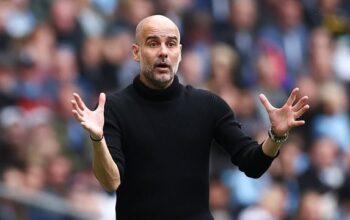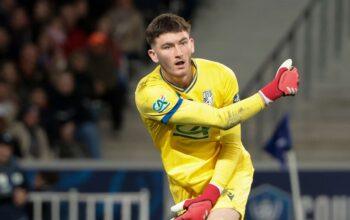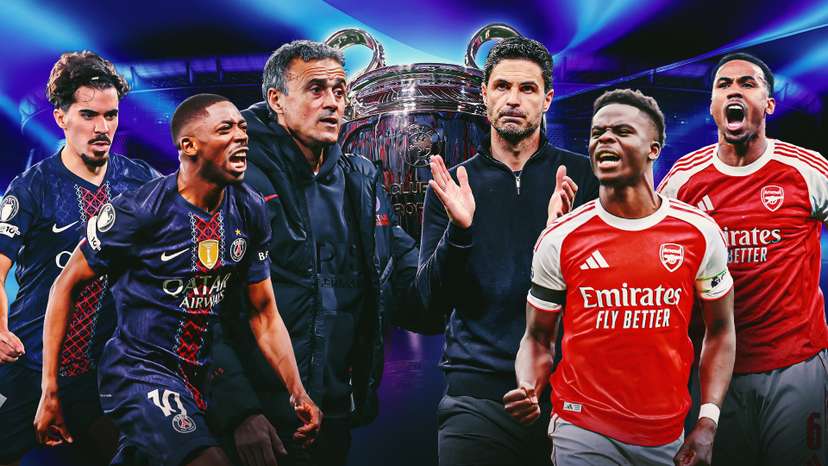
The stage is set for what promises to be a historic night in European football. On Saturday, the iconic Puskás Aréna in Budapest will host the 2026 UEFA Champions League final between Arsenal and Paris Saint-Germain.
The stakes could hardly be higher. Mikel Arteta’s Arsenal arrive with immense momentum after ending a 22-year wait for the Premier League title, a triumph that has reignited belief across North London. Now they stand one step away from immortality, chasing their first-ever European Cup and the chance to etch their names into club folklore.
Opposing them is a PSG side built for nights like this. Under Luis Enrique, the Parisians are the reigning European champions and have added another Ligue 1 title to their growing list of honours. More importantly, they arrive with the mindset of a team determined to protect their place at the summit of European football and prove that their dominance is no passing phase.
When a relentless attacking force meets one of the most disciplined defensive structures in world football, the result is usually decided by fine margins. This final is expected to be no different. Beyond the tactical systems and team philosophies, it will likely come down to individual duels and key matchups across the pitch. Here are six crucial battles that could ultimately determine who lifts the famous trophy.
Bukayo Saka against Nuno Mendes: A Battle of Speed, Skill and Discipline
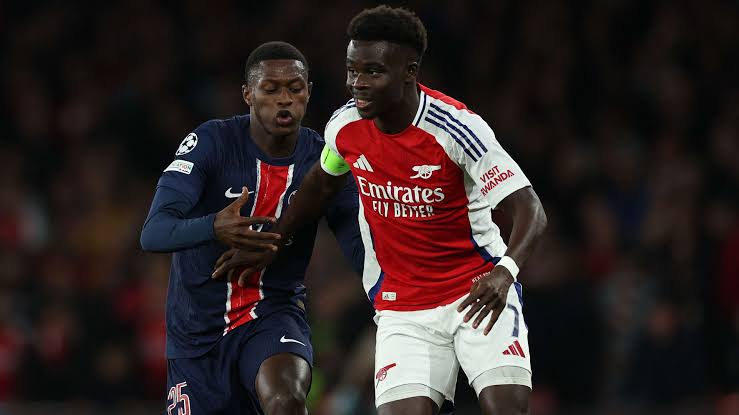
One of the most anticipated duels of the night will take place on Arsenal’s right flank. Bukayo Saka has been central to Arsenal’s rise, combining creativity, directness and a consistent goal threat. His ability to drift inside and strike with his stronger left foot has made him one of the most dangerous wide forwards in Europe.
Standing in his way is Nuno Mendes, a fullback widely regarded as one of the most complete in the game. Blessed with exceptional pace, strength in recovery and a fearless approach to defending, Mendes represents a major test for any winger. Luis Enrique often relies on him to engage attackers early and deny them the space to build rhythm.
The tactical battle here will be fascinating. If Arsenal can create overloads through Martin Ødegaard and isolate Saka in favourable situations, they could consistently trouble PSG’s back line. However, if Mendes successfully limits Saka’s time on the ball and forces him into less comfortable areas, PSG may succeed in neutralising one of Arsenal’s most dangerous attacking weapons.
Read more on: Real Madrid Tops Forbes 2026 Ranking as the World’s Most Valuable Football Club
William Saliba against Khvicha Kvaratskhelia: A True Test of Defensive Composure
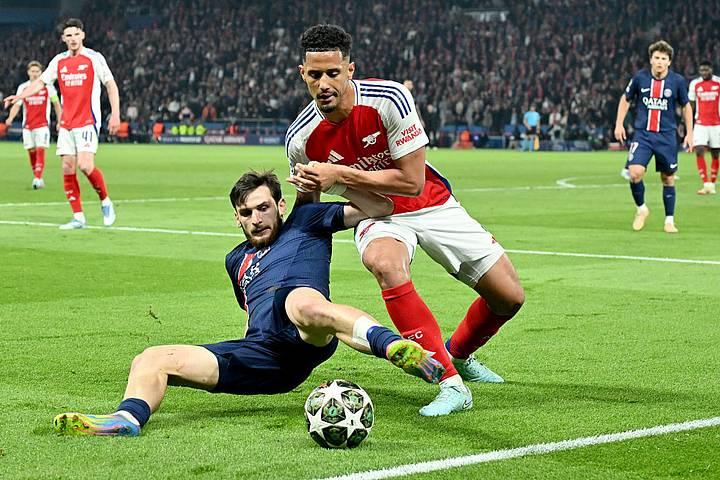
Arsenal’s defensive stability will be heavily tested by PSG’s fluid and unpredictable forward line. With Kylian Mbappé drifting across central and left channels and Khvicha Kvaratskhelia operating with freedom across the front, the responsibility on Arsenal’s centre-backs becomes enormous.
William Saliba has developed into one of the most reliable defenders in world football, combining physical dominance with calmness under pressure and excellent reading of the game. However, Kvaratskhelia presents a different kind of challenge entirely. His game is built on unpredictability, sharp changes of direction, clever movement between lines and sudden bursts of acceleration.
This is not a duel that can be won through strength alone. Saliba, and at times Ben White stepping into defensive cover, will need constant communication and perfect timing. Any lapse in coordination could allow PSG’s attackers the space they need to turn possession into a decisive moment.
The Midfield Contest: Rice and Zubimendi against Vitinha and João Neves
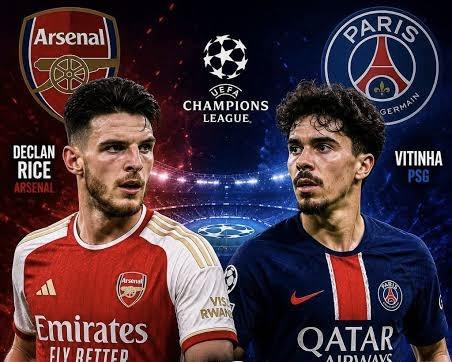
The outcome of the final may well be shaped in midfield, where control of tempo and territory will be fiercely contested. PSG’s midfield pairing of Vitinha and João Neves brings technical quality, intensity and an ability to progress the ball through tight spaces with precision. Their movement and passing combinations allow PSG to dictate possession and shift opponents from side to side.
Arsenal will respond with the physical authority and intelligence of Declan Rice alongside the composure of Martín Zubimendi. Together, they form a midfield partnership designed to disrupt rhythm, close passing lanes and provide a stable platform for transitions.
The key objective for Arsenal will be to prevent Vitinha from finding a consistent rhythm in possession. If PSG are allowed to settle and circulate the ball freely through midfield, they will gradually push Arsenal deeper and control the flow of the match. On the other hand, if Rice and Zubimendi succeed in breaking up play and forcing turnovers, Arsenal could gain valuable territory and relieve pressure on their defence.
Read more on: Barcelona Line Up £45m Move for Arsenal Defender After Gordon Signing
Martin Ødegaard against João Neves: The Battle for Creative Freedom
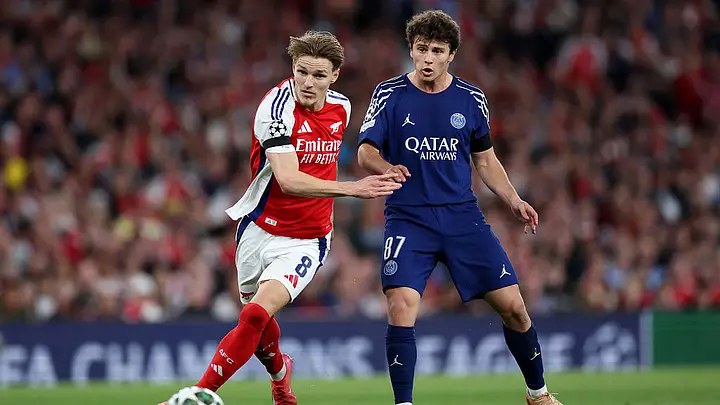
Another intriguing subplot lies in the duel between Arsenal captain Martin Ødegaard and PSG’s João Neves. Luis Enrique is known for his structured pressing system, often assigning specific players to track key opposition figures across the pitch. In high-stakes matches, Neves frequently takes on the responsibility of shadowing creative midfielders to limit their influence.
This sets up a fascinating tactical chess match. Ødegaard thrives in finding space between the lines, drifting into pockets where he can dictate play and unlock defences with quick, incisive passes. However, if Neves sticks closely to him and disrupts his rhythm, Arsenal may struggle to connect midfield and attack effectively.
The ability of Ødegaard to escape his marker, drag him out of position and create openings elsewhere on the pitch could be crucial. If he is successfully contained, Arsenal’s attacking structure risks becoming predictable and easier to defend against.
Arsenal’s Direct Transitions against PSG’s High Press
PSG’s defensive approach often involves aggressive pressing high up the pitch, particularly in matches where they seek to dominate possession and territory. Their forward line and midfielders work collectively to pressure opposition defenders into mistakes and force hurried clearances.
Arsenal are well aware of this threat and have developed a more flexible attacking approach under Mikel Arteta. While they are comfortable building from the back, they also possess the ability to bypass pressure with direct, vertical passes into advanced areas.
The effectiveness of this strategy will depend heavily on PSG’s defensive organisation, particularly the positioning of Marquinhos and Milan Škriniar. If their defensive line holds too high and lacks coordination, Arsenal could exploit space in behind with quick transitions. However, if PSG manage to compress space effectively and win second balls, they will be able to sustain their pressure and keep Arsenal pinned back.
Read more on: 2026 Ballon d’Or Details Confirmed as Harry Kane, Dembele and Mbappé Lead the Race
Arsenal’s Set-Piece Threat against PSG’s Defensive Structure
In matches of this magnitude, moments from open play can be rare, which places even greater importance on set pieces. Arsenal have built a reputation as one of the most dangerous teams in Europe from dead-ball situations, thanks in large part to the meticulous preparation led by Nicolas Jover.
Corners and free kicks have been a consistent source of goals for Arsenal throughout their campaign, with Gabriel Magalhães emerging as a major aerial threat. The delivery from players like Bukayo Saka adds another layer of danger, making Arsenal a constant threat whenever they win set-piece opportunities in advanced areas.
PSG, on the other hand, will also look to capitalise on their own set-piece situations, with players like Ousmane Dembélé capable of delivering dangerous balls into the box. However, their defensive organisation in such scenarios has shown occasional vulnerability, particularly when dealing with well-timed runs and physical aerial pressure.
A single moment from a corner or free kick could very well decide the outcome of the final, especially if the match remains tightly contested deep into the second half.
Final Outlook
This is a final that appears finely balanced on paper, with both teams bringing contrasting strengths and elite-level quality across the pitch. Arsenal’s hopes will rest on defensive discipline, midfield control and their outstanding set-piece efficiency. PSG, meanwhile, will rely on technical superiority in midfield and the individual brilliance of their attacking stars.
In the end, such matches are often decided by fine margins, moments of brilliance, or a single lapse in concentration. Whether it becomes a night of celebration for North London or another triumph for Paris will depend on which of these key battles tips in one direction.
Read more on: