The already fragile ceasefire between the United States and Iran has come under severe strain following a rapid and dangerous escalation across the Gulf region. In what has become one of the most serious confrontations in recent months, Iran’s Islamic Revolutionary Guard Corps carried out a coordinated attack involving ballistic missiles and drones aimed at Gulf nations that host key American military facilities.
This latest move by Tehran was in direct response to targeted U.S. military strikes that destroyed important Iranian coastal radar systems near the Strait of Hormuz, a location of enormous strategic importance to global trade and energy supply.
The situation has raised fresh fears that the uneasy truce between both nations could collapse entirely, potentially derailing ongoing diplomatic efforts that were aimed at reaching a more stable and long term agreement.
How the Crisis Escalated
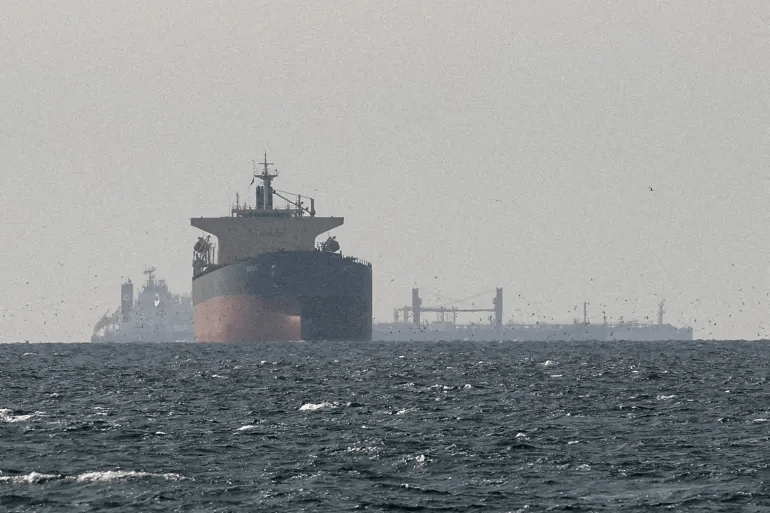
The current round of hostilities can be traced back to a series of events that unfolded in the Strait of Hormuz, one of the busiest and most critical shipping routes in the world. A significant portion of global oil supply passes through this narrow waterway, making any disruption a matter of international concern.
Drone Activity Triggers Alarm
According to the United States Central Command, American forces detected four Iranian drones described as one way attack unmanned aerial vehicles operating over the strait. These drones were intercepted and destroyed after being assessed as an immediate threat to both commercial shipping vessels and military assets in the area.
While Iranian state affiliated outlets later downplayed the incident by describing the drone launches as a form of warning, U.S. officials viewed the action as a serious provocation and a violation of maritime security norms.
Read more on: Former UNILORIN Vice Chancellor Professor AbdulGaniyu Ambali Dies at 68
American Military Response
In reaction to the drone activity, the United States carried out what it termed a defensive operation intended to secure vital shipping lanes and deter further threats. Precision airstrikes were launched against Iranian surveillance infrastructure positioned along the coast.
The strikes focused on radar installations in Goruk and on Qeshm Island, both located close to Bandar Abbas, which serves as a major Iranian naval base. These facilities were believed to play a crucial role in monitoring vessel movement and potentially coordinating attacks in the region.
The objective of the operation was to weaken Iran’s ability to track and target ships moving through the Strait of Hormuz, thereby ensuring safer passage for international maritime traffic.
Iran reacted strongly to the strikes, with its Foreign Ministry condemning the action as a violation of a ceasefire agreement reached earlier in April. Officials in Tehran warned that the United States would be held accountable for any consequences arising from the attack.
Iran’s Retaliatory Strike
Iran’s response came swiftly and marked a noticeable shift from indirect confrontation to a more direct form of engagement. The IRGC launched seven ballistic missiles along with several drones toward Kuwait and Bahrain, both of which host significant American military installations.
In Kuwait, the intended target was Ali Al Salem Air Base, which houses U.S. personnel. Air defense systems successfully intercepted the incoming missile, although falling debris caused minor damage in nearby residential areas.
In Bahrain, the primary concern was the U.S. Navy’s Fifth Fleet headquarters. Air raid sirens were activated across the island as defense systems intercepted the incoming threats, prompting residents to seek shelter.
According to U.S. Central Command, six of the seven ballistic missiles were successfully intercepted. The remaining missile failed to reach its target and crashed without causing harm. Authorities in both countries confirmed that despite the intensity of the attacks, there were no casualties reported among civilians or military personnel.
Kuwait’s Foreign Ministry described the incident as a serious breach of sovereignty and warned that such actions represent a dangerous escalation with direct implications for civilian safety.
Read more on: Over 1,000 Nigerians Complete Evacuation Registration Amid Rising Tensions in South Africa
A Wider Conflict Shaped by Economics and Regional Instability
The confrontation between the United States and Iran is not limited to military exchanges. It is deeply connected to economic pressure, sanctions, and broader regional conflicts that continue to complicate the situation.
Economic Pressure on Iran
The United States has maintained a strong naval presence aimed at restricting Iran’s ability to operate freely in its own waters, particularly in response to threats against the Strait of Hormuz. This has been accompanied by a strict enforcement of sanctions targeting Iran’s energy exports.
Recent figures indicate that Iran’s oil exports have dropped significantly, falling below 300,000 barrels per day in May, marking one of the lowest levels in years. Additional sanctions imposed by the U.S. Treasury have targeted Iran’s shipping networks and financial channels tied to liquefied natural gas transactions.
These measures have placed immense strain on Iran’s economy, further intensifying tensions between both nations.
The Lebanon Factor
Complicating matters further is the ongoing instability in Lebanon. Despite efforts to broker a ceasefire between Lebanon and Israel, violence has persisted, with continued airstrikes reported in southern parts of the country.
Iran has linked its willingness to agree to a broader deal with the United States to developments in Lebanon, insisting that any lasting agreement must include an end to hostilities in that region.
The situation is further complicated by Hezbollah’s rejection of Western backed ceasefire proposals, making diplomatic progress increasingly difficult.
Read more on: Peter Obi Criticizes Tinubu’s Approval of 1,000 Forest Guards for Oyo State
Diplomatic Talks Under Pressure
Ironically, this escalation comes at a time when both the United States and Iran are still engaged in negotiations aimed at extending their ceasefire and addressing long standing issues, including Iran’s nuclear program.
Although there had been tentative progress toward extending the truce by sixty days, key disagreements have stalled the process.
Iran has insisted that any agreement must include the immediate release of 24 billion dollars in frozen assets, along with the lifting of restrictions on its oil exports.
The United States, on the other hand, has maintained a firm position, demanding guarantees on freedom of navigation in the Strait of Hormuz and strict limitations on Iran’s nuclear activities before offering any economic relief.
Speaking to reporters, President Donald Trump struck a cautiously optimistic tone, suggesting that the situation was under control while maintaining pressure on Tehran. He claimed that Iran’s military capabilities, particularly its missile and drone arsenal, had been significantly reduced, leaving the country with limited options moving forward.
What the Future May Hold
The recent exchange of missile strikes highlights just how quickly tensions in the Gulf can escalate into a broader conflict. With both sides holding firm to their positions and little room for compromise, the risk of further confrontation remains high.
At the same time, ongoing military activities, including intensified drills by U.S. naval forces in the Arabian Sea, signal that preparations are being made for a range of possible scenarios.
Whether this latest escalation serves as a final show of strength before renewed negotiations or marks the beginning of a more prolonged conflict remains uncertain. What is clear, however, is that the stability of the region hangs in a delicate balance, and the coming days will be critical in determining the direction of events.
Read more on: