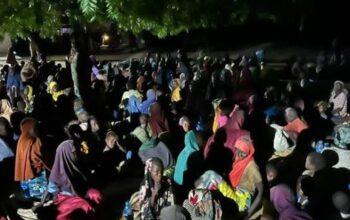
According to updates from the Nigerian Ministry of Foreign Affairs, a total of 1,094 Nigerians successfully concluded the registration exercise in Pretoria as of today. The figure marks a dramatic increase in urgency compared to earlier records, which showed only about 130 individuals initially signed up for assisted return barely a month ago. Officials say the sharp rise reflects growing fear, uncertainty, and displacement pressures within migrant communities following weeks of rising tension.
With the registration window now closed, attention has shifted to the coordination of emergency repatriation flights and broader diplomatic management of the crisis.
Escalating Tensions and Deepening Anxiety Across Migrant Communities
South Africa, long regarded as one of the continent’s primary destinations for labour migration, continues to attract thousands of African workers due to its relatively advanced industrial economy. However, persistent economic challenges, particularly unemployment levels that remain above 30 percent, have repeatedly contributed to friction between local communities and foreign nationals.
In recent weeks, that tension has intensified significantly. Beginning in late April 2026, a wave of anti-immigration protests spread across several major urban centres, including Johannesburg and Pretoria. What started as localized demonstrations gradually evolved into broader unrest, creating an increasingly volatile atmosphere in some communities where migrants reside and work.
The situation escalated further following the emergence of a publicly circulated June 30, 2026 ultimatum issued by a citizen-led anti-migration group. The statement called for the removal of undocumented migrants from selected neighbourhoods and quickly gained traction on social media, amplifying fears among foreign residents.
Although South African authorities have not officially endorsed the ultimatum, its circulation has contributed to heightened anxiety and a growing sense of vulnerability among migrant populations. Many Nigerian families reportedly restricted their movements, avoided public spaces, and in some cases relocated within cities in search of safer environments.
Read more on: Peter Obi Criticizes Tinubu’s Approval of 1,000 Forest Guards for Oyo State
Reports of Violence and Diplomatic Concern
The crisis took on a more serious diplomatic dimension following reports of violent incidents involving Nigerian nationals. The Federal Government of Nigeria recently condemned the deaths of two citizens who were allegedly killed during enforcement operations involving local security personnel.
These incidents have intensified diplomatic engagement between Abuja and Pretoria. Nigerian officials have demanded clarification and accountability while urging South African authorities to strengthen protection measures for foreign nationals caught in the unrest.
The developments have also placed additional pressure on Nigeria’s diplomatic mission in South Africa, which has been working around the clock to verify reports, support affected citizens, and coordinate evacuation procedures.
Joint Registration and Screening Exercise
The evacuation process officially began on June 4, 2026, as part of a coordinated response between the Nigerian government, South African immigration authorities, and local law enforcement agencies.
The exercise was designed to serve multiple purposes. First, it provided a structured channel for distressed citizens to register for voluntary return. Second, it ensured proper identity verification and documentation in line with international migration standards. Third, it allowed both governments to maintain oversight and security during a sensitive and rapidly evolving situation.
Officials confirmed that the exercise concluded on June 6, 2026, with a final tally of 1,094 Nigerian nationals approved for voluntary repatriation processing.
Authorities explained that the next stage will involve detailed logistical planning, including flight scheduling, airport coordination, security arrangements, and arrival reception planning in Nigeria. Aviation resources are expected to be mobilized immediately following final clearance approvals.
It was also noted that Nigeria submitted its evacuation list ahead of several other affected national groups. However, Ghana reportedly received earlier flight scheduling due to an earlier completion of its registration process. Ethiopia is expected to follow in subsequent phases once its own documentation is finalized.
Read more on: Middle East Tensions Persist as Ceasefires Fail and Humanitarian Crisis Worsens
Diplomatic Negotiations and Immigration Waiver Agreement
One of the most significant outcomes of the ongoing diplomatic engagement has been the agreement on temporary relief measures to facilitate smooth evacuation.
Through negotiations led by the Minister of Foreign Affairs, Ambassador Bianca Odumegwu-Ojukwu, Nigeria’s High Commission in Pretoria secured a waiver arrangement with South African authorities aimed at reducing legal and administrative barriers for departing migrants.
Under this agreement, individuals who may have violated immigration regulations, including visa overstays or documentation lapses, will not face immediate financial penalties, detention, or re-entry bans as part of the voluntary evacuation process. The measure is intended to ensure that affected citizens can return home safely and without additional legal complications at departure points.
However, officials emphasized that this waiver is strictly limited in scope. Individuals currently facing active criminal investigations or formal charges within South Africa’s judicial system are excluded from the arrangement and will be subject to due legal process before any travel decisions are made.
Timeline of Escalation: April to June 2026
The situation has developed rapidly over a relatively short period, with tensions increasing in stages.
Between April 27 and April 29, 2026, large-scale anti-immigration demonstrations were reported in Pretoria and Johannesburg. These early protests triggered concern within migrant communities and led to the first wave of evacuation interest, with approximately 130 Nigerians initially registering for assistance.
Throughout May 2026, the situation deteriorated further following reports of violence. The deaths of two Nigerian nationals during alleged enforcement operations significantly escalated diplomatic tensions and prompted formal engagement between both governments.
By early June 2026, displacement of migrant communities was reported in several areas, including Kleinmond and surrounding regions. This period saw a sharp increase in evacuation registrations, as fear and uncertainty spread across affected populations.
The activation of the joint screening exercise between June 4 and June 6 marked the final phase of registration, culminating in more than one thousand approved evacuees.
Read more on: Crisis in Oyo State as Massive Manhunt Intensifies as Kidnappers Demand ₦1 Billion and Push for Sharia Law
Government Response and Humanitarian Coordination
President Bola Tinubu has reiterated that the safety, dignity, and welfare of Nigerians abroad remain a core priority of the Federal Government’s foreign policy framework. In response to the unfolding situation, the government has intensified coordination efforts across multiple agencies, including foreign affairs, aviation, and emergency response units.
Plans are currently underway to deploy aircraft for evacuation flights, with priority given to vulnerable individuals, families, and those in high-risk locations. Officials have also indicated that reception arrangements are being prepared in Nigeria to ensure smooth reintegration upon arrival.
Humanitarian agencies are expected to assist with processing returnees, particularly those who may have lost livelihoods, documentation, or stable housing during the period of unrest.
Broader Regional Implications
While immediate attention remains focused on evacuation logistics, the broader implications of the crisis continue to spark discussion among policymakers and analysts.
The recurring nature of xenophobic tensions in parts of South Africa has once again highlighted the economic and social pressures facing both host communities and migrant populations. It has also raised renewed questions about regional migration governance, labour mobility frameworks, and the long-term sustainability of intra-African migration patterns under uneven economic conditions.
For many observers, the current situation underscores the fragile balance between opportunity and vulnerability that defines migration across the continent.
Conclusion
As the registration process closes and evacuation planning moves into its next stage, attention now shifts toward execution, coordination, and the safe return of affected citizens.
For over a thousand Nigerians registered in this process, the coming days will mark the beginning of a return journey shaped by urgency, uncertainty, and difficult circumstances, while for both governments, it represents a delicate test of diplomatic coordination and humanitarian response capacity.
Read more on: