The Middle East is currently facing a deeply complex and contradictory reality, where formal ceasefire agreements and diplomatic announcements exist on paper, but intense military activity continues on the ground. Although international actors have repeatedly announced truce arrangements involving Gaza, Lebanon, and Iran, the situation in practice remains unstable, with ongoing airstrikes, ground operations, and retaliatory attacks reported across multiple fronts.
As tensions continue to escalate, the humanitarian consequences are becoming increasingly severe. United Nations agencies have issued urgent warnings over the deteriorating conditions, while several countries, including Ireland, have taken unprecedented diplomatic steps in response to the ongoing conflict and political rhetoric surrounding it.
Fighting Continues Despite Ceasefire Declarations
In Gaza, despite the existence of a declared ceasefire framework, reports indicate that Israeli forces have continued expanding their ground presence, now controlling an estimated 60 percent of the territory. Hamas has not agreed to disarm, and hostilities have not fully stopped. Local health authorities have reported that hundreds of Palestinians have been killed since the ceasefire was meant to take effect, with figures exceeding 900 fatalities according to recent updates.
The situation in Lebanon remains equally fragile. A renewed ceasefire agreement was recently discussed between Israel and Lebanon, with proposals for limited operational zones intended to reduce direct clashes. However, Hezbollah has rejected key aspects of the arrangement, accusing Israel of continuing violations. Israeli air and drone strikes have persisted in southern Lebanon, while Hezbollah has responded with retaliatory attacks. Lebanese parliamentary officials have also stated that any withdrawal from southern areas would depend on a full Israeli pullback from occupied positions, leaving the agreement effectively stalled.
Meanwhile, the broader regional environment remains volatile. Iran has been linked to a recent missile and drone strike that reportedly impacted Kuwait International Airport, resulting in at least one fatality. This incident has further complicated ongoing indirect diplomatic efforts involving the United States and Iran, adding another layer of instability to an already tense situation.
Read more on: Crisis in Oyo State as Massive Manhunt Intensifies as Kidnappers Demand ₦1 Billion and Push for Sharia Law
United Nations Warns of Deepening Humanitarian Catastrophe in Lebanon
The United Nations has raised serious alarm over the worsening humanitarian conditions in Lebanon, where the conflict has now stretched into its fourth month. According to updates from UN officials in Geneva, approximately 1.4 million people are currently in urgent need of assistance, as displacement, destruction, and shortages continue to rise.
The UN, working alongside Lebanese authorities, has launched a renewed humanitarian appeal seeking an additional 331.5 million dollars in emergency funding. This brings the total required assistance to nearly 640 million dollars.
Reports indicate that more than 3,500 people have lost their lives, while around 10,000 others have been injured since the escalation began. Nearly one million residents remain displaced, with many families forced to move repeatedly in search of safety. In some southern areas, residents have reportedly fled multiple times as fighting shifts across different locations.
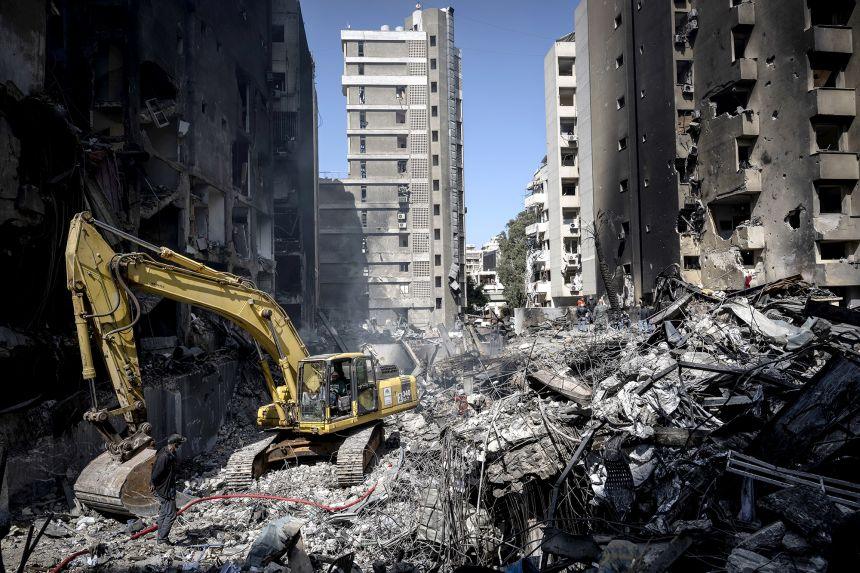
Infrastructure across Lebanon has also suffered extensive damage. Airstrikes have destroyed residential neighborhoods, damaged water supply systems, burned agricultural land, and repurposed schools into overcrowded shelters for displaced families. These conditions have severely limited access to basic services and essential resources.
The UN has further warned of a looming food security crisis. Projections suggest that by August, more than one million people could be pushed into emergency levels of hunger, with widespread shortages of food and rising prices worsening already fragile living conditions.
A senior UN humanitarian official described the psychological toll of the conflict as long-lasting and deeply damaging, noting that the emotional impact on civilians may persist far beyond the end of active hostilities.
Read more on: NCDC Steps Up Preparedness as Ebola Threat to Nigeria Remains High
Diplomatic Tensions Rise as Ireland Imposes Entry Ban on Israeli Ministers
In a significant diplomatic development, Ireland has announced entry restrictions targeting two senior Israeli government officials, reflecting growing divisions within Europe over the conduct of the conflict.
Irish authorities confirmed that Itamar Ben-Gvir, Israel’s Minister for National Security, and Bezalel Smotrich, the Finance Minister, will be denied entry into the country if they attempt to travel there. The decision was formally communicated by Ireland’s Minister for Justice, who instructed immigration officials to enforce the ban.
The move was reportedly prompted by controversial public remarks made by one of the ministers, including comments related to the detention of pro-Palestinian activists involved in an aid flotilla bound for Gaza. Irish officials described the rhetoric as unacceptable and incompatible with international humanitarian expectations.
Speaking on the issue, Ireland’s leadership stated that the repeated statements and actions attributed to both ministers reflect an extreme political stance that has contributed to rising tensions. Irish officials also suggested that similar sanctions should be considered at the European Union level, arguing that diplomatic pressure is necessary to address what they describe as inflammatory political behaviour.
Ireland has been among the more vocal European critics of Israel’s military campaign, having formally recognised the State of Palestine in the previous year. In response to Ireland’s position, Israel’s foreign ministry ordered the closure of its embassy in Dublin, marking a further deterioration in diplomatic relations between the two countries.
Ireland now joins several other European nations, including the United Kingdom, France, Spain, and Slovenia, which have also introduced restrictions targeting the same Israeli officials.
Read more on: Four NYSC Members and Soldier Killed in Fatal Adamawa Crash
A Region Still Searching for Stability
Despite ongoing diplomatic negotiations and repeated announcements of ceasefire agreements, the situation across the Middle East remains highly unstable. On the ground, civilians continue to face displacement, infrastructure collapse, and persistent insecurity, while political agreements struggle to translate into lasting peace.
The contrast between diplomatic statements and battlefield realities has created what many observers describe as a widening gap between intention and implementation. As international actors continue efforts to revive negotiations and restore stability, millions of civilians in Gaza and Lebanon remain caught in the middle of an unresolved and intensifying crisis, with no immediate end in sight.
Read more on: