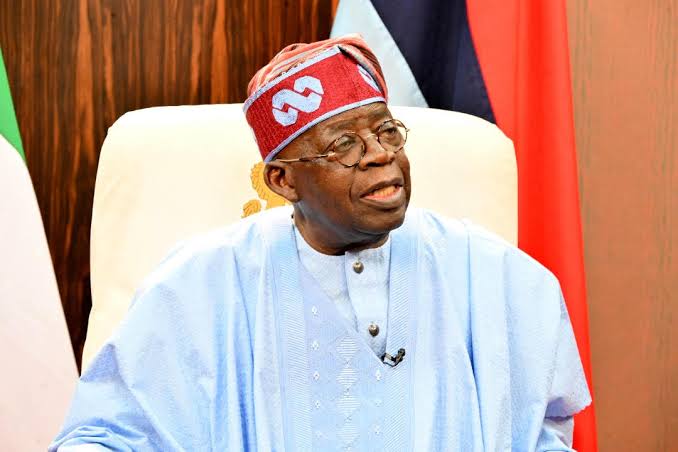
In what has already become a week defined by intense political activity, shifting alliances, and renewed debates about Nigeria’s economic direction, President Bola Ahmed Tinubu on Thursday, April 16, 2026, used a high-level engagement at the State House in Abuja to deliver a forceful and highly symbolic message to both supporters and critics of his administration.
The President, speaking before a delegation of Renewed Hope Ambassadors, did not only defend his policies but also projected an unmistakable tone of political confidence. His remarks came at a time when public conversations across the country are dominated by the effects of ongoing reforms, particularly in the areas of fuel pricing, taxation, currency adjustments, and broader structural economic changes. Against this backdrop, Tinubu made it clear that his administration would not be distracted or intimidated by opposition pressure, public protests, or what he described as coordinated attempts to derail the reform process.
At the core of his message was a direct rejection of fear-based political narratives. In his words, he insisted that no amount of political intimidation or scare tactics would force him to abandon his responsibilities or alter the direction of his government’s agenda. He expressed a sense of personal resilience shaped by decades of political involvement, suggesting that the current moment was simply another chapter in a long history of challenges he has already endured.
Read more on: Gunmen Abduct UTME Candidates on Benue Highway
With emphasis, he declared that those who expect him to be shaken by criticism are mistaken. He noted that he has walked similar difficult paths in the past, including the highly competitive political climate that surrounded the 2023 election cycle, and therefore understands the pressures that come with leadership at the national level. He assured his audience that his commitment to governing the country remains firm and unwavering, adding that he has no intention of stepping away from what he described as the demanding task of national administration.
As he continued his address, the President framed the current political environment as one filled with noise, misinformation, and deliberate attempts by opponents to influence public opinion through emotional appeals rather than factual arguments. He dismissed many of his critics as individuals or groups who thrive on creating confusion rather than contributing to meaningful national dialogue. According to him, such voices should not be allowed to define the direction of the country or weaken the resolve of those entrusted with leadership.
One of the more striking elements of his speech was his strong language concerning public demonstrations and political pressure groups. While acknowledging the right to civic expression within a democratic system, Tinubu warned against what he described as disorderly and unstructured forms of protest that could threaten public stability. He used pointed language to caution against what he referred to as street driven political agitation, arguing that democracy must be guided by established legal and constitutional frameworks rather than by uncontrolled public pressure or emotional outbursts. In his view, the strength of Nigeria’s democracy lies in respect for institutions and adherence to lawful processes, not in the dominance of street level confrontation.
Closely linked to this argument was his emphasis on the importance of the judiciary. The President reiterated that court decisions must be respected and accepted by all parties, regardless of whether they align with political interests or expectations. He described the judiciary as a central pillar of democratic governance and insisted that its authority must remain final and binding. In doing so, he reinforced a recurring theme in his administration’s messaging, which places significant weight on institutional stability and the rule of law as essential components of national progress.
While much of his address focused on political discipline and institutional respect, Tinubu also made deliberate efforts to address the economic concerns that continue to dominate public discourse. He acknowledged that many of his administration’s reforms have imposed significant short term burdens on citizens, particularly in relation to rising costs of living and the restructuring of long established economic systems. However, he maintained that these measures are necessary corrections designed to address deep rooted inefficiencies that have accumulated over many years.
Read more on: Security Report Warns of Planned Terrorists Attacks on Airports and Prisons in Two States
In a more informal and lighthearted moment during his speech, the President used humor to respond to those who claim they are unable to see signs of progress under his administration. He suggested that such individuals might require what he jokingly referred to as a clearer perspective in order to recognize ongoing developments across the country. He referenced infrastructure projects, institutional reforms, and social investments as evidence that his government is actively working to reshape national systems for long term benefit. The comment, delivered in a relaxed tone, drew laughter and applause from the assembled APC governors and political coordinators present at the meeting.
Despite the humorous delivery, the underlying message remained serious. Tinubu reiterated that the Nigerian economy is undergoing a structural transformation aimed at replacing outdated frameworks with more efficient and transparent systems. He pointed to recent institutional changes, including the commissioning of the Nigerian Revenue Service headquarters, as symbolic of a broader effort to modernize governance and improve accountability in revenue generation. According to him, these reforms are intended to eliminate fragmented and inefficient systems that have historically limited the country’s fiscal performance.
The President also emphasized developments in the energy sector, particularly ongoing adjustments in fuel pricing linked to deregulation policies and domestic production capacity. He suggested that the long term goal is to stabilize the sector through market driven mechanisms that encourage investment and reduce dependency on imports. While acknowledging that current prices have created pressure for households and businesses, he maintained that these changes are part of a broader strategy aimed at achieving sustainable energy independence and economic resilience.
In the education sector, he highlighted the large number of candidates participating in the 2026 Unified Tertiary Matriculation Examination, describing it as evidence of a growing youth population engaging with an evolving academic system. He framed this as part of a wider effort to digitize and modernize education delivery, ensuring that Nigerian students are better prepared for a competitive global environment. He suggested that investments in education remain central to the administration’s long term vision for national development.
Read more on: Trump says Israel and Lebanon leaders will hold talks for the first time in 34 years
Throughout his address, the President also returned repeatedly to the theme of governance stability in the face of opposition fragmentation. His remarks were delivered against a political backdrop in which internal tensions within opposition parties have become increasingly visible. Recent public disagreements among prominent opposition figures, including high profile exchanges involving Nyesom Wike and Atiku Abubakar, have fueled perceptions of disunity within the opposition camp. Tinubu referenced this broader political environment indirectly, suggesting that while opposition figures remain preoccupied with internal disputes, his administration is focused on governance and policy execution.
He positioned his declaration that he would not abandon the responsibilities of leadership as both a personal commitment and a political signal. By stating that he is not running away from national affairs, he sought to reinforce an image of continuity, stability, and determination at a time when public debate often centers on the effectiveness and impact of his reforms. For his supporters, the statement was presented as reassurance that the administration remains firmly in control of its agenda despite criticism.
At the same time, he urged members of the Renewed Hope Ambassadors initiative to take a more active role in communicating government policies at the grassroots level. He encouraged them to engage directly with communities, explain the rationale behind ongoing reforms, and help citizens understand what he described as the long term benefits of current sacrifices. In his framing, the present period represents a difficult but necessary transition, one that will ultimately lay the groundwork for broader prosperity if sustained and properly understood.
As the political atmosphere continues to evolve, Tinubu’s remarks have added another layer to the national conversation about leadership, reform, and public patience. Supporters interpret his tone as evidence of a leader confident in his direction and unwilling to be distracted by opposition criticism. Critics, however, view the same statements as potentially disconnected from the immediate economic realities faced by ordinary Nigerians, particularly in a period marked by inflationary pressure and rising transportation costs.
Read more on: APC Dismisses Implosion Claims as Defections Strengthen Its Grip Ahead of 2027 Elections
Ultimately, the President’s address reflects a broader tension within Nigeria’s current political and economic landscape. On one hand is a government insisting that structural reforms are essential and unavoidable for long term stability. On the other is a population grappling with the short term effects of those same reforms, while demanding faster relief and clearer improvements in daily living conditions.
The question that now continues to linger in public debate is whether this defiant posture signals the resolve of a leader firmly committed to a long term national vision, or whether it risks widening the gap between policy direction and the lived experiences of citizens navigating the realities of economic adjustment.
Read more on:
- Trump Claims China Will Halt Arms Sales to Iran to Reopen Hormuz
- APC Moves to Rein In Defectors as Atiku and Presidency Clash Over Jilli Airstrike
- Akpabio Sets 2027 Timeline for Insecurity, Defends Tinubu, Reacts to U.S. Staff Reduction
- Atiku Accuses INEC of Undermining Democracy
- Benin Republic Announces New President-Elect
- President Tinubu Signals Tougher Military Push Against Terror Groups