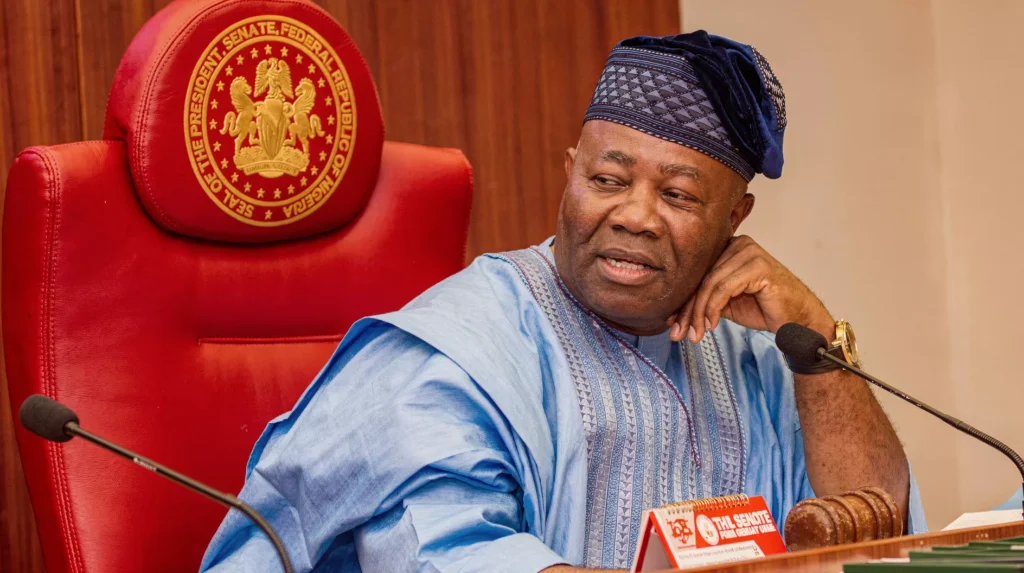
Senate President Godswill Akpabio has stirred intense national debate following a striking and highly controversial speech in which he linked Nigeria’s worsening insecurity to political maneuvering ahead of the 2027 general elections. Speaking during the commissioning of the newly completed Nigeria Revenue Service headquarters in Abuja, Akpabio not only offered a specific timeline for when the violence would subside, but also mounted a vigorous defense of President Bola Ahmed Tinubu while dismissing growing international concerns about Nigeria’s security situation.
His comments, delivered before a distinguished audience that included President Tinubu, senior government officials, and key political stakeholders, have since dominated public discourse. The speech blended political loyalty, bold claims, and sharp rhetoric, leaving many Nigerians divided over its implications.
Akpabio’s Timeline for the End of Insecurity
At the heart of the controversy is Akpabio’s assertion that the current wave of violence across the country is not merely a security failure, but a deliberate effort by political opponents to destabilize the Tinubu administration. According to him, the attacks are part of a coordinated attempt to distract the government and weaken public confidence ahead of the next election cycle.
In what many have described as his most startling claim, Akpabio declared that the insecurity would abruptly come to an end shortly after the 2027 presidential election, provided President Tinubu secures victory.
Read more on: Atiku Accuses INEC of Undermining Democracy
He expressed confidence that within two weeks of the election, the bombings and attacks currently troubling parts of the country would stop. His reasoning suggested that those allegedly sponsoring the unrest would have no further incentive once the political contest is settled.
Akpabio’s framing of the crisis effectively shifts the narrative from one of structural security challenges to one driven by political sabotage. In his view, the persistence of attacks is tied directly to efforts to undermine the administration’s reform agenda rather than systemic failures within Nigeria’s security architecture.
This position has drawn both support and criticism. Some see it as a candid acknowledgment of the political undercurrents that often shape national issues, while others argue that it oversimplifies a complex crisis that has claimed lives and displaced communities across multiple regions.
Defense of Tinubu and the “Blame Game” Remark
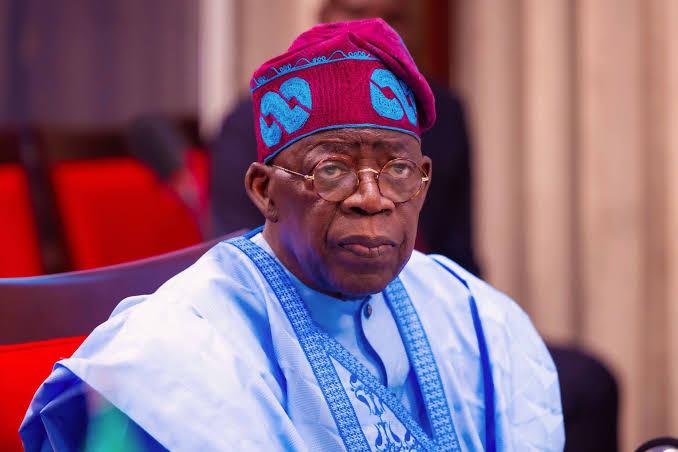
In the course of his speech, Akpabio also made a remark that quickly gained traction across social media and political circles. While defending President Tinubu from what he described as excessive criticism, he likened the situation to a man being blamed for every pregnancy.
The comment, though delivered in a somewhat humorous tone, was intended to illustrate what he perceives as the unfair tendency to hold the President responsible for every problem facing the country, regardless of its origin or underlying causes.
Read more on: Benin Republic Announces New President-Elect
Akpabio argued that many of Nigeria’s current challenges predate the Tinubu administration and cannot realistically be resolved overnight. He maintained that despite inheriting significant economic and security difficulties, the President has continued to push forward with reforms aimed at stabilizing the country and improving long term prospects.
Supporters of the administration have echoed this sentiment, pointing to policy changes in areas such as fiscal management and infrastructure as evidence of progress. However, critics have dismissed the analogy as inappropriate and insensitive, arguing that it trivializes the real hardships faced by Nigerians dealing with insecurity and economic strain.
The remark has since become one of the most talked about aspects of the speech, with many interpreting it as a reflection of the administration’s broader communication style when responding to criticism.
Akpabio’s Explanation for U.S. Embassy Staff Reduction
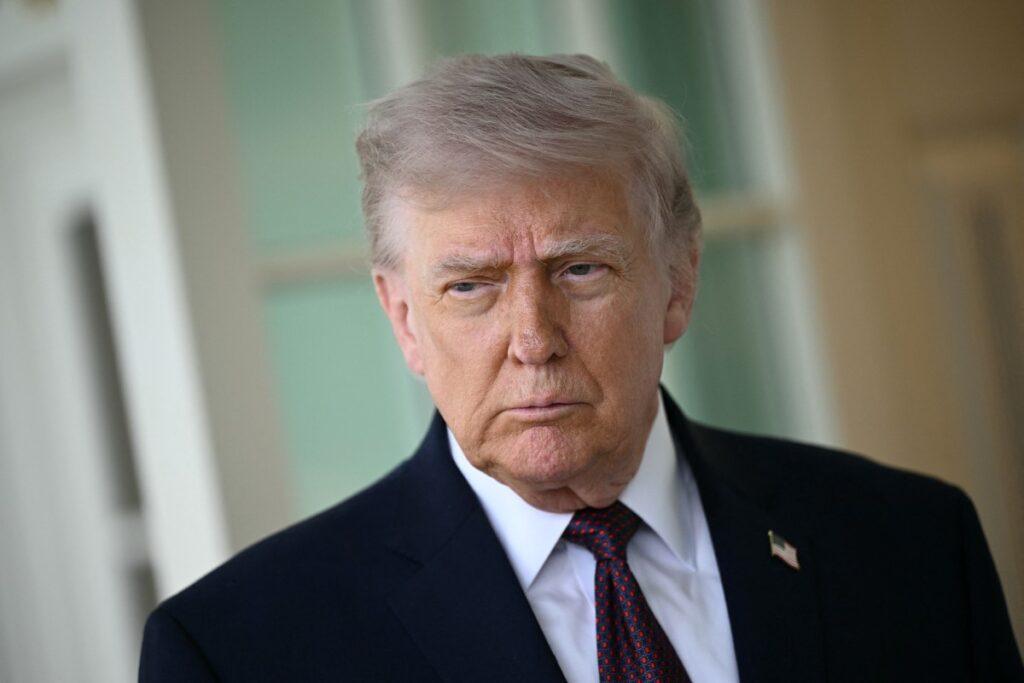
Another major point addressed by the Senate President was the recent decision by the United States government to reduce its embassy staff presence in Nigeria. The move, which involves the voluntary departure of non essential personnel and their families, has been widely interpreted as a response to growing security concerns.
The U.S. State Department had earlier cited a deteriorating security environment and issued heightened travel advisories for several parts of the country. This development added to existing anxieties about safety, particularly in Abuja and other major cities.
Akpabio, however, rejected the notion that the decision was a direct reflection of Nigeria’s internal security situation. Instead, he attributed it to broader global tensions, specifically referencing fears of potential retaliatory actions linked to geopolitical conflicts involving Iran.
According to him, the United States is acting out of caution on a global scale, reducing its diplomatic footprint in multiple locations due to concerns about possible repercussions from international disputes. He suggested that Nigeria is not being singled out, and that the narrative portraying the country as uniquely unsafe is misleading.
This explanation has been met with skepticism in some quarters. Analysts and observers have pointed out that diplomatic decisions of this nature are typically based on country specific risk assessments. Nevertheless, Akpabio’s comments reflect an effort by the government to counter negative perceptions and reassure both citizens and international partners.
He further emphasized that Nigeria remains stable and that there is no widespread breakdown of law and order. This position aligns with statements from other government officials who have consistently downplayed the severity of the situation.
Read more on: President Tinubu Signals Tougher Military Push Against Terror Groups
Reinforcing Support for the Administration
Throughout his address, Akpabio reaffirmed his unwavering support for President Tinubu and the administration’s policy direction. As the head of the National Assembly, he highlighted what he described as a strong and cooperative relationship between the legislative and executive arms of government.
He argued that this alignment is critical for effective governance and for the successful implementation of reforms under the Renewed Hope agenda. According to him, the synergy between both branches has enabled the passage of key policies aimed at addressing economic challenges and promoting national development.
Akpabio also praised the President’s leadership, describing it as visionary and resilient in the face of adversity. He expressed confidence that ongoing reforms would gradually yield positive results, even though the benefits may not be immediately apparent.
His remarks underscore the political dynamics within the current administration, where loyalty and coordinated messaging play a significant role in shaping public perception.
The Broader Context of Insecurity
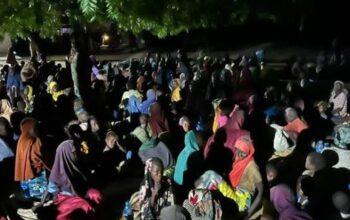
Akpabio’s comments come at a time when Nigeria is grappling with multiple security challenges across different regions. Incidents of banditry, insurgency, and communal clashes continue to affect communities, leading to loss of lives and displacement.
Recent events have further heightened concerns. Reports of a military airstrike that allegedly resulted in significant civilian casualties have sparked outrage and calls for accountability. Additionally, attacks in states such as Plateau and Nasarawa have reinforced fears about the spread of violence.
Against this backdrop, the Senate President’s assertion that the crisis is politically motivated and temporary has generated mixed reactions. For many Nigerians directly affected by insecurity, the idea that their experiences could be tied to electoral strategies is difficult to accept.
Critics argue that such statements risk downplaying the urgency of the situation and could undermine efforts to develop comprehensive, non partisan solutions. They stress the need for a more nuanced approach that addresses the root causes of insecurity, including poverty, unemployment, and weak institutional capacity.
On the other hand, some supporters believe that acknowledging potential political interference is an important step toward understanding the full scope of the problem. They contend that security challenges in Nigeria have often been intertwined with political interests and that addressing this dimension is essential for lasting peace.
Read more on: Chibok Parents, Foundation Express Concern Over Fading Global Attention
Public Reactions and Political Implications
The reaction to Akpabio’s speech has been swift and varied. On social media, the comments have sparked intense debate, with users dissecting every aspect of his বক্তব্য and its implications.
Supporters of the administration have praised his candor and loyalty, viewing his statements as a bold defense of the government against what they perceive as unfair criticism. They argue that his remarks highlight the need for unity and patience as the country navigates a difficult period.
Critics, however, have expressed concern over the tone and content of the speech. Many have questioned the logic behind linking insecurity to election outcomes, arguing that it raises troubling questions about accountability and governance.
The “pregnancy” analogy, in particular, has drawn widespread criticism, with some describing it as dismissive and inappropriate given the seriousness of the issues at hand. Others have called for more measured communication from public officials, especially on matters that directly affect the lives and safety of citizens.
Politically, the speech may have broader implications as the country moves closer to the 2027 elections. By framing insecurity as a politically driven phenomenon, Akpabio has introduced a narrative that could shape campaign strategies and public discourse in the coming years.
Read more on: Pope Leo XIV Breaks Silence, Challenges Trump Over Foreign Policy Dispute
Looking Ahead
As Nigeria continues to confront its security challenges, the debate sparked by Akpabio’s remarks highlights the complexity of the situation. While his comments reflect a strong belief in the administration’s direction and intentions, they also underscore the deep divisions in how the crisis is understood and addressed.
The coming months will likely see continued scrutiny of both the government’s actions and its messaging. For many Nigerians, the priority remains clear: tangible improvements in safety and stability, regardless of political considerations.
Whether Akpabio’s prediction about the end of insecurity proves accurate remains to be seen. What is certain, however, is that his speech has added a new layer to an already complex national conversation, one that will continue to evolve as the country approaches another pivotal election cycle.
Read more on:
- Commanding Officer and Six Troops Killed in Borno
- NDLEA Nabs 93-Year-Old Man, Doctor in Shocking Nationwide Drug Crackdown
- Borno State Governor Addresses Military Strike in Border Market
- Six-Day Ultimatum as Bandits Demand 700 Cattle and 1,000 Sheep from Residents
- Another Top Legislator Passes Away as Circumstances Unfold