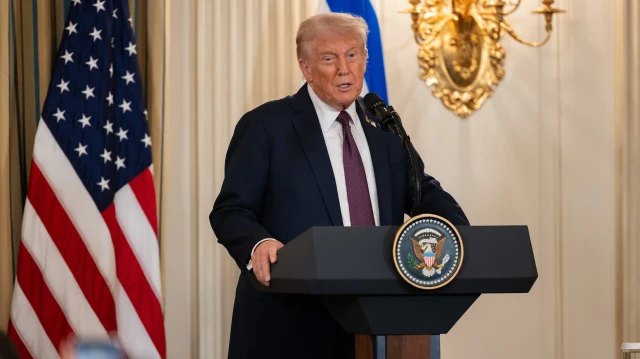
What initially appeared to be an ordinary news cycle has rapidly transformed into a moment of intense geopolitical focus, as U.S. President Donald Trump unveiled a series of claims that could have far-reaching consequences for global energy markets and the fragile balance of power in West Asia. Through a combination of social media statements and a televised interview, Trump suggested that a quiet understanding may have been reached with China, one that links military restraint with the stability of one of the world’s most critical maritime routes.
At the heart of this development is the Strait of Hormuz, a narrow but vital waterway through which nearly 20 percent of the world’s oil supply passes daily. For weeks, tensions in the region have been escalating following a U.S. naval blockade on Iranian ports, implemented on April 13. The move sent shockwaves through global markets, driving up oil prices and raising fears of prolonged disruption. Against this tense backdrop, Trump’s latest remarks are being interpreted as an attempt to steady the situation while projecting diplomatic progress.
A Bold Claim from Washington
The President first introduced the idea of a breakthrough in a post shared on Truth Social, where he adopted an upbeat and confident tone. In the message, he claimed that China had agreed to halt the supply of weapons to Iran. In return, he stated that the United States would ensure that the Strait of Hormuz remains permanently open, allowing uninterrupted passage for global shipping.
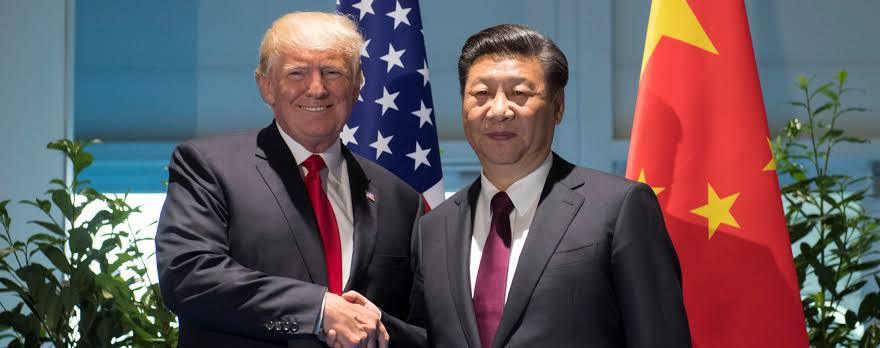
Trump’s wording stood out not only for its certainty but also for its personal touch. He spoke of an upcoming visit to Beijing and suggested that Chinese President Xi Jinping would welcome him warmly. The remark, though informal, underscored Trump’s continued reliance on personal rapport as a cornerstone of his diplomatic strategy.
The anticipated visit, scheduled for May 14 and 15, will be Trump’s first trip to China since the start of his second term. The White House has already begun framing it as a significant diplomatic moment, describing it as an opportunity to reinforce trade ties and highlight cooperation between two of the world’s largest economies.
Read more on: APC Moves to Rein In Defectors as Atiku and Presidency Clash Over Jilli Airstrike
The Strategic Trade-Off
Beneath the President’s confident messaging lies a complex and delicate negotiation. The proposed understanding between Washington and Beijing appears to revolve around a strategic exchange of interests. China, as one of the largest importers of Iranian oil, has a strong incentive to keep the Strait of Hormuz open and stable. Any disruption in that corridor would pose serious risks to its energy security and broader economic stability.
By suggesting that China is willing to reduce or halt military support to Iran, Trump is effectively framing the situation as a calculated trade-off. In this scenario, Beijing prioritizes secure energy flows while the United States secures a reduction in external military backing for Tehran. The arrangement, if confirmed, could shift the dynamics of the ongoing tensions in the region.
This development also intersects with efforts to extend the fragile ceasefire between the United States and Iran. The current agreement is set to expire on April 22, and diplomats are working urgently to prevent a return to open confrontation. Trump’s claims, if substantiated, could strengthen the case for extending the truce by reducing one of Iran’s key sources of support.
Beijing Responds with Caution
Despite the optimism expressed by Trump, China’s official response has been far more measured. During a briefing by the Chinese Foreign Ministry, officials dismissed reports of arms transfers to Iran as unfounded and characterized them as fabricated narratives. However, they stopped short of confirming any new agreement with the United States, leaving the situation open to interpretation.
This ambiguity has fueled skepticism among analysts and observers. Reports from international media outlets suggest that China may have been preparing to deliver advanced air defense systems to Iran as recently as the previous week. Such claims appear to contradict the narrative presented by Trump and raise questions about whether a genuine policy shift has occurred.
In his interview with Fox Business, Trump addressed these discrepancies by pointing to his direct communication with Xi Jinping. He explained that he had written to the Chinese leader expressing concerns about potential arms transfers and claimed that Xi had responded by denying any involvement. The exchange highlights Trump’s preference for leader-to-leader engagement, though it also underscores the challenges of verifying such informal assurances.
Read more on: Akpabio Sets 2027 Timeline for Insecurity, Defends Tinubu, Reacts to U.S. Staff Reduction
Markets React to Possible De-escalation
The mere suggestion of a more stable situation in the Strait of Hormuz has already had a noticeable impact on global markets. Oil prices, which had surged following the U.S. blockade, began to show signs of stabilization as traders assessed the likelihood of continued access to the waterway. While the shift has been modest, it reflects a broader sense of cautious optimism.
The shipping industry is also closely monitoring developments. Maritime insurers and logistics companies are waiting for formal confirmation from the U.S. Fifth Fleet before resuming full-scale operations in the Gulf. Official guidance indicating that the route is secure would be a key signal that tensions are easing. Until such confirmation is issued, many operators are likely to proceed with caution.
Iran’s Position in a Shifting Landscape
For Iran, the evolving situation presents a complicated set of choices. On one hand, the potential reduction in Chinese military support could weaken its strategic position. On the other hand, the reopening of the Strait of Hormuz would allow it to resume oil exports more freely, providing a critical source of revenue.
Tehran’s response will play a crucial role in determining the future of the ceasefire. If it views the situation as an opportunity to stabilize its economy, it may be more inclined to support an extension of the truce. However, if it perceives the developments as a threat to its security, tensions could quickly resurface.
Read more on: Atiku Accuses INEC of Undermining Democracy
Eyes on the Beijing Summit
As the date of Trump’s visit to China approaches, global attention is increasingly focused on what the meeting might deliver. If the President’s claims are backed by concrete agreements, the summit could mark a significant turning point. A clear commitment from China to limit its military engagement with Iran, combined with a sustained U.S. guarantee of maritime security, would represent a meaningful step toward de-escalation.
However, there is also a risk that expectations may outpace reality. Diplomatic negotiations are often complex, and initial announcements do not always translate into lasting agreements. The lack of explicit confirmation from Beijing, coupled with conflicting reports, suggests that the situation remains fluid.
A High-Stakes Diplomatic Gamble
Ultimately, the unfolding developments highlight the intricate relationship between energy security, military strategy, and personal diplomacy. Trump’s assertive messaging has injected momentum into the narrative, but it has also raised important questions about transparency and credibility.
The Strait of Hormuz remains one of the most strategically important waterways in the world, and its stability is essential to the global economy. Any effort to ensure its openness carries significant implications, not just for the countries directly involved but for the international community as a whole.
Whether this moment represents a genuine step toward lasting stability or simply another episode of geopolitical maneuvering will depend on what happens in the coming weeks. For now, the world is watching closely, aware that the stakes extend far beyond the power of any single leader.
Read more on:
- Benin Republic Announces New President-Elect
- President Tinubu Signals Tougher Military Push Against Terror Groups
- Chibok Parents, Foundation Express Concern Over Fading Global Attention
- Pope Leo XIV Breaks Silence, Challenges Trump Over Foreign Policy Dispute
- Commanding Officer and Six Troops Killed in Borno
- NDLEA Nabs 93-Year-Old Man, Doctor in Shocking Nationwide Drug Crackdown